If you really want to know someone, ask them about their internet search history. That little trail of questions can be revealing. In my case, my search history might make me look like an unhinged movie villain with a tech problem.
As a writer, I spend a lot of time googling things that would raise eyebrows if you didn’t know the context. For example, “would a person drown easily” was one of my recent searches for a story I was writing. Not because I’m plotting anything nefarious, but because fiction demands believability.
Then there are the health-related searches. A friend asked me about her medical condition, and I wanted to give thoughtful advice, so I did some quick online digging. Without knowing this, someone looking at my search results may think I was the one with the health issue.
I search for a lot of places as well, especially when deciding on where to dine. I’ll check how to get somewhere…and then never actually go to that place because I found a place more convenient. So I appear to plan ambitious trips and abandon them before leaving my driveway.
And TV shows? I have the patience of a two-year old. I’ll watch something, get curious, and search, “How does episode 4 of season 2 end?” or “Who is the new guy?” because I skipped a few episodes. Online searching is a real time saver.
The one constant in all my searches? Tech problems. Easily a quarter of my searches are about the software I use, price comparisons, if the latest virus is a real threat or a hoax, or what-on-earth is this tech term I just heard about.
All in all, my search history paints a funny, chaotic picture—equal parts dark, nerdy, and hopelessly curious. In other words, a writer just trying to figure it all out.
Daily writing prompt
What was the last thing you searched for online? Why were you looking for it?
Blogging has come a long way from personal journals and niche hobby sites. In 2025, it remains a popular form of communication, but how you blog and what works best have evolved. Whether you’re a seasoned writer or just starting out, understanding the current landscape is key to staying relevant. Here’s what’s changed—and what hasn’t.
What’s Changed
1. AI-Assisted Content Creation With the rise of AI writing tools and automated blogging software, content creation has become faster and more efficient. Bloggers can now use AI to outline, draft, and optimize content for search engine visibility, allowing more time for strategy and creativity.
2. Search Intent Over Keywords Today’s SEO focuses on search intent optimization, meaning your content must answer user questions directly. Simply targeting a high-volume keyword isn’t enough—Google now rewards relevance and clarity over density.
3. Voice and Visual Search Optimization As voice search SEO and visual content strategy grow, bloggers must adapt their writing to be more conversational and incorporate multimedia with proper alt text and image SEO best practices.
4. User Experience (UX) Google’s Page Experience update has made things like mobile-friendly blog design, fast loading times, and clear formatting more important than ever. A smooth user experience boosts both rankings and reader engagement.
What Still Works
1. Quality Content Creation Publishing high-quality blog posts regularly remains essential. Informative, engaging, and well-structured content still drives organic traffic and builds domain authority.
2. Email Marketing Building an email list for your blog continues to be a top way to grow your audience. With open rates higher than social media engagement, email remains a reliable channel in 2025.
3. Evergreen Blog Topics Evergreen content—posts that stay relevant over time—still performs exceptionally well. Updating old blog posts with fresh insights can significantly improve SEO rankings.
4. On-Page SEO Basics Using proper meta descriptions, header tags, internal linking, and clean URLs still matters. These on-page SEO fundamentals are the essentials of a successful blog.
Key Takeaways
In 2025, successful blogging combines time-tested techniques with smart adaptation. By prioritizing valuable content, SEO strategy, and reader engagement, you can build a blog that succeeds in a changing digital world.
When was the last time you saw an ad or read an article that persuaded you to buy something you didn’t even need? Well-crafted words can be powerful enough to influence your decisions. This writing skill is worth developing in your professional and personal life.
Here are some powerful, persuasive writing tips you should know to write copy to convince your reader to agree with you or buy from you. Let’s dive into the topic by defining persuasive writing.
What is Persuasive Writing?
Persuasive writing gets your reader to side with your point of view. To achieve this, you need facts, statistics, and other research from credible sources. When your point of view or opinion is backed up with strong and credible evidence, your reader is more likely to agree with you.
What Makes Persuasive Writing “Persuasive”?
Persuasive writing has three key elements. First, it will include the beliefs of a group of people or a culture. If the writer seems to understand the reader’s beliefs, then the reader is more likely to agree with the piece of writing. Second, the writer must appeal to the reader’s sense of logic by providing scientific evidence and facts. Lastly, the writing must appeal to the reader’s emotions and feelings.
If the piece of writing cannot appeal to the reader’s beliefs, sense of logic, or emotions, then it will be difficult to persuade the reader to agree with the point of view presented.
How Can You Use Persuasive Writing at Work?
If your job is to influence people through the written word, then persuasive writing will be an extremely handy skill to have.
Persuasive writing will persuade your audience to follow your social media channels because people value the insights they get from your blog posts or articles.
Persuasive writing persuades customers to buy products and services. Advertising and marketing copywriters, for example, write copy for web content, email campaigns, marketing brochures, ads, and corporate brochures.
Persuasive writing skills are also needed for press releases, copy for fundraisers, and articles about government policies.
How Can Persuasive Writing Help Your Business?
Persuading your customers and clients to invest in your products and services is key to your business’s success. Dr. Robert B. Cialdini’s research on the psychology of persuasion has had a tremendous impact on marketing.
One concept he has proven is the principle of reciprocity. Humans naturally want to return favors and pay back debts. An example of this in marketing is a business that gives advice to website visitors in the form of free blogs, training courses, and PDF downloads. The informative, free content increases the likelihood that people will pay for the company’s products and services in the future.
Another principle is social proof: whatever most people do, someone joining the group will do the same, even if the behavior doesn’t make logical sense. Consider how a worker may work a little longer just because everyone else in the department works late. And think of the last time you decided whether to give a new restaurant a try because of how busy it looked. If you read about a popular trend with your age group, you’ll be more likely to try it.
Scarcity is another persuasive tactic. An ad for “the last available room,” “30% off your purchase today only,” and “offer ends at midnight tonight” will create a fear of missing out (FOMO).
Persuasive writing will give people the push they need to decide to subscribe to your email list, buy two for the price of one, sign up for a course, or invest in your consulting services.
How Is Persuasive Writing Useful to You?
Persuasive writing can help you to get a job when you’re writing to a prospective employer. It can help you to get a promotion or raise.
Persuasion is also critical when speaking during an interview or conversation for a promotion. Whether spoken or written, words can be used to appeal to others and convince them to agree with your point of view.
Key Takeaways
Persuasive writing uses psychology to give people that nudge to make a decision now. It wins you over with logic and appeals to your emotions. It may even play to your fears (FOMO) or convince you to make a purchase because of the free value you have already received. Persuasive writing creates action through the power of words.
If you enjoyed this article, subscribe to make sure you don’t miss the next post!
An article by Forbes announced new changes to Google that affect how the search engine presents results using artificial intelligence. This news is for you if you publish your work online, such as blogs and articles.
The new change will mean that when you provide Google with a query, it will generate an answer created from all the material that it can find online. This means Google search users don’t need to visit the original pages that contain the information, resulting in fewer eyes on the web pages of content creators.
Blogging has become a powerful way to promote your business, attract an audience, and express your ideas to billions of people. Blogs cover a wide range of topics and niches, including learning how to blog as a hobby or as a source of income.
According to OptinMonster.com, there are more than 500 million blogs in 2019, 60 million blogs on WordPress, and an expectation that the number of bloggers in the USA will reach 31.7 million in 2020. If you want to start making a name for yourself as a writer, or if you’re looking for a way to find leads for your business, blogging is clearly one option to explore.
To help you begin your blogging journey, I’ve chosen five of the best websites for learning how to blog.
1 HubSpot
Top spot in this list of best sites goes to HubSpot for two reasons. First, HubSpot’s training on many topics is widely recognized. Second, after visiting multiple websites about the same topic, I found visual appeal is what differentiated one resource from another.
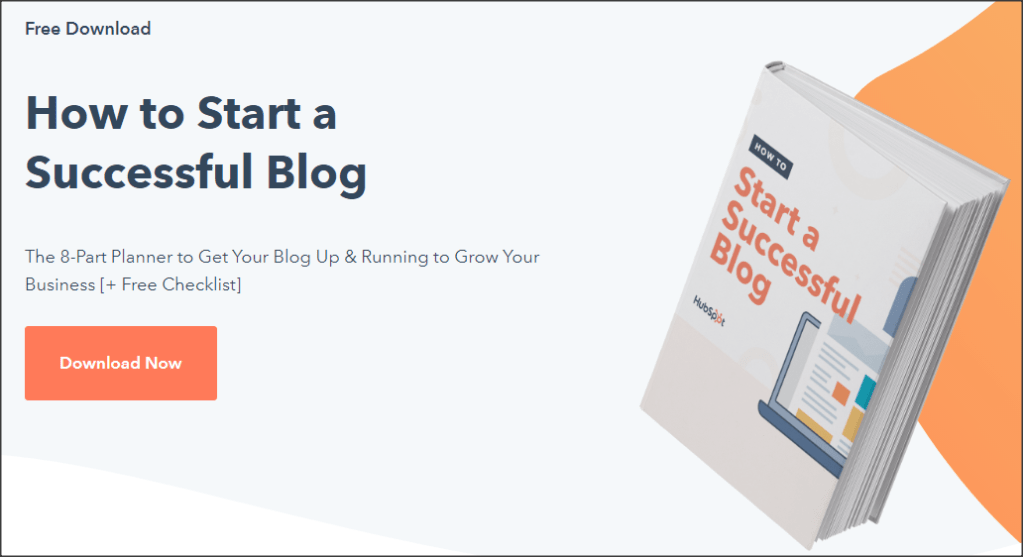
The article “How to Start a Successful Blog” addresses many of the topics that a newbie blogger would be curious to learn.
Pros
As I had mentioned earlier, HubSpot Academy training is widely recognized. You can take a course on business blogging and using WordPress. As part of your marketing education, you can take certificate courses on marketing.
The introductory article “How to Start a Successful Blog” includes a PDF download with many topics. A table of contents shows you at-a-glance what you will learn, including determining your blog’s purpose and goals, setting up your first post, deciding on content, and monetizing your blog. It covers all the basic topics that a beginner will want to know.
The PDF is free and you can refer to it even when you are offline. It is visually appealing, with graphics, well organized text, and links to other sources. When you are finished the PDF, you’ll find other articles on the website to build on your skills, such as “How to Write a Blog Post: A Step-by-Step Guide [+ Free Blog Post Templates].”
Cons
To obtain the PDF, you’ll need to provide some basic information about yourself, which could put you on their email list. The PDF is free, but those who are wary of downloading files may wish to look for other resources on how to blog.
Verdict
HubSpot offers a visually appealing resource from a company that’s recognized for its marketing training. It covers basic topics on learning how to blog and offers additional resources on blogging and marketing.
2 Neil Patel
Neil Patel’s site has a comprehensive library of resources on digital marketing. Blogs and videos show his expertise on content marketing and SEO. He introduces blogging as something to appeal to a wide range of people, from the average person, to someone looking to make an income, to businesses. Of his many articles on blogging, the post that seemed most relevant to beginners is “How to Start a Blog That Generates $3817 a Month in 2020.”
Pros
The article covers all the topics you need to know about learning how to blog. Like most other articles on this list, it covers webhosting and how to set up your blog. It focuses on the WordPress platform and how to work with the theme and dashboard and optimizing for SEO.
Deciding on topics for your blog can be a challenge, so you can brainstorm topics and ask yourself questions such as, “What do readers love or hate about your niche?” In addition to useful activities like these, the article covers how to set up an editorial calendar and how to monetize your site.
Once you’ve completed this article, you can follow up with other articles such as “Neil Patel’s Guide to Blogging Consistently” and “The Ultimate Guide to Writing Blog Posts That Rank in Google’s Top 10.” As a break from all the reading, check out his educational videos on content marketing and blogging.
Cons
The article is lengthy, with plenty of information about blogging, but it lacks an overview on what topics you will cover. To get the gist of what the article will cover, you would need to quickly scroll down the entire page.
Verdict
Those who have trusted Neil Patel as a source of information for SEO and digital marketing will find the resources on learning how to blog both informative and familiar. This article follows a similar format as Patel’s other informative articles. The steps for learning how to blog are easy to follow, and there are plenty of text and video resources on the website to expand on your knowledge of blogging.
3 ProBlogger
Problogger is the first website I discovered when I wanted to learn about blogging years ago. The site has plenty of resources on blogging, including an article titled, “How to Start a Blog” for a basic introduction on the subject. It also has a free course called, “Ultimate Guide to Starting a Blog.”
Pros
As you read through the article, you work your way through a series of five steps to set up your first blog, beginning with choosing your hosting platform, and an explanation of the difference between WordPress.com and WordPress.org.
The article alternates between clear, easy-to-read font and videos on each of the five steps. The text includes links to explanations of common terms related to blogging. At the end of the article, you’ll find links to additional resources, such as blog posts and a book on your first week of blogging.
What makes this site different than the others, however, is the job board for those who are looking for blogging gigs. This resource is great for those who want to blog but not take on blogging on their own website.
Cons
The information offered in this article isn’t that much different from the other articles I’ve read about learning how to blog. If you’re a visual learner, you’ll find the article is text heavy, broken up with video and links with no graphics. However, the article is a solid introduction to blogging, without diving into too much detail for a beginner.
Verdict
The article is a useful introduction to blogging, and perfect for those who like to learn a new skill through a combination of text and video. To learn more about blogging, you have access to blog articles, a book and courses. If you’re looking for a gig or job to practice your newfound blogging skills, there is a job section to explore.
4 Quick Sprout
The next best site on this list for learning how to blog is from Quick Sprout, which teaches you the skill in 11 easy steps. What separates this article on blogging from the others on this list is the title. “How to Start a Blog That Makes Money (Lessons Learned)” takes the approach that this guide is here to protect you from making the same mistakes the author made. You can skip the brief intro and go straight to “How to Start a Blog in 11 Steps” if you’re not interested in the preamble about why blogging could be a profitable income choice for you.
Pros
The article begins with a table of contents that lists all the topics that will be covered. You can jump straight to the topic that interests you or go through each section in order. It assumes that you will be blogging on WordPress and teaches you about the technical aspects of choosing a domain and theme for this platform.
It also covers useful topics such as narrowing down your niche, building an email list and an audience, and several options for monetizing your blog. If you need some motivation to get you going on your projects, there are “action steps” at the end of each section that describe activities you can complete to master each topic in the eleven-step list.
Each section is clearly laid out with examples and recommendations from the author. The section on analytics is well explained.
Cons
This article, although very educational, is text heavy, with a few screenshot-type images. These images explain points from the text and simplify learning to blog in clear steps. When you are finished this article, there are many others you can read to learn more about blogging.
Verdict
This site is a solid source of information about blogging. It’s perfect for those who like to read and follow directions step-by-step using text and images. As you increase your expertise, you’ll find plenty of blog posts to educate you on your blogging skills, how to monetize blogging, and examples of successful blogging sites you can learn from.
5 Blogging Guide
This website ranks fifth in this list because your opinion on this site will depend on whether you like general or detailed overviews to topics. If you like detailed information when you’re just beginning your learning journey, you will rank this site high.
The site is a series of guides that teach you various blogging related skills, starting with “Blogging for Beginners.” The resource is quite technical and addresses blogging for other platforms in addition to WordPress.
Pros
The guide is quite extensive in its coverage of topics. After you choose your platform, you find an outline of steps for creating a blog on the platform of your choice. The first is steps for WordPress followed by the same steps with Medium. The outline is a great overview of what you’ll learn. The estimated time for completing each section is also shown. To expand on each subtopic, you click on the +.
Each section provides clear, step-by-step direction on how to develop your blogging skills. Other topics covered in this introduction are newsletter writing, webhosting, and domain registration. When you are finished with the overview, you can explore the other guides on relevant topics like content marketing and blogging platforms.
Cons
If you like things to be straightforward and simple when you are first learning about a subject, you may find this resource overwhelming because you have many decisions to make. For example, the first step to blogging is choosing your platform. If you have a platform preference, you can read about that one first. Or, if you are undecided, you can read about all three types and the one you prefer.
Verdict
This website has many useful guides on blogging and content marketing. I liked how the information was organized, but I also know what I’m looking for. If you are a true beginner to blogging, then searching by topic (such as WordPress or Medium?) can be daunting and you can become overwhelmed by the choices.
Conclusion
Blogging continues to increase in popularity over time, for businesses and hobby bloggers alike. If you’re just getting started on learning how to blog, there is no shortage of websites and blogs to teach you about this topic. I have found five sites that provide clear guidance on how to start your own blog. Is there a website you would like to add to the list? Comment below!









 Vanya Wryter Consulting Services