Tag: Entrepreneur

  • What You Need to Know About Remote Work

    What You Need to Know About Remote Work

    How would you feel about mixing work and home life? Many workers got a taste of remote work, or working from home, when the pandemic turned our lives upside down in 2020. Some people loved the change while others absolutely hated it.

    If you haven’t tried it yet, and you’re wondering what it’s like, here’s what you need to know about remote work. If you already have been a remote worker, would you agree with the following points about blurring work and home life?

    Isolation and lack of in-person interaction

    At first, you might think it’s a nice break from your coworkers if you’re working from home. The co-worker you dislike running into is finally gone from your life, and the co-worker who interrupts you to offer the latest company gossip is finally quiet. Then weeks go by, and you become a hate or love it remote worker.

    Here are some reasons why you hate it: you miss having lunch with the co-worker who is also your friend. You miss the conversations you had whenever you collaborated with a team. Sure, you have team meetings on Zoom, but everyone is mindful of the time and sticks to the point. When you worked in person, there was time for social conversation to lighten the mood while you worked.

    In contrast, if you’re an introvert, you might love remote work. Interaction with your co-workers is at a minimum. No more purposeless water cooler conversations. Now, you can work in peace and get what you need done on time. You don’t feel isolated at all. You also enjoy the short commute from your bedroom to your home office.

    Some people may be less extreme, preferring some face-to-face in-person work time and the flexibility to work from home without interruption.

    A makeshift office that doubles up as kitchen and family space

    Your office may be a temporary workspace, a desk by day and family dining table at night. It’s easy to be distracted by family members or the family pet as they pass from room to room. Virtual meetings with the office may be a challenge. For example, a friend said her co-workers are now familiar with her husband’s comic character T-shirts because he passed in the background quite often.

    This makeshift office may be less comfortable without a proper chair or room lighting. You might start to get annoyed at your spouse, sitting at the other end of the dining table, clicking away on the computer or talking during a meeting. It’s a change because you used to have your own private office with a window view and now you’re sharing your desk with someone you see from morning til night.

    Lunch has required some changes too. It’s nice you no longer have to spend time packing your lunch the night before. You can heat up or cook something from your kitchen. Or you can order take out. But you miss popping out of the office to grab something from a nearby restaurant for lunch. It was an excuse to get some fresh air.

    Different level of professionalism

    Is it necessary to dress up if your co-workers can’t see you? You’re accustomed to wearing comfy clothes when you’re at home, not stiff suits or heel-biting shoes. Perhaps you dressed up when you first started remote work because you enjoyed the psychological separation between work time and home time.

    As the months trudged on, however, your formality may have started to decline. For example, why dress up from head to toe if the camera only shows you from the waist up during a meeting? Why not look good from the waist up and let your lower half get comfy in jogging pants?

    It may also be more practical to dress casual at home because of the added flexibility. A friend said that during coffee breaks, he would do some housework before returning to work. It seemed more productive than what he used to do at the office, which was complete crossword puzzles during coffee breaks.

    Overnight technological savvy and IT nerdiness

    When you used to work at an office, you had someone to call on whenever you had an IT issue. While working from home, you may have found an overnight need to become technologically savvy with your own computer.

    With remote work, you had to set up your home office for virtual meetings, learn how to install communication and project management apps on your computer and/or phone by yourself. If you needed the “IT guy”, he would need to access your computer remotely or advise you over the phone or by chat messaging.

    On the upside, you may have figured out a way to let the office know that you’re online during regular office hours, even if you aren’t.

    Summary

    Is working from home something you would want for the rest of your career? Remote work has changed the habits of many office workers. Some prefer remote work while others can’t wait to return to old habits. What do you think? Would you prefer to work from home?

    If you enjoyed this article, subscribe to make sure you don’t miss the next post!

  • Why You Must Leave Your Comfort Zone

    Why You Must Leave Your Comfort Zone

    You’re standing at the front of the room, aware that every pair of eyes is on you. Palms clenched and sweaty, your heart thuds so hard it will crash out of your rib cage. You open your mouth to begin your presentation, but just a breath of air leaves your lips. You want to die to escape, but then you remember a horrible, universal truth.

    Fear itself kills no one.

    Never be afraid to leave your comfort zone.

    When I gave my first presentation in front of two hundred people, all strangers, I did an excellent job of bombing it. I could blame it on the fact that I hadn’t been properly informed about the audience. The material I presented wasn’t challenging enough and they complained it was too simple. Throughout the painful, 3600 second duration of my talk, I could feel impatient eyes pushing me off the stage. I wanted to do what they asked, to escape, but their dislike alone couldn’t make me melt under the spotlight and die.  

    The comments I received on the feedback forms afterward I would never frame on my wall, but I don’t regret the experience. It has become my war story about how I spoke while on hostile territory and survived.

    When you get uncomfortable, you grow.

    Humans can live through a lot of things, and with each experience, we stretch that elastic band that defines our comfort zone. I redefined the boundaries of mine when I gave that work presentation. I fear bombing a presentation a lot less because I’ve told myself that it’ll never be that bad ever again.

    A little bit of anxiety = a little bit of adventure.

    If you’re considering leaving your comfort zone, you should start with something small, like changing your routine to or from work.  Instead of taking the main road, take a detour down a neighbourhood to check out the types of buildings and people that are there. Instead of keeping to the sidewalk, venture into the corner store to discover what they sell. Don’t let metathesiophobia – fear of change – get the better of you. Get uncomfortable just a bit at a time.

    Fear of the unknown, fear of disappointment, and fear of failure are just three phobias that prevent people from trying something new.

    Fear of the unknown can be terrifying. If you look down a long, dark tunnel, and cannot see the end of it, you may not venture in. What if there’s a beast living deep inside? What if entering that tunnel causes you to lose ten years of your life for every minute you spend in it?

    What if?

    But what if I told you that anyone who enters the tunnel will have one of their dreams granted after they reach the other side? Would you enter then?

    Take chances and leave that zone of comfort.

    Traveling to a new country used to be out of my comfort zone. I was taking a job in a country I’d never been to, in a city where I didn’t speak the language, and the only person I knew would be a friend from my home city. I chose to leave my comfort zone because I needed a job that paid well, but more importantly, my friend was going to leave me to live in a place where I’d never been. I didn’t want to be apart from him, and if he were going with me, I wouldn’t be alone.

    The adventure didn’t quite turn out the way I had intended. My papers came through more quickly and I ended up in Tokyo, Japan, before he did. I was in a city of strangers, armed with only a few weeks of Japanese lessons. My assessment of the situation: highly uncomfortable.

    Time passed. He joined me eventually, after I was settled in. Then I got homesick and left, and an ocean separated us for many years after that. Long distance phone calls became more sporadic, and ten years later, when we were reunited, we were strangers struggling to complete a conversation.

    My fear had come true – our friendship had fizzled away, but I had no regrets. I wasn’t wondering if our friendship would have lasted if only I’d had the courage to follow him on his travels.

    The upside of the experience was that I was more comfortable with visiting new places. Focusing on all the positive of what could happen inspired me to keep trying something new.

    Leaving your comfort zone is like learning to walk.

    Imagine if all babies in the world never leave the crawling stage because walking is scary. You could fall on your bum. You could sprain a finger. “Walking is hard! I give up! I’ll crawl for the rest of my life!” But at some point even babies decide to take one step at a time to leave their comfort zone and try that new way of moving that’s so efficient. It starts with standing up and putting one foot forward at a time.

    Everyday, entrepreneurs try to challenge themselves to do something they haven’t done before. It’s easy to feel safe and secure.  However, you attain success only when you change, and only when you change do you grow into a new you.

    For me, becoming an entrepreneur was not an overnight process. It involved a lot of slow growth mixed with plenty of setbacks (one step forward, two steps back) before I started to enjoy a smooth ride. Each day now, I get closer to my destination.

    So how about it? How will you challenge yourself today?

    If you enjoyed this article, subscribe to make sure you don’t miss the next post! 

  • Self Care Tips Based on Your Personality Type

    Self Care Tips Based on Your Personality Type

    These days, more people are not just working from home – they’re working longer hours. Home and work life are blurring together, affecting mental and physical health. This trend is not a positive one and needs to change. You deserve a break, so here are self care tips by personality type to help you avoid burnout.

    Why self care by personality type? Some people by nature work harder out of a need for competition, while others find it more difficult to maintain focus. My business mentors told me about the four basic personality types, which I describe here but with different names (to avoid copyright issues).  Which personality type are you, and what will you do for self care?

    Self-Driven Hard Worker

    The self-driven hard worker runs on never-ending batteries. They will forget to eat while they pursue a goal for the day. This personality type are often leaders and like to get straight to the point because they don’t like to waste time. They enjoy the finer things in life, desiring a lifestyle of luxury and wealth as an ultimate goal. If they are on vacation, or playing a game, they tend to be competitive and need an objective for the activity. They can be extremely focused.

    Taking a moment for self care is most challenging for the self driven, hard worker. They will ask questions such as, “Why take the night off to watch a movie when I can keep going and hit my next milestone?” Achievement after achievement is its own reward.

    Unfortunately, these hard workers could burn out and suffer from health problems. They need to take a much-needed break to eat a proper meal and enjoy some fresh air with friends or family! Having a little fun will not result in disaster or an episode of laziness, and this is hard fact for them to accept.

    Detail-Oriented Analyst

    People who fall under this personality type tend to over analyze and be very critical of many aspects of their life. Unlike the hard worker, who will take risks, the analyst needs to know all the facts up front before making a decision. They love details and keep meticulous records. They can be very tidy and organized, and they feel safest when they can anticipate what their future holds.

    A detail-oriented analyst will take the time to pamper themselves or take a vacation if they know that everything is under control and carefully planned out. They will take the night off after they have planned out their day for tomorrow. They will try out a new spa treatment or yoga class if they have researched it first.

    You can count on the analyst to thoroughly research your vacation destination, to plan out activities, schedules, and prices. It may intimidate them a bit at first but encourage an analyst to leap into something without knowing what they are getting into. Ask them to join you for a night about town and tell them your destination will be a pleasant surprise. A little adventure can be fun!

    Devoted Humanitarian

    The humanitarian puts friends and family first. Their objectives in life and career tend to revolve around what they can do for the people they care about, as well as humankind in general. They tend to be shy and quiet in personality (but not all of them are introverts), and they like to play it safe. They will work hard if it means their paycheck will cover the cost of hockey practice and uniforms for their child, or ensure that their parents have a nicer place to live. They tend to be selfless.

    Self care can be a challenge for these humanitarians. They are so focused in giving and caring for others that they will sacrifice their own time, well being, or finances for another person. They need to try to put themselves first occasionally to avoid burn out.

    Instead of giving their spouse a day off, for example, they should take the day off themselves and not feel guilty about it. Even if family members don’t show appreciation for what a humanitarian personality does, these personality types can give themselves a well-deserved time off.

    Big-Picture Enthusiast

    The big picture enthusiast is social and gets along with people. They can be the life of the party and the team member that coworkers consider most amicable. If there is a project at work, they tend to focus on the bigger goals and encourage people to become involved. However, they are sloppy with details and find it difficult to stay focused, especially if a task isn’t fun. Their biggest motivator is fun. If they like an idea, they will jump in and try it out, often without weighing the consequences.

    For a personality type that likes to enjoy life, they too need some time for self care. They need to set goals and check in to make sure that these goals are achieved. Did they reach their income goal for the month? Did they complete all the mundane paperwork?

    Taking the time to ground themselves in these less exciting aspects of life is important. Otherwise, they may find themselves missing out on important deadlines or stressed out and dealing with the aftermath of bad decisions because they didn’t do enough research. Enjoying life is good, but everything needs balance.

    Summary

    No one is exactly 100 percent one of these personality types. You could be predominately one of these types when you’re working and another when you aren’t. You could be a combination of any of these types, like a combination pizza of multiple flavors. Knowing the strengths and weaknesses of each type will help you focus on what you can do for your own health and well being. What self care will you work on this week?

    If you enjoyed this article, subscribe to make sure you don’t miss the next post!
  • How to Manage Your Time and Stay Productive

    How to Manage Your Time and Stay Productive

    If you could control time, would you go back to change the past so you could revisit a memory or redo a mistake? How awesome it would be to freeze that moment and have all the minutes to do everything you want with hours to spare! Managing your time and staying productive would not be a problem for you.

    A 60 Minutes/ Vanity Fair poll in 2015 found that people would like to go back in time to prevent catastrophes such as the sinking of the Titanic and the 9/11 attacks on the United States. Some people would like to witness firsthand events such as the opening of King Tut’s tomb and the first landing on the moon. Overall of those polled, 53% were more interested in their future than in what went wrong in the past.

    It’s possible to experience time travel vicariously. Stephen Hawking, H.G. Wells, and Charles Dickens are all associated with time travel theories and stories. Fantasies about visiting yesterday and tomorrow abound. However, for the average person, is it possible to hold power over time?

    As an entrepreneur, I’ve learned that time management is an important skill. Employees have set work hours, such as 9 to 5; after that, they can forget about work for a while. In contrast, entrepreneurs have to set their work hours, and sometimes work time can easily seep into personal time.

    coins-currency-investment-insurance-128867

    Staying busy versus productive

    “Most of us spend too much time on what is urgent and not enough time on what is IMPORTANT.” – Stephen Covey, businessman & author

    We all have the same amount of time every day. If every minute of your day was worth a dollar, would you waste it? Stephen Covey says that we should invest time, not spend it. You need to prioritize your tasks and decide what you absolutely must finish and what you don’t need to do each day. Keeping busy is not the same as being productive.

    One key to time management is finding blocks of time in your day that could become investments. Author Scott Turow wrote a book during his long commutes in New York.

    What could you be doing while you take the train or the bus? A friend of mine used to do sit ups and push ups while we were talking. That amounted to a 20-minute workout. Similarly, if someone were late for a one-to-one meeting with me, I would send follow-up texts to clients while waiting at the coffee shop.

    Knowing the difference between being productive and being busy is a way to manage time. The key is identifying what your long-term goals are. Checking your phone for messages and news updates over a quick lunch break isn’t necessarily productive. What messages are you looking for? Confirmation of your meeting tomorrow? Or a reply from your friend to say that she did buy a pet dog?

    pexels-photo

    Time is a resource to invest in

    “Either run the day or the day runs you.” – Jim Rohn, entrepreneur & author

    Managing time as a precious resource means prioritizing your day. You won’t have the energy to do everything you ideally want to. Don’t be afraid to delegate tasks to others. Everyone has their special skills. Ask a business associate or a family member for a favor. Don’t wear yourself out attempting to do everything on your to-do list. And don’t forget to thank those who assist you.

    You can also use a timer and set office hours. It is easy to spend hours on social media promotion. I am guilty of this because social media is one way to promote your business, so I tell myself I am being productive, but I need to keep track of how much time I am spending on it.

    Setting office hours is also critical to your health and well being. If you can work from anywhere, it is all too easy to fit in some work time before or during a family dinner. Instead, draw boundaries on when you are devoting time to work, and when you are devoting time to family and friends, and set aside enough time for yourself.

    It’s not yet possible to jump into a time machine and set a date to which we can jump forward or backward, but we can prioritize time. Stay productive, and you will look back on your life and see fewer regrets. Too many people wish they’d had the energy to fit in a 30-minute jog before the day’s end. But no one regrets not watching a TV show by the end of the day.

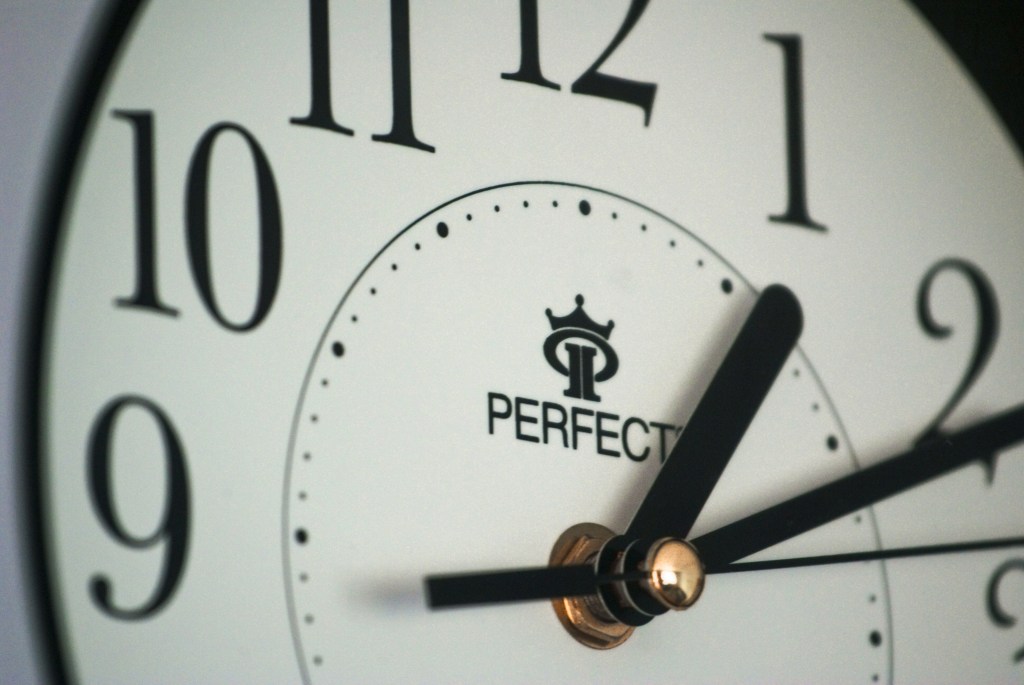
    Tick tock! What will you achieve when the clock strikes midnight tonight?

    If you enjoyed this article, subscribe to make sure you don’t miss the next post!

  • Online Dating Apps Hit or Miss: Entrepreneur’s Review

    Online Dating Apps Hit or Miss: Entrepreneur’s Review

    If there was ever a year that online dating apps could be the answer to those looking for a date, 2020 would be it. For those singles in lockdown or severely restricted to just leaving the home for essentials, meeting singles through social events has become near impossible. Online dating apps seem to be the best solution during the pandemic but are they a hit or a miss?

    I decided to put a few online apps under my entrepreneurial magnifying glass to decide if they were the solution to dating during COVID times. A single friend of mine tried out a few apps but she was doubtful that she would have much success. It was her first time trying out a dating app. Her views are somewhat typical of adults who haven’t used online dating before.

    According to a survey, about 56% of adults don’t view dating apps favourably because of concerns of misrepresentation (lying about age, income, etc), fraudulent activity, or lack of safety (company doesn’t protect their information). This percentage changes with people who met someone online. About 78% who met their partner through a dating app view these services in a positive way.

    As for my friend, we were curious about what her experience with online dating would be like. Would she find her future partner? Or would she be hoping to meet him still?

    Are Online Dating Apps a Hit or Miss?

    The reality is that online dating is a business. To that end, their goal is to keep you on their app as long as possible. In other words, the more you swipe, the more they win.

    If you enjoy an abundance of choices and spending a portion of your day swiping through profiles and engaging in some conversations, you might enjoy online dating. However, if you’re a busy professional who just wants to meet that special someone, mindlessly flicking right and left quickly becomes a frustrating activity to kill time.

    In many cases, my friend had to decide from a couple of photos and a sparse profile with few details (such as city, height, career, and short description of who he’s looking for) whether she wanted to pick the guy or not. She found it hard to decide with so little information.

    In addition, when she did get a match, most matches opened a conversation with, “How are you?” Her textbook answer was always, “Good” or “Fine” because they don’t expect you to say, “Super busy at work” or “Would you believe I’m at a party” or “Super apprehensive if you’re the one or not.”

    After a while, her answers became mechanical instead of genuine. Especially on day two of the chat when the guy would again ask, “Hi. How are you?” Whenever she opened a conversation, she tried to be more creative by looking at the man’s profile and asking a question based on what she read, such as, “Hi. So what places have you travelled to?”

    A more meaningful conversation was a lot more useful at helping her decide if she liked the guy or not.

    The Reality of Online Dating Apps

    It doesn’t matter what reviews say about each dating app. Your experience on the app may or may not be anything like what they describe. As mentioned earlier, dating apps are in the business of roping you in and keeping you there.

    Without knowing what selection of candidates are in your area, you could invest time in creating a profile of yourself only to find things aren’t what you expected. My friend had read about Bumble and liked the idea that women could make the first move.

    My friend is in her forties looking for a man in his forties, and she is confident and knows what she is looking for. She wants a partner to start a family together. But, like a woman going to a steakhouse and hoping to meet a vegetarian, she found herself in the wrong place.

    Her experience on Bumble lasted one hour from downloading the app to deleting it from her phone. What she quickly found out was that the men in their forties on this app either didn’t want kids or already had them and didn’t want any more.

    After an endless succession of swiping no’s, she got rid of the app. She found that online dating was more about getting more users on the app than preparing users for what they would experience.

    A dating app isn’t likely to put the user first, and have “buyer beware”, up to date descriptions on the types of profiles they had. Business-wise, it was too time consuming, and some app users probably weren’t as picky.

    But if the app wanted to put the customer first in the future, she hoped it would have a description of the types of men she would meet before she invested the time in getting an app that wasn’t suited for her situation.

    Photo credit: Adrianna Calvo

    What the Online Dating Apps Don’t Tell You

    The goal of dating apps is to keep you swiping (and single for as long as possible). It would be an impressive story if someone signed up, got a match on the first day, had a great conversation, and closed the app a week later because they had found their soulmate. Ideally, that’s what my friend wanted, but it’s not ideal for the app if people keep signing up and leaving with quick success.

    She tried Coffee Meets Bagel (CMB), Plenty of Fish, and Match.com. On the first day of CMB, she had some matches that she liked. It went downhill from there, with fewer and fewer desirable matches as the days went on.

    The process was also slow because she could only get less than 10 suggested candidates per day. Then she would have to wait until noon the next day for more suggestions. She could also browse about 10 additional candidates if she did a search. However, with these candidates may not meet her must haves.

    Eventually she became more desperate (or daring) and widened her search area from 10 km to 20km. Within minutes, she found guys who had picked her. One man lived in another country. Another man was 20 years older than her, and other was 20 years younger.

    These matches alarmed her because that meant they had seen her profile some time ago in order for them to have “liked” her already. For example, there was a man who liked her who lived in another country. She would never choose him in return because she wasn’t interested in a cross-border relationship.

    From the customer’s point of view, she felt that she should have been able to select criteria that would work both ways. For example, if she wasn’t interested in viewing profiles of men who were 20 years older than her, then men who were 20 years older shouldn’t have access to her profile either.

    From the business point of view of the dating app, I could see why they would not want these types of “two-way” limitations. It gave the app a bigger pool of candidates. A guy 20 years older than her could “like” her, hoping that one day, she would like him back, not knowing that she never will. It’s like encouraging people to be optimistic about something that wouldn’t happen. To me, this is one aspect of online dating that is a “miss.”

    Summary

    It’s possible to meet a perfect partner on an online dating app. Success stories boast that these apps are a “hit.” But for those like my friend who downloaded and deleted a series of online dating apps during the pandemic, these apps were a “miss.” The main purpose of an app, like any business, is to keep you coming back for more. Given the choice between matching you to your ideal partner or keeping you swiping, these apps are designed to keep you swiping and searching. If you’re lucky, you’ll find the hidden gem you’re looking for.

    If you enjoyed this article, subscribe to make sure you don’t miss the next post!