Tag: family

  • Celebrating Mother’s Day: Honoring Women Who Shaped History

    Celebrating Mother’s Day: Honoring Women Who Shaped History

    Mother’s Day is more than a day of flowers and brunch—it celebrates what mothers do for us. Observed in many countries around the world, Mother’s Day has a rich history that I’d like to share in honor of the amazing moms around the world.

    The modern American version of Mother’s Day began in the early 20th century because of Anna Jarvis. Jarvis wanted a national holiday to honor mothers’ sacrifices. In 1914, President Woodrow Wilson officially proclaimed the second Sunday in May as Mother’s Day.

    While we often celebrate our own mothers, I’d also like to recognize mothers who made history while raising children. Three examples stand out:

    Coretta Scott King, wife of Dr. Martin Luther King Jr., and civil rights leader and mother of four. She founded the King Center and played a vital role in making her husband’s birthday a national holiday.

    Marie Curie, the first woman to win a Nobel Prize, was also a devoted mother. Despite facing societal barriers, she raised two daughters while conducting groundbreaking research in physics and chemistry.

    Maya Angelou, legendary poet, author, and civil rights activist, was a single mother who raised her son while accomplishing literary works. She inspired generations.

    On Mother’s Day, we honor not just the daily care mothers provide, but also their strength, resilience, and contributions to society. Whether through quiet sacrifices or bold public actions, mothers shape families—and the world.

  • A Story: How Do You Unwind? 

    A Story: How Do You Unwind? 

    Daily writing prompt
    How do you unwind after a demanding day?

    After a long day, each family member returns home to relax. Everyone has their own routine after work or school, and the most important thing is finding some sort of release from the day’s stress. But even though unwinding after the day brings the family together, they also need time alone.

    Father

    The key turns in the lock, and Dad steps inside, glad to be home after a long day at work. The smell of dinner pulls him to the kitchen, and he asks how his wife and kids are doing. He eats quickly while adding to the family conversation about weekend plans and asking about school and what’s happening that weekend.

    After dinner, he drops onto the couch, happy to catch up on recent news in the newspaper and TV news channels. The kids pile into the room much later, and they watch a family drama together. He wonders where his wife is – she wouldn’t want to talk with him anyway – she doesn’t like to hear about his work stress. If he’s not too tired, he plays games with the kids before bedtime.

    Mother

    Mother watches while her husband and children eat dinner and talk about events at school and in their city. Then she puts away the leftovers and washes the dishes while she thinks about all the other household tasks that she needs to complete the next day. She checks if the children are doing their homework. Her husband is relaxing in front of the TV and not speaking to her. They usually don’t talk because she wants to remind him of all the millions of tasks that they need to do.

    Then she packs the children’s lunches for the next day. This weekend, she will be working part time so she makes a checklist of what she needs to prepare – what outfit to wear, what lunch to bring, what the kids need to do while she’s at work. When her day is done, she looks forward to doing a little reading before bedtime.

    Children

    The school day was long so the children can’t wait to leave the classroom and go home. They first go to the kitchen to grab snacks and watch after-school cartoons. Their mom is busy preparing dinner. TV time is one of the best times of the day.

    If they are lucky, Mom cooks something they like for dinner and mealtime will be quick. Otherwise, dinner will be slow if they don’t like the food. After dinner, it’s the unpleasant task of completing homework. Sometimes homework is fun, and sometimes it isn’t. Then they chat with their friends or find their Dad and watch more TV. 

    All too soon, it’s time for bedtime and lights out. When their parents think they have gone to sleep, one kid turns on a flashlight and starts to read a book under the sheets.

  • Dreaded Questions: “How Old Are You?”

    Dreaded Questions: “How Old Are You?”

    Daily writing prompt
    What is one question you hate to be asked? Explain.

    If there’s one question I hate being asked, it’s “How old are you?” Throughout the different stages of my life, I vacillated from welcoming to not caring to disliking that question. 

    As a child, age is something we celebrate down to the smallest detail. You’re not just six; you’re six and a half. You’re not simply eight; you’re eight and three months. Every added fraction of a year is a milestone, a step closer to the next exciting stage of life.

    Then, as a teenager, age becomes a frustrating boundary. It takes forever to reach the magic age of eighteen. You’re constantly reminded of what you’re not old enough to do—too young to drive, too young to go to late-night parties, too young for independence. The years seem to stretch endlessly before you, filled with rules and restrictions.

    But then, something shifts. You finally reach the legal age for certain privileges—driving, voting, entering clubs. Suddenly, answering “How old are you?” feels like a badge of honor. You say your age with pride because it now represents newfound freedom. You can’t wait to show your ID card.

    Yet, time passes, and one day, that same question feels different. When you realize no one is checking your ID anymore, you wonder—do I look older? Am I showing my age? You want to show your ID card to prove you’re still young enough to be questioned.

    As the years go by, you don’t want to be asked about your age anymore. That question is a reminder that you’re older. Your parents are old. You’re not a kid anymore. You have your own kids.

    By now, your experience and maturity should speak for themselves. And more importantly (unlike when you were exactly eight years and three months old), you have trouble remembering exactly how old you are because you don’t want to know your age! Chances are, at this stage of your life, you might have a friend who has been celebrating a twenty-first birthday for the past ten years.

    Then, you hit the senior years, and it’s like experiencing the same challenges of a teenager all over again. Age once again determines what you can or can’t do but in a different way. Are you old enough for retirement? Old enough for senior discounts? Old enough to be taken seriously or dismissed as just “old”?

    At some point, you might even forget how old you are. Your teenage years might feel like yesterday. Your cousin doesn’t live in the same city anymore – she moved twice already in twenty years. And you aren’t the youngest in your friend group – you’re the oldest. You’re starting to realize the passage of time.

    Ultimately, no matter how old you are, the question carries weight. Are you too old, too young, not old enough, or not young enough? The question, “How old are you?” is asking for a number—but how you feel about it changes with every year.

    Thanks for reading!

  • Chinese New Year: Traditions, Wishes, and the Year of the Snake

    Chinese New Year: Traditions, Wishes, and the Year of the Snake

    Chinese New Year is one of the most significant celebrations in Chinese culture. It’s the beginning of the lunar new year and is a time for family reunions and festive traditions. Each year is associated with one of the twelve Chinese zodiac animals. This year is the year of the Snake.

    Traditions and Festivities

    Chinese New Year is celebrated with a variety of customs that bring luck and drive away bad fortune. Families clean their homes before the new year to sweep away misfortune and make way for good luck. They also decorate their homes with red lanterns, couplets with auspicious phrases, and images of the year’s zodiac animal.

    One of the most cherished traditions is the reunion dinner on New Year’s Eve, where family members gather for a grand feast. Traditional foods like dumplings (symbolizing wealth), fish (symbolizing abundance), and glutinous rice cakes (symbolizing growth and success) are served.

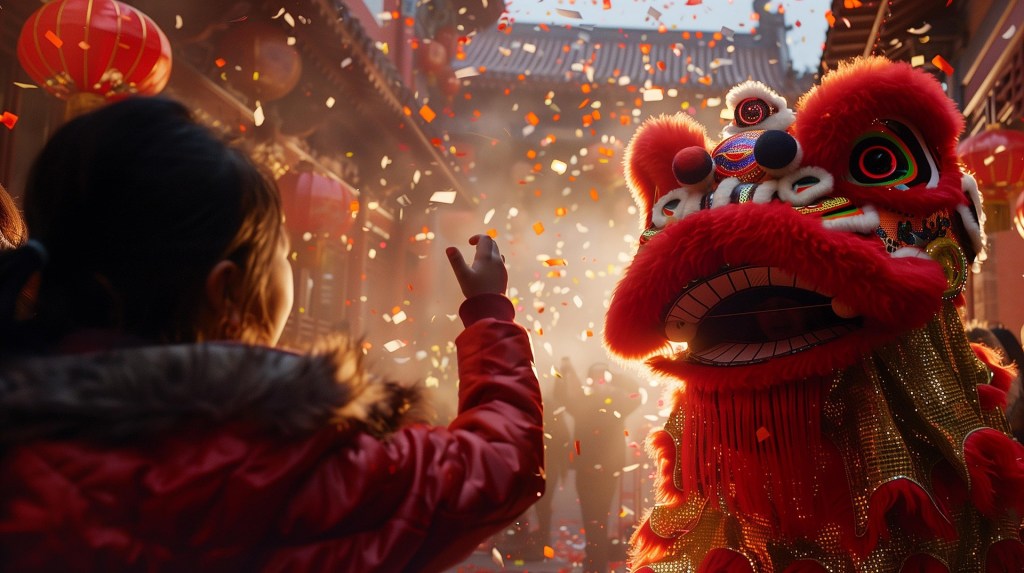
    Red envelopes, or hongbao, filled with money, are given to children and unmarried young adults as a symbol of good fortune. Fireworks and lion dances are also common, as they are believed to scare away evil spirits and invite prosperity.

    What People Wish For During Chinese New Year

    During this festive season, people exchange well wishes and blessings for the new year. Common greetings include:

    • (恭喜发财) – Wishing you prosperity and wealth
    • (新年快乐) – Happy New Year
    • (身体健康) – Wishing you good health
    • (万事如意) – May all things go as you wish

    The Special Meaning of the Snake in the Chinese Zodiac

    The Snake is the sixth animal in the Chinese zodiac cycle and is often associated with wisdom, intelligence, and mystery. People born in the Year of the Snake are believed to be intuitive, elegant, and highly perceptive. They are often seen as deep thinkers who approach life with strategy and grace.

    In Chinese culture, the Snake is associated with transformation and renewal. It symbolizes rebirth, adaptability, and resilience. The Year of the Snake is often considered a time for reflection, self-improvement, and making moves toward success.

    For those celebrating the Year of the Snake, it is believed to be an ideal time to embrace change, pursue knowledge, and harness inner wisdom to achieve one’s goals.

    Key Takeaways

    Chinese New Year is a time of joy, tradition, and optimism for the future. Whether it is through festive gatherings, exchanging good wishes, or honoring zodiac animals like the Snake, the celebration carries deep cultural significance. As people welcome the new year, they embrace the hope for prosperity, good health, and success, making it one of the most cherished and meaningful holidays in Chinese tradition.

  • Three Wishes, A Different Fate

    Three Wishes, A Different Fate

    Getting three wishes from a genie seems like the perfect solution to all life’s challenges. Any difficult problem could be solved. Not enough money to pay for a mortgage? Job searching for over a year because of a bad economy? Solution found! Just ask a genie for millions of dollars. Can’t fix a leak in the ceiling? Constantly cooking bland meals? No problem. Ask the genie to fix the roof, and to gift you with an appliance that will make delicious meals. 

    If I had three magic genie wishes, I would ask for things that would get me set for life. For example, a literal money tree that grows hundred dollar bills. I wouldn’t need to work unless I wanted to, and all my bills would be paid off if I wait for a good money harvest. I could also help friends and family with their money problems. 

    My second wish would be for the power to heal. This would prevent people I care about from dying from fatal injuries or long-term illnesses. 

    My third wish would be for time. There were so many times when I didn’t have enough time to get something done. For example, if I wanted to go to two events happening simultaenously. I have to prioritize and go to one. Or I waste time working on something that takes longer than anticipated, like putting together a piece of furniture. When I’m done that project, hours have passed and I barely get anything done that day. If I could slow down time, or rewind the day, imagine how productive I could be.

    Would I get happiness from these wishes? In the long term, I’m not sure. Friends and family might pressure or guilt me into helping them. (You’re infinitely rich – help me buy a car.) The government might want to tax me on all my income if they find out about my money tree. I might get into arguments with people – such as whether or not to prolong the life of a loved one. Just because I can keep fixing each health issue they encounter doesn’t mean that they want to be continuously made healthy to live forever. 

    As for having infinite time, perhaps I would not appreciate time as much as before. Instead of learning to prioritize, I would be able to rewind the day and take as long as I need to get something done, or go to both events that are the same time. At some point, the novelty would perhaps wear off and I would get bored. People would also think about me differently if they knew I had such a gift. Such as having higher expectations: if I have all the time in the world, I should have time for all my friends and family. If I have all the time in the world, I should be able to work on any task until I get it done.

    Overall, when things are scarce or finite, such as money, health, and time, we appreciate them more. Having more of these precious things would be great for solving some of the problems we face every day, but it may also create issues. Would I want these wishes regardless? I’d probably say yes.

    Thank you for reading this post! If you enjoyed this article, subscribe to make sure you don’t miss the next post!

    Daily writing prompt
    You have three magic genie wishes, what are you asking for?