Tag: goals

  • What I’d give you if I won the lottery

    What I’d give you if I won the lottery

    Bloganuary writing prompt
    What would you do if you won the lottery?

    What would you do if you won the lottery? Would you spend it all or would you give it all away? For sure, I wouldn’t do what most expect and here’s why.

    I discovered some interesting statistics about lottery wins of significant amounts. There is a myth that most people go broke after going on a spending spree and purchasing whatever their heart desires. The truth is, these types of dramatic stories make for catchy news. The reality is a bit different.

    For example, you’ll find a statistic like this in USA Today: “Nearly one-third of lottery winners eventually go bankrupt within three to five years, which is more likely than the average American.” Stories about rags to riches and back to rags are like a tale warning us to stay away from excessive spending and unwise long-term planning. There is also conflicting research.

    Studies have contradicted such dramatic myths. Researchers found that “all else being equal, money is associated with greater life satisfaction and well-being. Of course, money on its own may not bring happiness.” The studies found that winners did not throw away their wealth on “extravagant purchases.”

    So before you win, ask yourself, “What’s your plan?” Do you want your life to change for the better after you win a huge sum? 

    Will there be a moment when the clock strikes midnight and your fortune disappears? If so, then indulge in all manner of extravagance! Buy mansions, buy luxury vehicles, like the $18 million lottery winner who spent all his winnings in ten years and returned to his old job. Your fortune will disappear quickly enough.

    If not, spend wisely, learn about investing, and enjoy a whole new level of lifestyle. The research found that more money can mean a better life if you live within your new means. Certainly, if you don’t have to worry about everyday expenses anymore, life can be incrementally more fun and relaxing!

    You might have watched the movie It Can Happen to You, which is based on the true story of a police officer who promised half his lottery ticket winnings to a waitress as a tip because he didn’t have enough change. In the movie, the characters became millionaires who had the time of their lives spending their winnings on making complete strangers happy.

    For certain, if I hit the jackpot, I would do the same and buy things for people – paying it forward – as the expression goes.

    If you won the lottery tomorrow, what would you do with all the extra cash?

    Thanks for reading this blog! To make sure you don’t miss the next one:

  • 5 Reasons to Join a Writing Group

    5 Reasons to Join a Writing Group

    Do you feel like you’re the only one in the world striving hard to achieve your writing goal? If you do, you’ve found one excellent reason to join a group. Writers often work on their masterpieces by themselves, stopping now and then to recall the spelling of a word or ponder whether to make the paragraph longer or shorter. But why ask yourself those questions when you could ask a bunch of like-minded individuals? Here are five reasons to join a writing group. 

    Social conversation with like-minded people

    Some writing groups like to get together to talk over a beer or a coffee. Now you might wonder how that’s different from socializing with friends. The difference is a group of writers talking about life, video games, jobs, or movies will eventually start talking about stories.

    They’ll compare movie plots with plots in novels. They’ll talk about historical events and how those events can become plots in stories.

    Life conversations revolve around writing. How does one find time to write if one has a full-time job? How do writers get inspiration for their writing? When is the best time of day to write?

    Just being around like-minded people can get you in the mood to either start writing or keep writing, knowing that other people face the same struggles.

    Discussions about writing

    Writing groups are a safe space to hold discussions in-person or online about writing. Unlike casually chatting with your friend (who doesn’t write outside of work) about a novel you are working on, your writing group is not only interested in what you’re doing, but they can provide you with support. They empathize with your struggles when you have writer’s block. 

    They know the pain when you forgot to save 1000 words because you shut off your computer by mistake at 3 a.m. Most importantly, they might have suggestions on books and other resources to help you write better or get over the hurdle of developing your protagonist.

    You have a group of people who have been where you are and know what you’re going through.

    Ideas, resources, and industry information 

    A writing group that meets in person and has an online discussion platform can keep the discussion going after an in-person meeting. For example, if the group sets up channels on a platform such as Discord, they can share thoughts under specific topics, such as conversations for future get togethers, self promos for books, writing topics, publishing topics, and critiques of each other’s work. 

    They can also share resources, such as writing books they recommend, and thoughts on industry trends for best ways to promote books, and what types of literature is most popular.

    Accountability for writing goals

    You can find people in the group who are looking for accountability partners. Some people find it difficult to find motivation to write or stick to their writing goals if they are easily distracted or overwhelmed by life’s challenges and distractions (good and bad).

    If you have an accountability partner, you know you will report to someone at the end of a designated time period to tell them about your writing progress. Between the two of you, you don’t want to be the one who didn’t achieve your writing goals!

    An audience

    The most important reason for joining a writing group is you already have an audience. This is especially important if you are a first-time writer and you don’t have an audience for your work. Your writing group is there to support you on your journey to finish (or just work on) your writing project. You have an audience who will give you feedback and comments and encourage you to keep writing.

    Key Takeaways

    Joining a writing group has a lot of perks. You’ll be in an environment of supportive, like-minded people who face some of the same writing struggles that you do. They can help you with resources and advice and hold you accountable to your writing goals. Also, if you’ve lost the motivation to write, your writing group can inspire you to start thinking about writing again.

  • Are You Feeling Lost?

    Are You Feeling Lost?

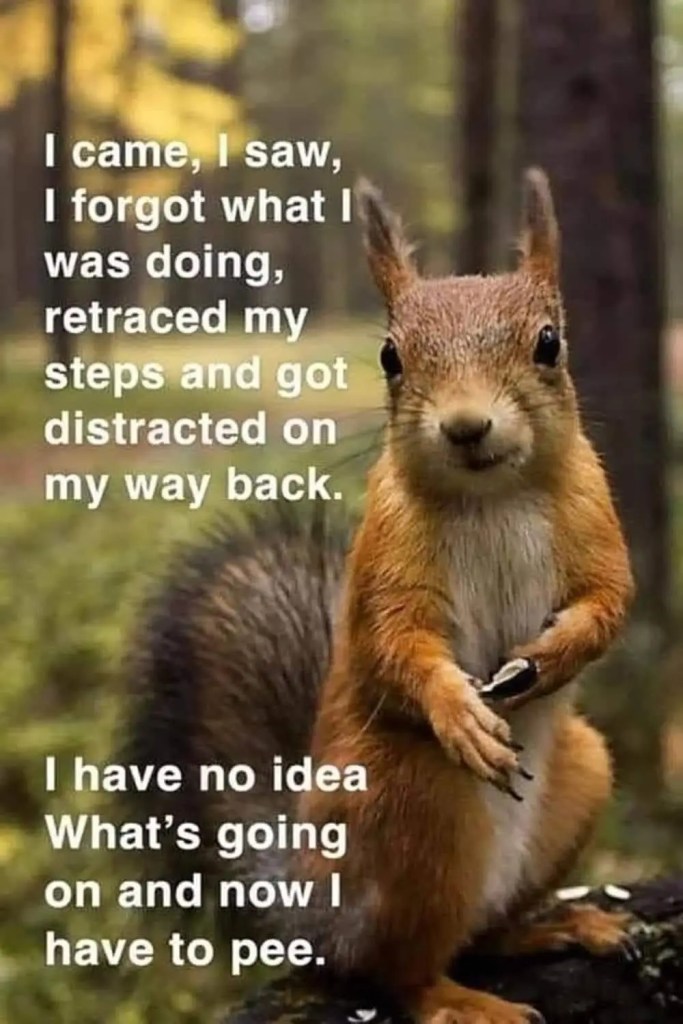
    Have you ever walked into a room and realized you don’t know why you’re there? Then you walked back out to retrace your steps and recover your memory from ten seconds ago. It happens sometimes.

    It can happen anywhere. You can be at the store and not remember what brought you to that aisle.

    You can be at work, distracted by a message, and find yourself sitting at your desk, fingers hovering over your keyboard while you try to recall what you were supposed to be working on.

    Maybe it’s time for a break. Happy Friday. Happy weekend. Happy whatever occasion you want to celebrate.

    Image credit: source unknown.

  • How to Conquer Your Fears

    How to Conquer Your Fears

    Fear is scary. It can physically and mentally cripple you. For example, people have gotten stage fright and forgotten their lines while standing, momentarily paralyzed on the stage. Have you had a similar experience? What are you afraid of?

    Everyone is afraid of something. The harder part is facing your fears and conquering them. The secret to defeating your fears is to break them down into pieces. 

    Here are four fears and how to conquer them.

    Fear of becoming overwhelmed. In life, we can be overwhelmed by everything we need to do, from personal to professional projects. Selling or buying a house, leading your first major project, or starting a job that is different from what you’ve done in the past. You are hit by a tsunami of questions – what do you do first? What if you forget to do something important? 

    The first step is to make a plan and break down a major task into a series of steps. If necessary, get help from a mentor or an expert or someone available. Ask for advice on what to do when buying a home. See if a coworker can help with a piece of the project. Just work on one small task at a time, instead of taking on everything as one goal.

    Fear of things. Phobias are often out of your control. You just fear what you fear, such as spiders, snakes, heights, or tight spaces. 

    But if you arm yourself with knowledge, you can slowly start to chip away at your fear. For example, if you fear spiders, read a book about spiders and learn everything you can about them. The question is WHAT should you fear about your fear. Being bitten by a spider and reacting to the venom is a true concern. Being fearful of a tarantula because it is sitting next to you, minding its own business and enjoying the weather – that’s a fear in your mind. Knowledge is power. 

    Fear of situations. Public speaking is a term that many people dread. You have no control over how people think of you. Will you make a mistake when you speak? Will people judge you and think that you’re awful even though you thought your presentation was flawless?

    To overcome your fear of these types of situations, put yourself in these situations more often. (This probably seems like a nightmare in itself.) Start with something small, such as going onstage to announce the next speaker. Or making a presentation in front of a small group of supportive friends before you start presenting in front of a large group of prospective clients.

    Fear of failure. Everyone fears failure. It’s embarrassing, and it’s a terrible feeling to disappoint yourself or someone else. However, failure gives us painful but valuable lessons. Any business owner will tell you that the road to success is not easy and failure (or failures) is something you encounter on your journey.

    To succeed, you develop mental toughness. When failure happens, ask yourself what you would do differently next time. What lessons did you learn? In business, it’s tough when you think you have a prospective customer or client, and after much discussion, talks fall through. Or you find you have successfully closed what turns out to be the client from hell. It happens. It’s a learning process.

    We face our fears every day. Today, on Halloween, take a moment to think about your greatest fears and how you will overcome them. 

    If you liked this post, subscribe so you don’t miss the next one!