Tag: history

  • Why Is February the Shortest Month? 

    Why Is February the Shortest Month? 

    February is an oddity. While the other months have at least 30 days, February alone has just 28 (or 29 in a leap year). But why?

    The Roman Calendar’s Quirks

    The origin of February’s short length goes back to ancient Rome. The earliest Roman calendar had only 10 months. To sync the calendar with the lunar year, the Roman king Numa Pompilius added January and February to the calendar. 

    However, the Romans considered even numbers unlucky, and to avoid an “unlucky” year, months were adjusted to have either 29 or 31 days—except for February, which was stuck with 28.

    Leap Years and Adjustments

    Later, Julius Caesar introduced a leap day to be inserted in the calendar every fourth year, so leap years kept things aligned with the solar year. The Gregorian calendar, adopted in 1582 by Pope Gregory XIII, refined leap year rules but kept February as the odd month out.

    Do People Actually Know How Many Days Are in Each Month?

    It’s easier to remember that February has 28 days (and 29 days every four years) because it is so peculiar. The number of days for the other months can be trickier to recall. 

    A surprising number of people rely on tricks to remember month lengths. Some use the rhyme:
    “Thirty days hath September, April, June, and November…” Others prefer the knuckle method: counting the peaks and dips of the knuckles on their hands to determine 30- and 31-day months. But ask someone off the top of their head how many days are in, say, August, and they might hesitate. 

    The next time you notice February’s shorter length, remember: it’s all thanks to ancient superstitions and the quirks of the Roman calendar.

  • Why History Must Be Read in Many Languages

    Why History Must Be Read in Many Languages

    How do you know if you’re reading a good history book or a bad one?

    This video I watched stated that a thirty-second test will help you to determine the quality of the history book you’re reading. If the book is about a part of the world that you’re not from, then flip to the bibliography at the end.

    Do you see any sources in the language of the country that you’re reading about? If there aren’t any, the advice would be to toss the book. For example, to get a more authentic experience about the history of the Middle East, the sources should ideally be in four of the languages spoken in the area to get the best authentic experience. Don’t settle for a foreign translation of the history of the place you are reading about.

    Here is the video that makes this point about authentic history.

  • I Was Part of a Famous, Historical Moment

    I Was Part of a Famous, Historical Moment

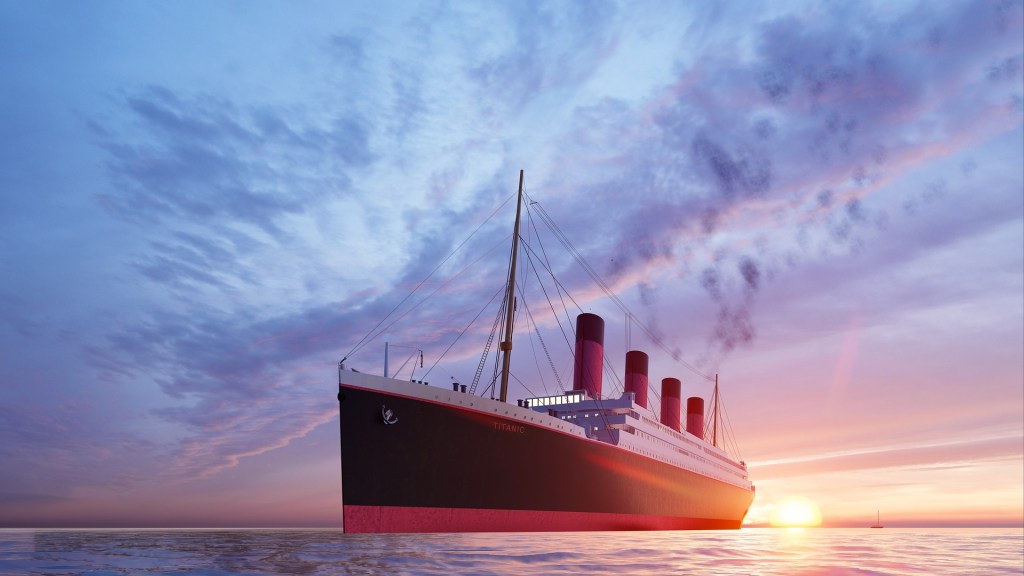
    Many people have heard of the tragedy of the Titanic. I was pretty much right there, experiencing the life and death of the passengers. Let me explain.

    I found myself on the dock where the Titanic was waiting for passengers to board. It was part of a museum display, and it was like traveling back in time to 1912 because we were each handed an identity card. I wasn’t a museum visitor anymore. I was a Titanic passenger, and the card told me my name and who I was. I was a famous actress traveling in first class. And by the end of my journey, I would find out if I survived.

    I could feel myself transported back in time when I walked into the famous room with the staircase and clock. I saw menus that described what I ate as a first-class passenger, and I walked through some of the rooms on the historical ship.

    Then, near the end of my journey, I touched a piece of ice that was at the same temperature as on that fateful night when the ship sank.

    In one display room, I read letters written by people who had traveled on the ship (and sent mail before that night). Some people weren’t even supposed to be on that ship but circumstances put them there. Sometimes, one small decision can have severe consequences.

    Finally, at the end of our tour, we disembarked from the ship. Along one wall, we saw a list of the names of all the passengers. I eagerly scanned the names until I found mine. I was alive! Then I searched for my friend’s name. He was a rich businessman, also traveling in first class. He didn’t make it. It was chilling to think this was once a real person. I felt sad that we had both boarded the ship and only I had made it.

    I reminded myself it was just a museum exhibit, but it truly had brought that moment in history alive.

    Daily writing prompt
    What major historical events do you remember?
  • What If Everyone on Earth Spoke the Same Language

    What If Everyone on Earth Spoke the Same Language

    Let’s imagine for a minute that we aren’t in a sci-fi movie. When you woke up this morning, everyone understood each other because we all spoke the same language. Convenient, right?

    We could travel from country to country without language barriers and easily communicate with people on other continents. Seems ideal at first. But when you examine the situation more closely, you’ll see why this reality may not come true. 

    Language is Culture

    Language is so complex that it’s not easy to create a language that is spoken worldwide. Every language tells you something about the people that speak it.

    For example, look at the number of words we have to express colors in English. The color red has over 20 synonyms for red (vermillion, scarlet, cherry, cerise, wine, ruby, crimson, coral, rose, auburn, bloody, blush, ruddy, coral, sanguine, maroon, florid, poppy, rusty, rouge). These words allow for beautiful imagery and poetry when we describe the rainbow.

    In contrast, colors in Chinese are expressed as the color (red) with modifiers (light red, dark red). There isn’t as much variation. But the Chinese value family, so the words to describe family are far more descriptive and precise than in English. It is not enough to say sister, brother, aunt, and uncle. They need to be exact. So if you ask how to say “aunt” in Chinese, you need to be specific and say, “How do you say aunt if she is your mom’s older sister”?

    People around the world have different cultures and cultural values. How could we have a universal language that captures all the world’s cultural values?

    Language is a Bunch of Concepts

    Often, we hear someone say, “I don’t know how to say it in English,” and they don’t mean they don’t know how to translate it into English. They’re saying that English doesn’t have such a concept. 

    Counting in French involves math, for example. Learning to count to twenty is useful because eighty is quatre-vingts (four twenties) and ninety-seven is quatre-vingt-dix-sept (four-twenty-seventeen).

    The Japanese language has different ways of counting items, depending on what the object is. For example, “one” when counting animals is ippiki, but “one” when counting umbrellas is ippon, and “one” for one drink is ippai. You can’t just say the same word to mean “one” cat and “one” pencil.

    In Cantonese, they classify food as “hot” or “cold,” but this concept doesn’t refer to temperature. Instead, it refers to yin and yang properties of food. So spicy food, mangos, chicken and lobster, for example, are “heaty” while pork, watermelon and crab, for example, are “cool.”

    It would be a challenge to capture all these concepts for all the languages of the world into one international language. 

    Language is History

    Language is a record of our history. English baffles people with its inconsistent spelling and pronunciation. For example, “through” and “threw” sound the same. But the “ough” sounds different when you say “bought” and “thought.” And “ough” changes its sound again when you say “though” and “sew.” 

    One reason for this inconsistency is how English evolved. “Knight” and “night” sound the same in modern English. But long ago, we did pronounce the “k” and the “g” in knight.

    English is continuing to evolve to be more inclusive. Instead of actor and actress, you can say actor for male and female actors. “Waiter” and “waitress” are evolving into “server.”

    Technology is also influencing language. American Sign Language (ASL) uses both hands to communicate concepts. As the popularity of the mobile phone and face-to-face calls became commonplace, ASL has evolved so it is possible to communicate while signing with one hand and holding the phone with the other hand.

    Key Takeaways

    What if everyone on earth spoke the same language? It would make communication a lot easier. But is it possible to have one universal language? Can one language capture all the nuances and cultures of all the peoples of the world? And can one language suffice to say everything we want to say as we continue into the future? What do you think?


  • How World War II Changed the Lives of Women

    The Second World War permanently changed the lives of women. Most notably, the war opened new career possibilities and changed women’s fashion. Here are some examples of these changes.

    Jobs

    World War II, (1939-1945) resulted in a shortage of people in the workforce because thousands of men had gone to fight in the wars. Prior to the war, women who held jobs usually worked in clerical and service sectors. During the war, they started to work in heavy industry and wartime production plants, in jobs that traditionally belonged to men. They worked as engineers, truck drivers, and construction workers, to name a few examples.

    Rosie the Riveter became an icon of World War II. She was a symbol of the working woman, especially in defense industries.

    Fashion

    Women’s fashion also changed because of the war. Skirts became slimmer and shorter (around knee length) to save fabric and meet regulations. Stockings disappeared and women went barelegged because nylon for civilian use was restricted.

    The Women’s Land Army were women in the rural workforce in Britain. Women from towns and cities were employed to do dairy work, join rat-catching squads on farms, complete horticultural tasks, operate heavy machinery to turn over land for food production, and source and prepare wood from forests. They wore a special uniform to do their work.