Tag: racism

  • Leadership and Race: Are Leadership Skills Affected By Our Identity?

    Leadership and Race: Are Leadership Skills Affected By Our Identity?

    Can we teach leadership skills without considering race and ethnicity? For a long time, I thought leadership was a skill that everyone could learn. But when I wanted to cite an example of a well-known female Asian business leader as an example for this article, I couldn’t think of a single name. I realized I had made an important discovery and after a little more digging, I found an alarming pattern.

    The more research I did, the more I realized leadership in business and one’s chances of earning an executive level position were in fact strongly affected by one’s ethnic background. Asians in the United States, for example, held many professional positions but few top-level leadership positions.

    When I looked at my own personal experiences with race, it was clear that race and ethnicity determined how people perceive you. If that were the case, how could we teach leadership skills so that all races and ethnicities would have a fair shot at executive positions?

    Can Asians Ever Be Canadian?

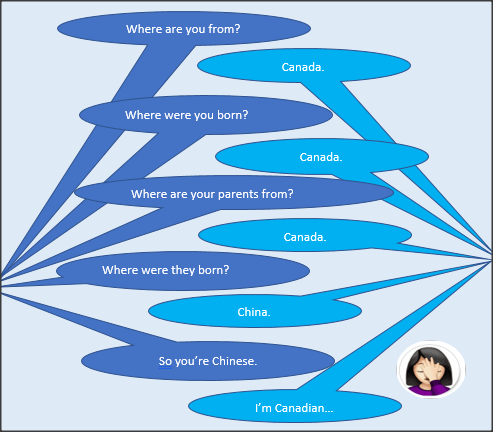
    Asians born in Canada or born in the US (or any nation that isn’t considered an Asian country) are familiar with the following inquisition when they try to explain to people that they are Canadian (or American or something other than Asian).
    I’ve always considered myself to be Canadian. As for role models, I choose them from any ethnic background, although I prefer successful female businesswomen, so that I could aspire to become like them.

    I have quite a few women role models: teachers I admire, bosses that inspired me, and favourite authors. But out of all them, none were Asian. When I looked at my business mentors, the situation was also grim.

    My two business mentors are highly successful millionaires or near millionaires and both are Chinese. They are examples of how immigrants could come to Canada, work hard, and become financially successful. They were leaders that I could follow but they were men.

    The successful women leaders that I could think of were the wives of these men. They hadn’t created their financial success on their own, but they learned leadership skills to help their husbands in their careers.

    I decided to look past my own experience and see if I could find more successful Asian leaders in North America. First, I wanted to establish what qualities I wanted to see in a strong leader.

    What Leadership Skills Should We Teach Managers And Executives?

    When you think of leaders that you admire, what qualities do they have? Are they good listeners? Do they show empathy? Do they inspire you to work hard to attain their level of success?

    The leaders I admire are very good at taking charge, providing direction for the team, and being someone you can depend upon. At the same time, even though they are the leader, or the boss, I never feel like they are demanding me to complete a task. They ask me in such a way that I feel that I’m doing them a favour. A favour that I’m not likely to refuse, of course, because it’s a request from a supervisor.

    Do Asians have the leadership qualities that I’ve identified?

    Maybe they do. And maybe they don’t. The American workforce either lacks Asians that have what it takes to be an effective leader, or they aren’t seen as having the qualities needed for leadership. A closer look at numbers reveals a gloomy situation.

    How High Is the Bamboo (Glass) Ceiling for Leadership?

    A 2010 study cited by Harvard Business Review (HBR) found that “Asians do outperform other minorities and white people when it comes to education, employment, and income.” If they are so successful, then shouldn’t they also successfully climb the corporate ladder as well?  

    Apparently, they don’t have far to climb before they bump into the glass ceiling. HBR used the term “bamboo ceiling” – the equivalent to the glass ceiling. In addition to the 2010 report, it cited a 2015 report on diversity.

    It found that, “Asians represent only 1.5% of corporate officer positions in the Fortune 500, according to 2012 data.” The situation for Asian women was worse because these women represented only 3.1% of executives five tech companies in a study, while Asian men represented 13.5%.

    What could be creating these limitations?

    All races face stereotyping at the workplace. Employment data cited above suggests that Asians are highly competent at finding high paying jobs. Their success may make them appear threatening in the workplace. However, Asians are also perceived to have a critical weakness.

    The HBR article study observed that “stereotypes about Asians lacking social skills make them seem unfit for leadership.”

    An article in Bloomberg suggests that Asian culture encourages communication and networking styles that go against the “mainstream dynamic of assertiveness and directness.” For this reason, Asian Americans are considered as fitting for “low- to mid-level management positions, but not top-level leadership.”

    How Many Asians Are In Executive Positions?

    A Silicon Valley report found that Asians were so underrepresented in leadership positions that they were grouped into other, larger categories. In the report, “Asian men are lumped into a ‘non-underrepresented’ category with white men” while “Asian women are assigned to a category that includes women of all races.”

    These types of numbers were repeated in other industries, where Asians continued to be underrepresented in the executive ranks of companies. See the table below.

    What can be done to increase the number of Asians in top level executive jobs? Could their social skills truly be so lacking that they would be unsuitable leaders? Or would it be possible to teach leadership skills in such a way to compensate for disadvantages from any cultural differences?

    Future of Leadership Skills

    It would be interesting to see the data for other races and ethnicities. What is the ratio of their ethnic group in jobs in an industry, compared to the percentage in executive positions for that industry?

    If a wide gap exists between the lower ranks and the executive ranks, what can be done to level the playing field in leadership?

    From these studies in this article alone, it seems that perception of cultural differences affect how people from different races are promoted to leadership positions.

    In future, one recommendation would be to design leadership training skills that address stereotyping and culture. It’s possible to have talented and skilled leaders equally represented from all ethnic backgrounds.

    If you like this post, subscribe to make sure you don’t miss the next one!

  • Halloween: How a Pandemic Made 2020 the Scariest Year of All

    Halloween: How a Pandemic Made 2020 the Scariest Year of All

    Halloween for most people is the scariest time of the year, but many would agree that 2020 is a whole year to be afraid of. I’ve seen memes warning time travellers to skip this year entirely!

    Unless you’ve been living in Antarctic and isolated from all communication, you would probably agree that COVID-19 deeply touched – I mean slammed – your life off course these past few months. Now that Halloween is around the corner, let’s count down some scaries from this pandemic, starting with the year itself.

    Theme of 2020: Panic Pandemic

    To those who usually say that Halloween lasts just one night – the joke is on them this year. Some have said that this year feels like a Stephen King movie and I would strongly agree. Just consider all that has happened.

    Beloved actors, musicians and athletes have passed away. Killer hornets were on the loose. Staycation and remote work replaced travel plans and commuting to offices on a global level. People lost jobs and businesses closed.

    The scary part is, I’ve built up an immunity to the plight of the unemployed and shops forever closing doors.

    Maybe I’m a monster in the making to be so insensitive, but there’s only so much drama the human body can take over several months. All the news is slowly chipping away at whatever’s left of my emotional reserves.

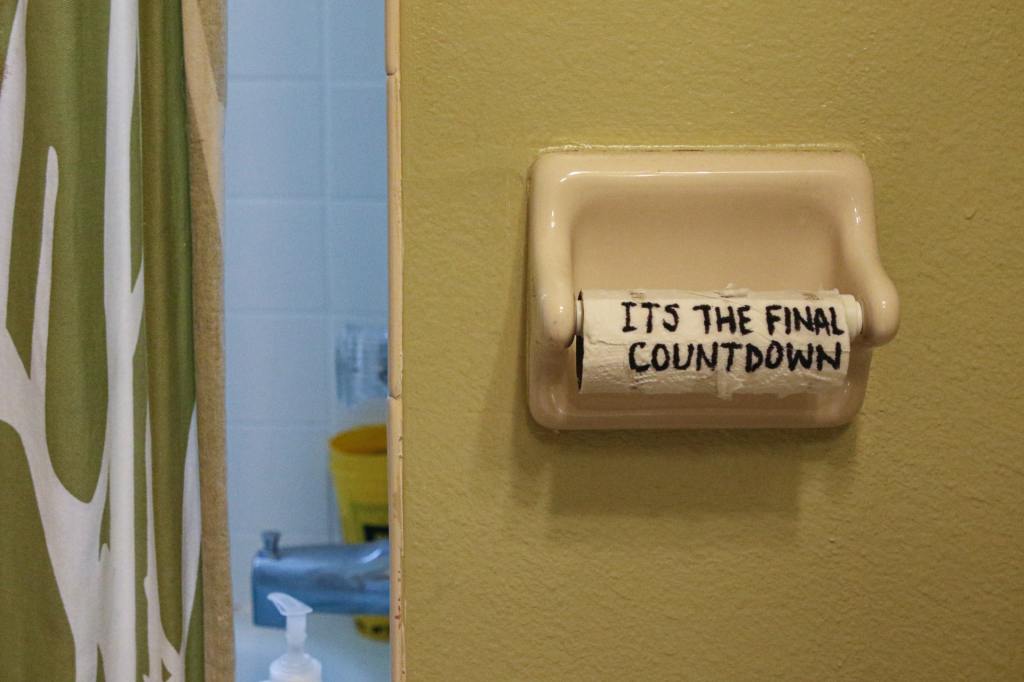
    Some news is too difficult to process so the human brain files it under “it’s the pandemic year.” Otherwise I would spend too much time arguing logic with the illogical. Toilet paper, for instance. COVID-19 is a respiratory disease. I understand the hand sanitizer shortage, but there was also a toilet paper shortage. Finding toilet paper in the store was like finding gold.

    Pandemic Issues that Were Sad and Scary

    Halloween is a time to put on a costume and become someone or something else. But this year, it felt like people removed costumes that they had been wearing for many years.

    Facebook friends and real-life friends became polarized on the election and on COVID: Democrat or Republican, pro China or pro Hong Kong, face masks or no face masks. People did not sit on the fence with these pairings. They sided clearly with one or the other.

    For example, if you were pro-mask, you couldn’t believe how ridiculous, selfish, and uneducated the anti-maskers were in their choice to not wear a face covering. If you were anti-mask, you couldn’t believe how pro-maskers were like sheep who were okay with breathing in contaminated air and giving up their personal freedom.

    People became so offended as they argued back and forth on Facebook that sometimes I would see the ugly aftermath in a follow up post. Someone would say that they had to unfriend someone to protect their mental health.

    Meanwhile, as the year progressed, the number of COVID-19 cases worldwide continued to climb, and so did the death toll.

    It seemed like we were actors in a live action game of WhoDunnit. The bizarre and unusual were normal. Logic could fly out the window as we tried to solve the mystery of what would happen next during the pandemic.

    Those who didn’t know any victims of COVID wondered if the pandemic were a hoax. Those who did know people who had caught COVID-19 who lived or died, were waiting for the shoe to drop. They could be next if they didn’t take the necessary precautions to protect themselves.

    Halloween Doesn’t Bring People Together Anymore

    In previous years, Halloween was one night that brought people and entire communities together. People would decorate their houses, and in some neighbourhoods, children would dress up in elaborate costumes and go door to door, walking in groups, for candy.

    Kids would walk with their friends and adults would walk together, watching their children while talking among themselves. In some neighbourhoods, people seemed to know each other.

    It was also the one time of the year that people would welcome you for walking up to their door and admiring their Halloween decorations. If you live in a big city, this sense of community is not that easy to find.

    I once had a talk with a woman who had decorated her entire house. She said it had taken 15 hours to assemble all the robotic creatures, mood lighting, fog machine, and graveyard. The décor was so elaborate that her house had been featured on the news. She offered me some candy for visiting her, after we had finished our friendly chat.

    In past years, Halloween parties were a wonderful occasion to bring people together to socialize, have fun, and pretend to be someone else. I once went to a Harry Potter themed party for adults. For one activity, we pretended to have magical powers! What a nice change from the adult world where taxes are real and won’t go away.

    Of course, the pandemic changed Halloween this year. Most parents I spoke to weren’t interested in taking their children door-to-door for safety reasons. And just days before Halloween, we were told by health officials to tighten and decrease our social circles because even small gatherings weren’t safe. Many local Halloween themed events were closed.

    Instead of the annual sense of community in some neighbourhoods, this year, we were going to isolate ourselves into our family units and spend even more time at home.

    Halloween Made “Ugly” Acceptable… and Things Did Get Ugly This Year

    Halloween was the one day of the year that bullies didn’t laugh at you for being ugly or weird looking. Fat or thin, tall or short, you were normal.

    No one cared who was behind the costume or the mask. It didn’t matter what race or ethnicity you were, or whether you were rich or poor. For one night of the year, each child going trick-or-treating was equal, no matter what their ethnic or economic background was. Anyone could get some candy and treats.

    By October 30, 2020, however, some major changes darkened this sense of equality. Racism was once again a major topic in the news, with people polarizing over BLM, marches, and violence. Locally, violence against Asians skyrocketed as they were blamed as a race for scattering a virus across the world.

    Friends of mine were yelled at because they were Asian and wearing masks. A friend who was born in Canada didn’t want to wear a mask because he was afraid people would think he was from China.

    And if the racism issue weren’t bad enough, friends and coworkers lost jobs or worked reduced hours. People who lost jobs were accused of being lazy when they applied for government support. People who wanted to work became frustrated when they applied to hundreds of jobs with no reply.

    Polarization spread like a disease day to day. For one night, on October 31, I wished everyone would be equal again. I wished you could put on a costume and be someone else and not be judged for your race or economic class.

    For one night, you were supposed to have fun and enjoy yourself.  Spend time with the kids. Carve a pumpkin or two. Eat some candy. Watch a scary movie.

    Halloween’s Scary Surprise

    I should point out that not everything about the pandemic was bad. I was house bound so much I had time to get addicted to Tik Tok videos. And what I discovered was that people’s view of witches had changed over time.

    Witch influencers with 20K to 100K + followers were making videos and giving out advice about witchcraft, divination, tarot, incense, astrology, spells, and a lot of other topics. Witchcraft was trendy.

    Some videos were a bit creepy. But the traditional idea of witches as evil was non-existent. This year was full of surprises.

    Not everything about the pandemic was dark and dreary after all.

    But it definitely was a strange year, as if the scary and weird part of Halloween had been let loose for 365 days. If you know where I can find a time machine, let me know. I’ll be glad to use it.