Tag: Technology

  • 5 Everyday Objects That Bring Me Happiness  

    5 Everyday Objects That Bring Me Happiness  

    Daily writing prompt
    What are 5 everyday things that bring you happiness?

    Sometimes, happiness is found in the little things that are part of everyday life. Of course, there are the special people (family and friends) who bring me smiles, but there are also everyday things that brighten my day as well. Here are five that stand out:

    1. My Computer

    My computer is like my lifeline. It’s where I write my stories, my blogs, and all of my creative ideas. I need it to enhance my brain power: I learn so much from watching videos or doing research on all kinds of topics. Most importantly, as a remote worker, I need my computer to earn an income. I can’t imagine a life without this valuable piece of technology.

    2. Water (and Tea!)

    Water is the key to my survival. I like it a lot as a drink, and when I add a tea bag to it, it becomes my caffeine to wake me up in the morning. I also enjoy tea with a snack, when I need a break from work, or when I need a quiet moment on the weekend. Water and tea are like vitamins to me.

    3. My Bed

    My bed is more than just a place to sleep. It’s my retreat—a spot to rest, reflect, and even brainstorm new ideas. (You probably saw that coming since I like writing so much and creative people need creative spaces.) Some of my most imaginative thoughts have come to me just before falling asleep or while I’m lying in bed in the morning. It’s a personal space where my mind can wander freely, before thinking about the distractions of the day.

    4. My Phone

    My phone keeps me connected to those who are important to me. Whether I’m making plans, sharing a funny picture, or just sending a quick message, it’s how I stay close to friends and family between in-person visits. It’s also how I stay connected to the world through news, music, social media, and random trivia. It’s a connection to everything happening around me.

    5. Music

    Music influences mood. It helps me stay focused while working or set the tone for a cozy evening at home. When I need a little boost, I turn on something upbeat. When I’m brainstorming or deep into writing, I have a playlist to match that energy. It’s amazing how a song can completely change the atmosphere of the moment.

    We all have objects we use every day, but it’s amazing that they can contribute to our happiness. These five things are a part of my daily life—and they make everything a little bit better.

    What everyday things bring you joy?
  • Screen Time: Pros, Cons, and Finding Balance

    Screen Time: Pros, Cons, and Finding Balance

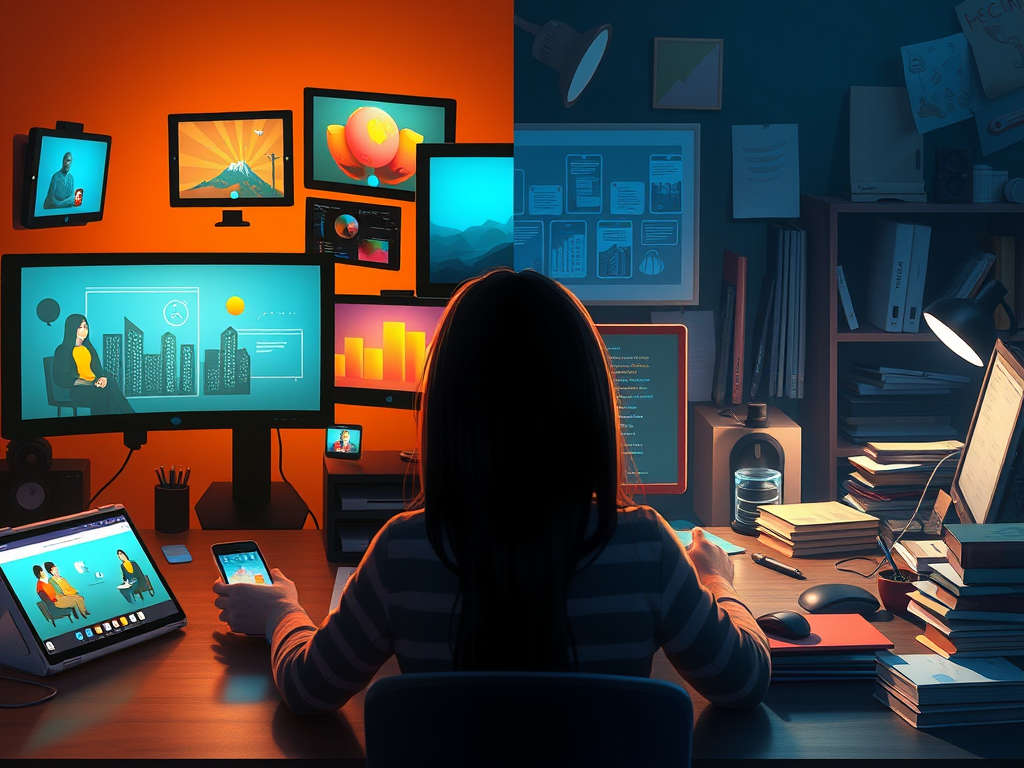
    Screens are now a part of our daily lives, from TVs to smartphones to computers. While they offer incredible benefits, too much screen time can lead to challenges we can’t ignore. Striking a healthy balance is essential to make the most of what screens offer while minimizing their drawbacks.

    The Benefits of Screen Time

    1. Unlimited Access to Information
      Screens provide a world of knowledge at our fingertips. From researching restaurant options to finding directions to learning unusual facts, they make it easy to learn new things, whether for school, work, or personal interests.
    2. Connecting with Others
      Technology bridges distances, helping us stay in touch with family, friends, and colleagues. Whether through video calls, messaging apps, or social media, screens help maintain relationships, no matter how far apart we are.
    3. Educational Opportunities
      E-learning platforms and apps make education more accessible and interactive. People with busy schedules can take courses at a time that’s convenient for them.
    4. Entertainment Options
      These days, a night at the movie theatre can be expensive when you factor in tickets, snacks, and drinks. Streaming a movie for a relaxing night at home can save money and travel time.

    The Challenges of Screen Time

    1. Physical Health Concerns
      Spending long hours in front of a screen can lead to eye strain, headaches, and poor posture. Not to mention the hazards of falling asleep so that your smartphone falls on your face. Over time, too much screen time can impact overall health, especially when combined with a sedentary lifestyle.
    2. Mental Health Impacts
      Excessive screen time, especially on social media, can contribute to stress, anxiety, and feelings of inadequacy. The constant notifications and information overload can make it difficult to unplug and recharge.
    3. Disrupted Sleep
      Blue light from screens can interfere with the body’s natural sleep cycle, making it harder to fall asleep and stay rested. Late-night scrolling or streaming often leads to poor sleep quality.
    4. Reduced Real-World Interaction
      Heavy reliance on screens for communication can sometimes take away from face-to-face connections and meaningful interactions in the real world.

    Finding the Right Balance

    To get the best of both worlds, it’s important to regulate screen time. Set boundaries, like limiting screen use before bed or designating device-free zones at home. Include offline activities, such as exercise, reading books, or spending quality time with loved ones. Using tools like screen time trackers can also help build healthier habits.

    By finding a balance, we can enjoy its benefits while protecting our well-being.

  • How has technology changed your job?

    How has technology changed your job?

    Daily writing prompt
    How has technology changed your job?

    Technology has changed the way I work, giving me more flexibility, and saving me valuable time and energy.

    Technology has made it possible to do an office job by working from home. When I work remotely, I am more focused. Without the distractions of side conversations or office noise, I can concentrate better on my work. Having flexible hours makes my days less stressful. If I’m tired, I sleep in and work later, for example. I also get to wear comfortable clothes and walk around the office in socks or slippers.

    Collaboration on projects with individuals in different time zones has also become much easier. Tools like Slack, Google Drive, and project management software allow for quick communication and file sharing, reducing the need to meet in person. This means work can continue around the clock as team members contribute at different hours.

    Another major advantage is the elimination of a lengthy commute and dealing with traffic jams. Travel time is now used for more useful things, like finishing work earlier, doing some housework, and running errands.

    Technology has also allowed me to make better use of breaks. Instead of being stuck in an office breakroom, killing time until I go back to my desk, I can spend fifteen minutes quickly completing some chores so I don’t need to do them later. This flexibility has greatly improved my work-life balance.

    Another great benefit is not having to worry about the weather. No more stressful drives through heavy rain or snow! I can avoid the hazards of bad weather and go out when the weather is better.

    Lastly, technology has made me more aware of online safety. Part of my job now includes being aware of cybersecurity and data protection. I take extra precautions to safeguard company files. It’s no longer sufficient to just show up at the office, turn on the computer, and type away.

    Overall, technology has significantly improved my work life, making it more efficient, comfortable, and globally connected.

  • Is AI Killing Creativity or Expanding It?

    Is AI Killing Creativity or Expanding It?

    Artificial Intelligence (AI) is becoming a part of every aspect of our lives—from writing and art to music and filmmaking. I’ve seen framed, AI-generated pictures at a local coffee shop, chatbots that can craft entire stories, and videos created by inputting ideas. But this rapid advancement brings up an important question: is AI enhancing creativity or killing it?

    Some argue that AI is a tool, just like a paintbrush or a camera. It can help artists brainstorm ideas, automate tedious tasks, and create work that they need assistance with. AI-powered design software, for example, allows creators to explore variations of a concept within seconds, helping them refine their vision faster than before. Talented storytellers with limited budgets can use AI to illustrate their tales for them so they aren’t limited to words on a page.

    On the flip side, critics argue that AI-generated content leads to generic, soulless creations. AI steals from the original artists without giving them credit. For example, it creates a painting in the style of an artist and calls it AI art. People who want to make money but cannot write search for ways to use AI to quickly and cheaply write stories for them. However, will true artistry be devalued if people consume AI-generated content without appreciating the effort that traditionally goes into the creative process? Some fear that creative jobs could disappear altogether as businesses turn to AI for cheap, efficient content production.

    But history has shown that technological advancements don’t eliminate creativity—they shift it. Photography didn’t kill painting, and word processing didn’t end story writing. Instead, they expanded the ways people can create and express themselves. Perhaps AI is just the next evolution, challenging humans to redefine what creativity means.

    What do you think? Is AI a powerful ally for artists, or is it taking the soul out of creativity?  

  • Celebrating Women Who Changed the World

    Celebrating Women Who Changed the World

    International Women’s Day, March 8, is a day to celebrate women: your mother, your sister, your daughter, your spouse, your friend, your coworker… any woman you would like to applaud. I would like to celebrate the achievements of remarkable women who made lasting impacts in history, science, and innovation. I’m highlighting three extraordinary people: Wu Zetian, Hedy Lamarr, Judith Love Cohen, and Elizabeth Magie.

    Wu Zetian: China’s Only Female Emperor

    Wu Zetian (624–705) became emperor in a male-dominated society, at a time in history when women weren’t rulers in China. This rank in itself was an amazing achievement. Rising from a concubine to Empress Consort and eventually Emperor of the Tang Dynasty, she was known for her intelligence, political acumen, and ambitious reforms. She expanded the civil service examination system, giving more people opportunities based on merit rather than birthright. 

    Hedy Lamarr: Hollywood Star and Inventor of WiFi

    A glamorous Hollywood actress of the 1930s and 1940s, Hedy Lamarr was also a brilliant inventor. During World War II, she co-developed a frequency-hopping communication system to prevent enemy interception of radio signals. This pioneering technology laid the groundwork for modern Wi-Fi, Bluetooth, and GPS. In her time, she didn’t get the recognition she deserved. Now, her contributions as a visionary innovator in science are being acknowledged.

    Judith Love Cohen: Aerospace Engineer Behind the Apollo Missions

    Engineer Judith Love Cohen played a key role in developing the abort-guidance system (AGS) for the Apollo 13 lunar module. She worked on the guidance system to help astronauts return to Earth while she was in labor, and solved the problem before delivering her son. She was also an advocate for women in STEM (science, technology, engineering, math), encouraging young girls to pursue careers in engineering. Her legacy is a testament to the importance of women in space exploration.

    Elizabeth Magie: Inventor of the Game Monopoly

    Elizabeth Magie invented “The Landlord’s Game” to illustrate the dangers of monopolies. This game popularized circular board games. Previously, board games were usually linear. Parker Brothers paid her $500 for the game, with no royalties. Although her idea was later adapted into Monopoly, her contributions to the game were not acknowledged during her lifetime. (A sad fact, considering that Monopoly ranks as one of the top ten board games of all time by units sold.)

    This Women’s Day, let’s celebrate the achievements of women in history!

    Image credit: Elf-Moondance