Blog

  • Best Reasons for Handwritten Messages

    Best Reasons for Handwritten Messages

    Would you feel more comfortable crafting a handwritten letter or sending a quick text? Most likely you answered “text” because it’s fast and autocorrect finishes some of your words! Meanwhile, where is that stationery when you need it?

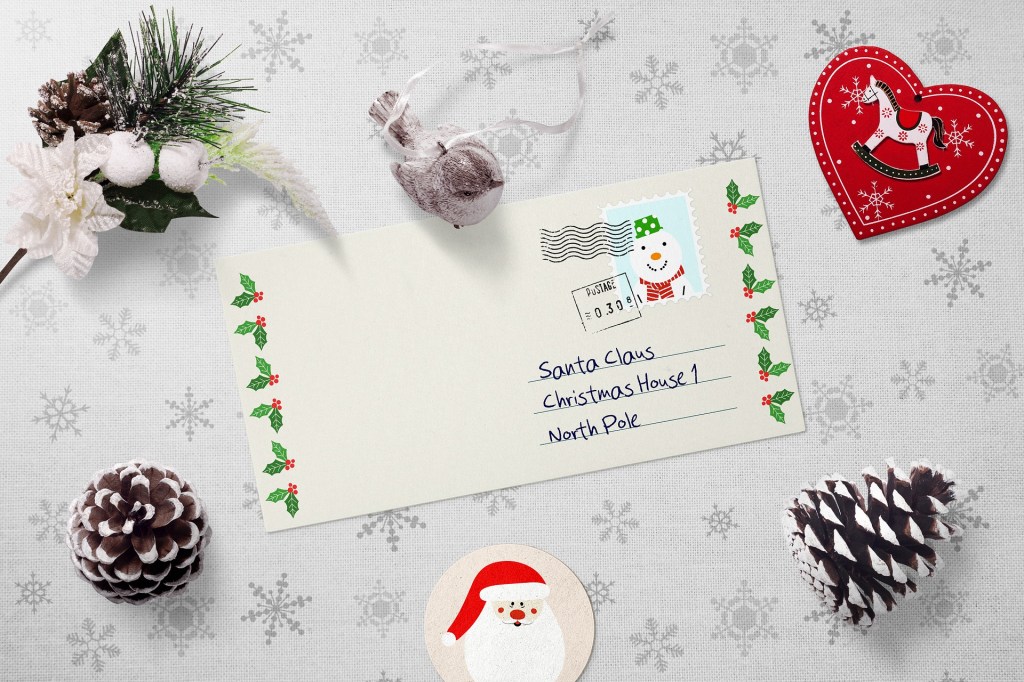
    Sadly, our writing skills (by hand or keyboard) have declined each generation! A perfect example of this is the tradition of writing letters to Santa Claus at this time of year.

    Good kids (well, all kids) are still writing their wish list to Santa at the North Pole. But over time, people haven’t been handwriting as often as they used to. When was the last time you picked up a pen and wrote a complete letter to someone, such as a love letter or note of thanks after an interview?

    If you’re feeling a bit shaky about your handwriting skills, you aren’t alone. But before we get into the educational and creative benefits of writing by hand, let’s take a quick look at how technology got us to our writing skills today.

    Writing Skills and the Impact of Technology

    These days, our writing skills are at the point where we may need help to write our letters. Blame technology for the decline in our writing. (And then thank technology for saving us, ironically.)

    Why write a note when you can send a text or voice message? Technology is so convenient and easy to access by phone or tablet. Back when we had to write pages of sentences by hand, you could get callouses on your fingers just from holding your pen for hours. You could also buy rubber pen grips to ease the pain on your fingers, but I haven’t seen one of those things in years.

    When writing was a grammar skills challenge, you double-checked your spelling, and you could identify verbs and nouns. Now we spend more time rapid firing messages with abbreviated words on our apps, LOL. (LOL is laugh out loud, if you still like to handwrite things.)

    Despite this trend toward technology, people still value handwritten notes. How much do you treasure a hand-scrawled message on a birthday card? Or a quickly jotted note from a loved one, signed with a happy face or heart? There is something about handwriting that technology just can’t replace.

    The Skills Behind Writing a Handwritten Letter

    Consider how wonderful it would be to receive a handwritten note. Years ago, people cherished handwritten letters a lot more. It was a way to communicate messages that you could keep someplace safe and look back at them time and time again. The early letters to Santa are one example of this way to pass on advice.

    That’s right – pass on advice, not send Santa a list of toys. The tradition of writing letters to Santa has a long history that has evolved over time. At first, the letters weren’t about getting toys. Over a century ago, Santa was writing letters of advice to children. He would comment on their past behaviour over the year and how they could improve for the coming year! Santa (well, the parents) would leave these letters near the fireplace.

    As it became more common to buy stamps in the 1860s, American children sent letters to Santa at the North Pole, where they believed he lived and worked. The tradition evolved to what it is today: children ask for toys they would like to see under the tree at Christmas.

    Technology has also evolved. If you don’t know how to write a letter – or struggle with letter writing in general – you can still be a competent writer.

    Websites such as emailsanta.com make the writing process easy for those who want to write a letter to Santa. You choose a stamp, go to a webpage with the skeletal structure of a letter, and fill in all the blanks. And just like that, presto, your letter to Santa is complete! You will also instantly get an answer back.

    You could say that letter writing programs such as this one is contributing to the decline in writing skills because the process has become so automated. But you could also say that technology can help with teaching writing skills.

    I don’t remember writing to Santa as a child, but I’m sure I would have been impressed that he took the time to write to me, one kid out of millions. I was already content that he could spare a few seconds on Christmas Eve to drop into my home and fill my stockings with gifts.

    As technology continues to advance, what will happen to letter writing in the future? Will children be sending video messages or holograms to Santa in a couple centuries?

    Handwriting as a Marketable Service?

    Chances are, written messages will still be around for a while. Entrepreneurs are constantly devising new ways to answer our desires for personalized content and bridge the writing skills gap.

    If your handwriting looks like a chicken scratched some random ink on the page, digital handwriting services are here to rescue you. Marketing research has found that customers are more likely to read a handwritten message. Just think of the last time you held a pile of mail in your hand and you saw handwritten words on an envelope. Weren’t you assuming a friend or family member had written to you?

    I was surprised when one such envelope with handwriting on it turned out to be a marketing campaign from some company I hadn’t even heard of. However, I’ll give them credit for piquing my interest for a good minute while I opened the envelope to see what was inside.

    Thanks to technology, we don’t need to hire a human to handwrite letters to a potential customer. We’ve got automated bulk mail machines to send the same letter to hundreds of people simultaneously. The handwritten text just adds that extra personal touch.

    With these services, it is even possible to get these digital handwriting services to “handwrite” your annual Christmas letter to your family.

    I wonder what people from two centuries ago would say about our writing skills. Would parents have preferred to use technology to handwrite their Santa letters to their children?

    Summary

    Handwritten letters seem to be a lost art. Nowadays, writing skills aren’t as good as they used to be.

    However, entrepreneurs and businesses have found a way to solve the writing skills gap. A letter to Santa could be composed using technology you find online. At the office, you can employ the services of a website to write your copy for you. Despite these changes, one thing remains the same.

    People still value receiving a handwritten note. It takes creativity, effort, and time. Perhaps you could handwrite a short letter to a loved one this Christmas and see what happens.

    If you enjoyed this article, subscribe to make sure you don’t miss the next post!

  • Insights From Bestsellers: Friends and Fortune

    Insights From Bestsellers: Friends and Fortune

    If you had the power to save your friend’s life, what would you do to change their fortune?

    Writers have the power to change lives with the use of words. A simple message, such as “It’s over,” can break a person’s heart. Words like “I love you” can bring sunshine and everlasting warmth. Writing compliments and praises can raise another person up and elevate their value.

    One spider knew the influence of words.

    If you’ve read Charlotte’s Web, you’ll know: on one level, it’s a children’s story, talking about the cycle of life.

    On another level, it’s a story about growing up and losing magic when a child can no longer understand animal speak.

    What is truly amazing is one spider’s ability to use words to save the life of a friend. What would you do to change another person’s fortune?

    “It is not often that someone comes along who is a true friend and a good writer.” – E.B. White

    If you had the power to save your friend’s life, what would you do to change their fortune?

    Writers have the power to change lives with the use of words. A simple message, such as “It’s over,” can break a person’s heart. Words like “I love you” can bring sunshine and everlasting warmth. Writing compliments and praises can raise another person up and elevate their value.

    One spider knew the influence of words.

    If you’ve read Charlotte’s Web, you’ll know: on one level, it’s a children’s story, talking about the cycle of life.

    On another level, it’s a story about growing up and losing magic when a child can no longer understand animal speak.

    What is truly amazing is one spider’s ability to use words to save the life of a friend. What would you do to change another person’s fortune?

    “It is not often that someone comes along who is a true friend and a good writer.” – E.B. White

  • 4 Ways to Improve Your Writing Skills Fast

    4 Ways to Improve Your Writing Skills Fast

    Do you prefer to text or write to the people you communicate with? How efficiently and clearly would you be able to communicate your thoughts? Workplace writing tasks can be challenging and intimidating for those with poor or average writing skills. However, you can bring your writing skills up a level by following these habits. Here are six ways to improve your writing skills fast.

    1 Collect templates and writing samples

    Like a squirrel preparing for winter, start collecting writing examples that you want to emulate. Start with an online search of business writing samples and templates. Bookmark websites with great tutorials or save your own files.

    Refer to these templates when you work on your next writing task. You may want to paste the template into your document or your email and replace the content with your own words as you write.

    Another tip is to save emails that you receive if you want to copy that writing style. I often receive emails from copywriters trying to sell me a product or service. Their emails can be very engaging and intriguing.

    When you have a chance, as a practice exercise, copy the words from the email until you become familiar with how it is written.

    2 Keep a List of Common Grammar and Spelling Mistakes  

    Grammar is considered a dull and dry subject for most people. However, like the vitamins you should eat, knowing how to write well is necessary. So how can you improve this writing skill without torturing yourself with lengthy grammar lessons?

    Start making a list of common grammar mistakes that other people make. Do you know the difference between their, there, and they’re? Do you know when to use “therefore” and when to use “therefor”? If the answer is no to any of these examples, then start a list of grammar mistakes for yourself to review.

    Also, turn on the grammar check function on your email and documents. Doing this will help to reduce grammar errors such as “She should of gone on vacation” versus “She should have gone on vacation.”

    Bad spelling doesn’t necessarily indicate low intelligence or poor writing skills. Accomplished writers Ernest Hemingway and F. Scott Fitzgerald were bad at spelling. However, even if writing isn’t one of your favourite activities, taking the extra time to check your spelling can make you look smarter. You will definitely look more professional.

    To improve this writing skill fast, turn on spell-check functions in your email and documents. This will help reduce silly typos such as “tommorrow” instead of “tomorrow.”

    3 Use Simple Vocabulary and Write Shorter Sentences

    You might be wondering if writing longer sentences and using bigger words will make you appear smarter. It’s true. In the academic world, it’s common to write in longer sentences with more complex vocabulary. But at the workplace, plain language is just as effective at getting the point across.

    To improve your writing skills, use plain language. Start with choosing the simpler word when you have two words with similar meanings. For example, say “use” instead of “utilize.”

    State your main point before going into details. Your thoughts should be clear and easy for the reader to follow. One way to do that is to use the active voice. Stick to one topic (or idea) per paragraph.

    Your sentences should be only between 15 to 20 words in length. If your sentence is longer than that, consider splitting the sentence into two.

    Plain language, or clear language, is ideal for the workplace because the writer states the point clearly and directly.  

    4 Establish a Writing and Editing Process

    Lastly, have a routine for your workplace writing tasks. Some recommend starting your day with the most challenging tasks to make sure they get done. Procrastination could make a writing task even more discouraging if you dislike writing. In this case, work on these tasks first and reward yourself with doing tasks you enjoy (or just the easy tasks) after.

    For each task, establish a routine. I start by checking what needs to be covered in the task. For example, do I need to answer specific questions in an email? Do I need to attach a file? Do I need to do research and present the data in a table?

    After finishing the writing task, I check grammar and spelling, and double check my facts. Then I set the task aside. If I’m working on a critical document, I’ll leave it until the next day to check it over.

    When I return to the writing task, I read it aloud. Hearing my own words helps me catch awkwardly written sentences or repeated words. For example, I might notice I repeatedly use the same word, so I will substitute it with a synonym for some variety.

    Having a routine for your writing task ensures you won’t miss important steps, such as a final edit of what you’ve written.

    Summary

    If writing is not your favourite subject, don’t worry. You can improve your workplace writing skills quickly by following some quick tips and creating solid writing habits. Keeping a list of spelling and grammar mistakes you often make, for example, will help you to minimize careless errors. Collect writing examples that you can copy for your writing tasks. Most importantly, have a writing routine that includes editing. If you follow these tips, you’ll look far more professional and competent.

    If you enjoyed this article, subscribe to make sure you don’t miss the next post!

  • Grammar, Real Language, Books, and the Movies: An Editor’s Dilemma

    Grammar, Real Language, Books, and the Movies: An Editor’s Dilemma

    A copy editor’s job is to correct the grammar in a novel. But what if the grammar is wrong, yet authentic?

    An author whose first language isn’t English caught a mistake in his novel and asked me what the correct grammar was. I told him the translator he hired had used authentic dialogue in the scene. His question did bring up a dilemma for editors, however. What is more important: proper grammar or real language?

    When writers craft a scene with dialogue, they want their characters to sound as tangible and real to life as possible. Realistic characters should use realistic language, including imperfect grammar. But what impact does the incorrect grammar have on people who want to learn proper English, such as children and English as a second language speakers?

    As an editor, I find myself pondering this dilemma. It’s my job to correct grammar in manuscripts. It’s also my job to let the author know if the characters aren’t speaking authentically. Often, my solution becomes one simple (yet not so simple) rule: correct all grammar mistakes unless a grammar edit results in inauthentic speech.

    What I’m about to share are some cases in which authentic language won out over proper grammar. If you had been the editor, and you encountered grammar mistakes like the following, what would you have done?

    Point of View

    How often have you caught yourself saying, “It’s between you and I”? How often have you heard people around you saying that phrase? Those words are in the movies, books, and my friends’ conversations.

    Writers who want to keep their characters in character say, “Let’s keep that between you and I.” We hear that phrase so often, it becomes ingrained in our minds as correct speech. However, we don’t hear people saying, “between you and we” or “between you and they.”

    The correct expression is “between you and me.” Nouns that follow prepositions such as “between” are the object form, such as me, us and them.

    The use of “me” gets confused in another common example.

    A writer asked if it was okay to start a paragraph with “Me and my friend went to see the movie.” The writer said, “Isn’t ‘my friend and I,’ not ‘me and my friend’ the correct grammar?”

    The correct grammar is “My friend and I went to see the movie.” However, changing the grammar changes the type of person you are writing about. The choice of spoken words is part of character development.

    Character Development

    “How are you doing?”

    “I’m doing good.”

    A character’s choice of words tells you so much about their education, where they are from, family, and personality. A talented writer chooses each word that a character speaks with care.

    What can you deduce about a character who says, “I’m doing good at math”? And what conclusions do you draw about a character who says, “She got a real nice raise at her job last year”?

    If you love your grammar, or if you’re an editor, you’ll be tempted to correct the grammar to “I’m doing WELL at math” and “She got a REALLY nice raise.”

    However, changing one word could change a lot about the character. You could be changing their education level, whether they speak casually or formally, or where they are from.

    When an editor reviews a manuscript, there is more to consider than just what is and isn’t correct grammar. They have to know how people speak in different parts of the world! (Often, as an editor, I use this as a very justified excuse to watch movies with dialogue. It’s not wasting time; it has educational value.)

    Everyday Speech

    Is each of us guilty of making certain grammar mistakes over and over again whenever we speak or write? Probably. I’ve heard educated people who can write reports and essays with proper grammar make simple mistakes when speaking.

    For example, I’ve heard people say, “There are LESS cars on the road this year than last year.” This error occurs more often than we may realize. People use “less” as a one size fits all modifier to describe all nouns, whether they are countable or not.

    You can have less money, less water, less luck, or less air because these items are not countable. But you have FEWER cars, fewer people, and fewer goals because these nouns are countable.

    Grammar also dictates that the present continuous tense is formed with a two-part verb. For example, we say, “ARE you GOING home now?” And we say, “She IS EATING dinner now.” We don’t say, “She EATING now.” That sounds very strange.

    But we can drop one of the verbs and say, “You GOING home now?” instead of “ARE you going home now?” and still sound like we are from this planet. In fact, a famous line from a movie drops one of the verbs with this line: “You talking to me?”

    In everyday English, it’s possible to drop a word here and there and still sound authentic and correct. As long as your character is mimicking realistic speech, grammar rules may not apply.

    Should Movies and Stories Teach Grammar?

    What we have is a chicken and egg situation. If movies and stories imitate real life, then could (or should) movies and books change bad habits?

    We can already censor sensitive content on social media and movies by blocking or silencing swear words. If characters start speaking with correct grammar, will people follow by example and correct their grammar as well?

    Would this approach be met with enthusiasm or rejection by moviegoers and readers?

    Several expressions have become a part of the culture of English speakers. For example, “Keep your friends close, but your enemies closer.” Consider also the expression, “I could care less.”

    You’ve likely heard these expressions before if you watch a lot of movies or read a lot of books… or Google searched these sayings because you read this blog. Do you know what the correct expression would be if you corrected the grammar mistakes?

    For the first one, you can fix the fragment by adding a verb. It may sound unfamiliar, but the proper grammar would be, “Keep your friends close, but keep your enemies closer.” It’s not as catchy, however.

    For the second expression, you could question the logic behind it. If a person could care less, then at the moment, they are caring a bit more. To really make their point, they should simply say, “I couldn’t care less.”

    Key Takeaways

    An editor’s job isn’t just about correcting the grammar in manuscripts for books and movies. Editors also want characters who speak authentically, even if they mimic the errors that real people make when they speak.

    Should art continue to mimic life? Or is there an opportunity for art to change the way we speak? What do you think?

    If you enjoyed this article, subscribe to make sure you don’t miss the next post!