Tag: artificial intelligence

  • What’s a moment that made you question reality?

    What’s a moment that made you question reality?

    More than once these days, I watch a video about something that seems to defy reality and I question what I’m looking at. Is it even real? Can my cat cook me dinner? And then I go to the comments and someone says, “This is AI.” What a trick! It’s scary, the speed at which AI has slipped into everyday life. One minute it was science fiction, and the next it’s everywhere. 

    You can’t even write an email without a recommendation for AI to write it for you. How about doing something more useful? (Please, AI, make me my lunch. I’m too lazy to cook!)

    It’s both fascinating and unsettling.

    AI is Good

    AI can be incredibly useful, especially if you run your own business and you don’t have the funds to hire three staff members without giving up your child’s college tuition. It can handle repetitive office tasks faster than people. It can also analyze data if you prompt it correctly. But you still need human oversight, or it can reach some oddball conclusions.

    One way AI makes you question reality is by generating scenes that never happened. Not fake news. But reenactments of scenes from the past. Reading pages out of history books can be boring. Hiring actors and creating sets can be expensive. So using AI to recreate the past, such as a scene from the Ice Ages, is educational. I call this a benefit.

    But there’s another side to it that makes reality feel a little unstable.

    AI is Bad

    AI systems can “hallucinate,” confidently giving wrong information that sounds completely believable. That means people still need to double-check the AI’s work, even while depending on it more every day. AI once gave me advice to do something real humans wouldn’t do. That really made me question this new reality of AI assistance.

    Another scary moment was when I was watching a video by a creator I follow. Then I clicked on the profile and realized it wasn’t her. It was a series of AI-generated videos using her likeness and voice. I had been deceived!

    Key takeaways

    AI creates moments that make me question reality. Sometimes it’s for a good reason (accurate historical enactment) and sometimes bad (stealing someone’s work). Overall, we’re getting closer to living out those sci-fi movies we used to watch!

    Daily writing prompt
    What’s a moment that made you question reality?

  • Is AI Good or Bad for Writers

    Is AI Good or Bad for Writers

    In a previous post, I wrote about the advantages and disadvantages of AI. Today, this very charged but relevant topic will get a part 2! 

    Recently, I read a discussion in a writing group about the impact of AI on writing jobs. The overall consensus was that jobs for writers are and will be affected. Topics that AI can’t write well will continue to be written by human writers. However, pieces that AI can generate are the most likely to replace human writers. For example, Top 10 lists, entertainment pieces, generic communication, and basic research for writing projects. 

    The type of writing that AI cannot reproduce requires human contact and a knowledge of technological advancements; for example, writers who produce how-to guides about the use of new technology. AI may not have access to the knowledge or vocabulary to explain how to operate such technology. 

    Similarly, AI cannot interview people and produce a piece of writing that includes the opinions of those interviewees. This human interest angle cannot be replicated with AI unless those interviews are already in the public domain. 

    Tech companies that aim to increase the number of clients they serve need to generate tech-related content at a speed that is too fast for humans to achieve unless they employ several humans working around the clock. From a project management perspective, that would be a headache, especially considering that they must hire content specialists who demand a high price tag. It would be more cost efficient to employ a smaller staff of writers who can check the authenticity of the AI while increasing the company’s output to serve more clients. In other words, writers who are tech savvy will be one type of writer who will thrive in an AI world. 

    Is AI good or bad? From this focus on the impact of AI and the writing fields, it is clear that AI will replace jobs. Some writers won’t find work for certain types of writing projects. But AI will also create and maintain jobs. The trickle-down effect of AI is thus both harmful and beneficial. 

    What do you think about this topic?

  • Is AI Good or Bad?

    Is AI Good or Bad?

    Daily writing prompt
    What technology would you be better off without, why?

    I would say that AI (artificial intelligence) is technology that I would be better off without – but it’s a necessary part of life. AI is here to stay.

    It helps us to complete tasks much faster and more efficiently. Yes, AI will replace tasks and possibly jobs. This week, a friend was asked at her job to use AI to speed up her workflow. She will be able to finish her tasks at three times the speed if she asks AI to do the work for her. Is there an ethics question there somewhere? Probably. Are we encouraging AI to replace certain jobs? Maybe. But do we have a choice? If my friend makes a stand and says, “No AI for me!” she could be job hunting tomorrow.

    Out of curiosity, I asked AI to write a paragraph about the benefits of AI, and it replied, “Artificial intelligence is rapidly becoming a necessary part of life in the modern world due to its transformative potential across various sectors. AI-powered systems enhance efficiency and productivity by automating tasks, analyzing vast amounts of data, and providing valuable insights in fields like healthcare, finance, and transportation. From personalized medicine and medical diagnosis to fraud detection and risk management, AI improves decision-making and problem-solving. Additionally, AI enhances user experiences through virtual assistants, recommendation systems, and customized content, making technology more intuitive and accessible. As AI continues to evolve, its ability to address complex challenges and drive innovation makes it an indispensable tool for progress and improvement in various aspects of life.”

    This paragraph was generated in one second. I can’t type that fast, let alone think that fast. In the future, our skills won’t be about how well we think creatively but how well we are able to use AI to do our work.

    It is clear that even if some of us push as hard as we can against the progress of AI, others will pull equally as hard to advance AI so we can incorporate it more into our daily lives and our jobs. In the future, AI will be as commonplace as mobile phones. Those who can use AI will reap the most benefit. What do you think?

    In part 2, I share more about the impact of AI on writing jobs.

  • AI Testing Job Skills Testing vs the Job Interview

    AI Testing Job Skills Testing vs the Job Interview

    Repost

    Communication skills are, without a doubt, vital for any job and any career. Effective written or spoken communication is necessary for sending and receiving messages in person, by phone, email, or communication platforms. Communication must also be adjusted for your audience, whether you speak with a co-worker, customer, or supervisor.

    Traditionally, employers evaluate a future employee’s communication skills based on the content of their resume, their writing skills in their application, and how they communicate during their interview.

    From this assessment, employers determine how suitable the candidate’s communication skills are for their future job. If their assessment is correct, they will have a suitable candidate. If their assessment is wrong, they will have wasted valuable time and resources.

    The communication skills required to ace the interview process are not necessarily the same as those needed for the future employee’s job. How we communicate with potential employers is not the same as with customers or supervisors.

    One solution is to test a candidate’s communication skills by recreating communication scenarios that are similar to what the future employee will encounter on the job. These scenarios can be duplicated through computerized assessments.

    How effective are assessments at determining a candidate’s communication skills? It depends on the skills you are testing and how closely the tests mimic actual work situations.

    Testing a Candidate’s Strengths and Weaknesses

    Communication skills are one of many soft skills that are transferrable across occupations and industries. Soft skills include leadership, creativity, problem solving, and time management.

    Communication skills are more than listening and speaking. They include observation, empathy, and non-verbal communication.

    How well can a candidate convey an urgent message to their team? How well can they use technology to understand a customer’s issue and communicate an appropriate solution?

    In addition to the job interview, we can ask a candidate to complete a standardized communication test online or complete a language assessment. However, these tests might not evaluate how well the candidate pays attention to detail, shows empathy, or demonstrates active listening.

    A skills assessment created for the types of scenarios that a candidate will face on the job will more accurately test their strengths and weaknesses.

    Will the candidate be managing teams and multiple projects? An AI test scenario could be a recording of a team member calling in to say he cannot meet the deadline because of a family emergency. In the recording, he summarizes what he has completed and what still needs to be done.

    As part of the test, the candidate records their response on the phone call. Do they show empathy in their response? Do they show active listening skills when they repeat the details of what needs to be assigned to another team member? How clearly do they articulate their message if the test requires a timed response?

    This is just one example of using AI assessments to determine how a candidate will communicate in a workplace situation.

    Test for Specific Types of Communication

    To decide what types of communication to include in an assessment, an employer first needs a clear and detailed description of the future employee’s job. What will be their responsibilities on a day-to-day basis? Who will they interact with? What problems will they need to solve?

    When the employer has created this description, the next step is to determine what communication skills are needed to perform those tasks.

    Some skills that employers often test for include:

    • Active listening: Showing the speaker that the listener is involved by nodding, paraphrasing what was said, or asking questions that show the listener heard what was said.
    • Comprehension skills: Understanding and responding to straightforward or complex workplace problems.
    • Language proficiency: Articulating clearly and efficiently the speaker’s message to the audience.
    • Problem solving: Providing a solution in a clear, concise manner with minimal or no errors.
    • Social skills: Dealing with customers or co-workers, particularly if there has been a misunderstanding or the other person is emotionally distressed over an issue.
    • Adaptability: Handling new situations that were not taught in training or haven’t previously occurred at the workplace.

    After deciding what types of communication skills to test for, the next step is to create a test that can accurately assess a candidate’s strengths and weaknesses for these skills.

    Why Use an AI Communication Skills Test?

    AI software has greatly improved over time. Assessments provide a more accurate evaluation of the candidate’s communication skills, allowing recruiters and employers to assess a candidate’s suitability for a specific role.

    These tests can be completed as part of the interview process at the employer’s office or at the candidate’s home after logging into the testing system.

    As technology continues to advance, companies have changed how they operate. More people can work from home, meaning companies have become more global. One company can hire employees from multiple cities and even other countries.

    The benefit is without the limitation of location, companies can hire the candidate with the best skill set for the role, regardless of where the candidate lives. However, communication skills become even more crucial with remote teams if employees no longer meet in person.

    With these changes to companies, communication skills become even more vital. How will the candidate handle problem solving when working at home? How will they use the technology to communicate by email, phone, or communication apps to solve a customer’s issue or work with team members they have never met?

    With AI communication testing, the employer can re-create scenarios that occur with their customers. The candidate will complete a typical scenario they will encounter by phone or email on the job.

    Their answer is then recorded and evaluated. Unlike standard testing, with AI assessments, more than one answer is possible. The candidate might not know the correct answer to a question because they are unfamiliar with the company policy or procedure. However, the employer can review how the candidate responded and evaluate only the clarity of the answer.  

    These communication assessments can evaluate many types of verbal and written communication scenarios between employees and the customers, co-workers, and supervisors.

    These customer/employee interactions and employee/co-worker interactions cannot be evaluated in an interview. However, they can be recreated in an AI communications assessment.

    Key Takeaways

    Communication skills are one of many soft skills vital to one’s ability to perform well on the job. Communication is in many forms: on the phone, by email, through messaging apps, and is more than listening to words and responding. It includes our use of language, empathizing with the speaker, how well we problem solve, and our active listening skills.

    When searching for the right candidate for the job, employers need to evaluate the candidate for communication skills, but an accurate assessment isn’t necessarily possible during an interview. An AI assessment recreates typical scenarios that the candidate will encounter when working with customers and their team while on the job.

    These more accurate assessments of a candidate’s skill set will result in better hires and a more efficient hiring process.

    If you enjoyed this article, subscribe so you don’t miss the next post!
  • Fear of AI and Technology Started Centuries Ago

    Fear of AI and Technology Started Centuries Ago

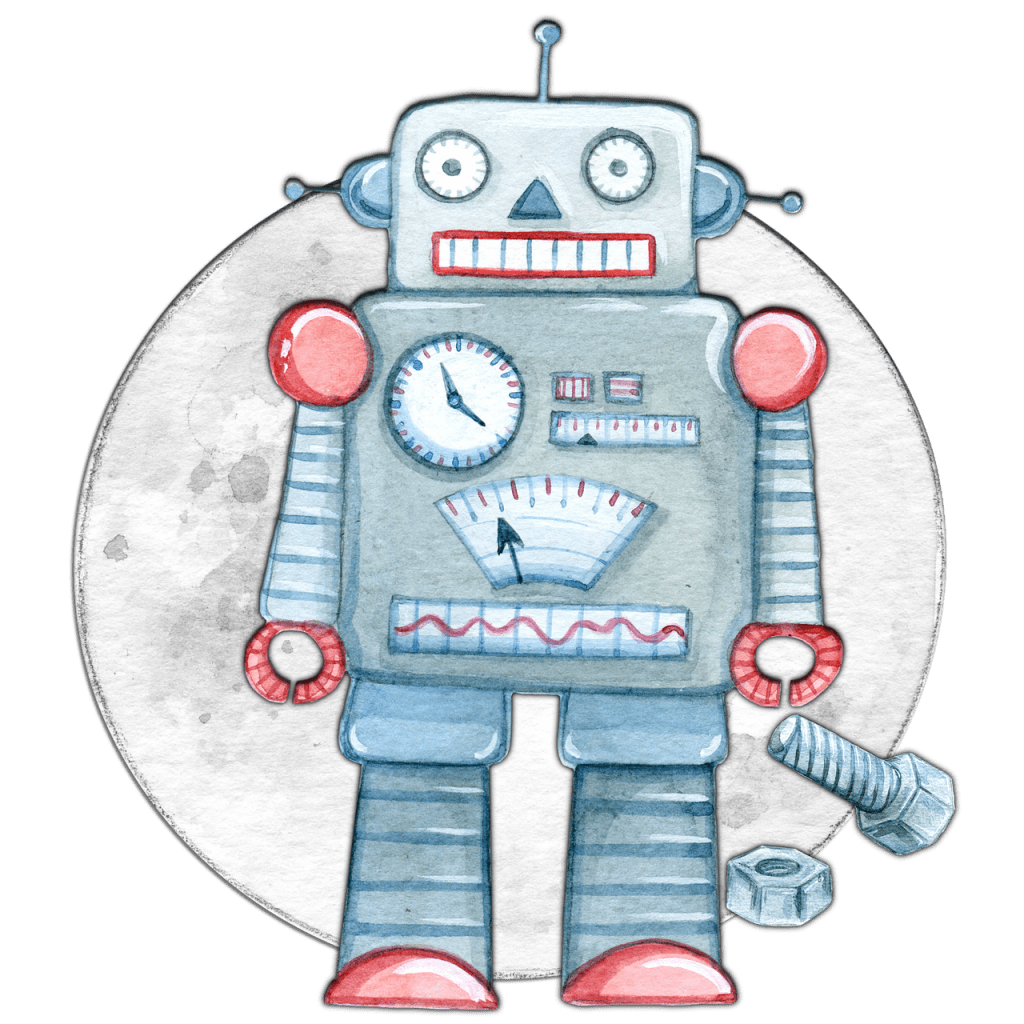
    People fear rogue robots like the Terminator (from the 1984 movie) will take over the earth and humankind if we allow technology to continue to advance. This fear has been around for a very long time, much longer than ChatGPT and robot waiters.

    Long ago, there were tales of golems, a black box of evil, and a self-driving boat. Point is, the theme of creating technology that rebels has been around for a very long time.

    Some myths and tales:

    • Pandora’s box: Pandora, an artificial life form, releases misery onto mankind
    • Golem of Prague: a golem that is like a robot that serves its master but later rebels and brings destruction
    • Odyssey: Odysseus gets home using a self-driving boat 

    For the full article on how our fears of artificial intelligence started more than a millennia ago, check out more examples of rebellious innovations.