Tag: Lifestyle

  • Your life without a computer: what does it look like?

    Your life without a computer: what does it look like?

    Life without a computer would be drastically different, almost unrecognizable compared to what I’m used to now. So much of my daily routine revolves around instant access to information, entertainment, and connection that removing the computer feels like stepping back in time.

    For starters, there would be no more YouTube for entertainment. That means no endless videos to relax with, no tutorials to learn from, and no music playlists to stream. In fact, without a computer, I’d have no music at all, unless I went back to CDs or live performances. Reading would also be limited—I wouldn’t have easy access to articles, blogs, or ebooks.

    Staying connected overseas would disappear too. No more instant chats, video calls, or social updates with friends and family abroad. Immediate news updates would also vanish. Instead of knowing what’s happening almost instantly, I’d be stuck waiting for newspapers or the evening news.

    Research would be exhausting. Instead of typing a question into a search bar and getting an instant answer (like how historically accurate is that movie?), I’d have to make trips to the library. Worse, if I got home and realized I wanted to look up something else, I’d have to go back again. That kind of delay makes learning far less spontaneous.

    Everyday conveniences would vanish as well. No maps to check locations before going there, traffic updates to avoid traffic congestion, or online menus to help you decide if you want to go to that restaurant. No online shopping to confirm whether a store has what I need—I’d have to go there in person just to find out if they have what I’m looking for.

    Even hobbies would suffer. I don’t have the patience to handwrite stories. By the time I finish one sentence, my mind has already moved to the next idea. Computers let me type quickly, insert links, and organize research on the spot. Without them, creativity feels trapped in slow motion. So life without a computer wouldn’t be as exciting!

    Daily writing prompt
    Your life without a computer: what does it look like?

  • 5 Everyday Objects That Bring Me Happiness  

    5 Everyday Objects That Bring Me Happiness  

    Daily writing prompt
    What are 5 everyday things that bring you happiness?

    Sometimes, happiness is found in the little things that are part of everyday life. Of course, there are the special people (family and friends) who bring me smiles, but there are also everyday things that brighten my day as well. Here are five that stand out:

    1. My Computer

    My computer is like my lifeline. It’s where I write my stories, my blogs, and all of my creative ideas. I need it to enhance my brain power: I learn so much from watching videos or doing research on all kinds of topics. Most importantly, as a remote worker, I need my computer to earn an income. I can’t imagine a life without this valuable piece of technology.

    2. Water (and Tea!)

    Water is the key to my survival. I like it a lot as a drink, and when I add a tea bag to it, it becomes my caffeine to wake me up in the morning. I also enjoy tea with a snack, when I need a break from work, or when I need a quiet moment on the weekend. Water and tea are like vitamins to me.

    3. My Bed

    My bed is more than just a place to sleep. It’s my retreat—a spot to rest, reflect, and even brainstorm new ideas. (You probably saw that coming since I like writing so much and creative people need creative spaces.) Some of my most imaginative thoughts have come to me just before falling asleep or while I’m lying in bed in the morning. It’s a personal space where my mind can wander freely, before thinking about the distractions of the day.

    4. My Phone

    My phone keeps me connected to those who are important to me. Whether I’m making plans, sharing a funny picture, or just sending a quick message, it’s how I stay close to friends and family between in-person visits. It’s also how I stay connected to the world through news, music, social media, and random trivia. It’s a connection to everything happening around me.

    5. Music

    Music influences mood. It helps me stay focused while working or set the tone for a cozy evening at home. When I need a little boost, I turn on something upbeat. When I’m brainstorming or deep into writing, I have a playlist to match that energy. It’s amazing how a song can completely change the atmosphere of the moment.

    We all have objects we use every day, but it’s amazing that they can contribute to our happiness. These five things are a part of my daily life—and they make everything a little bit better.

    What everyday things bring you joy?

  • Are You a Night Owl or an Early Bird?

    Are You a Night Owl or an Early Bird?

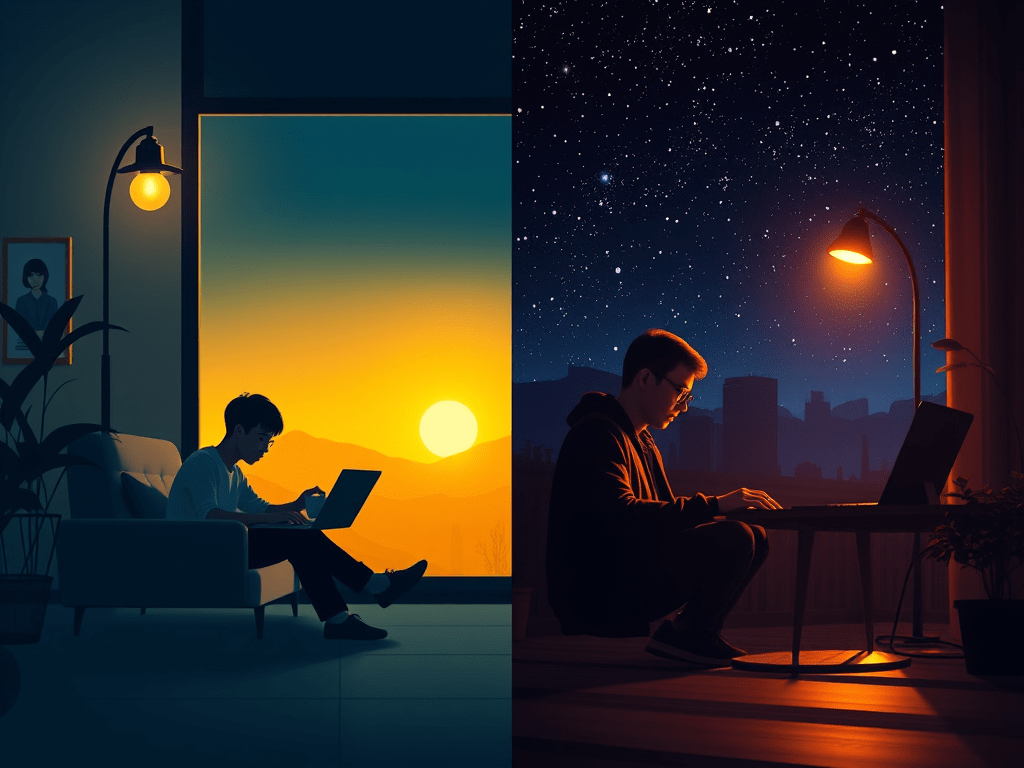
    Are you most productive with the sunrise, or are you most creative under the moonlight? Whether you’re an early bird or a night owl, both schedules have their perks and challenges. I’ve tried both lifestyles, and I think one is a clear winner.

    The Case for Early Birds

    Early risers often believe in the “early bird catches the worm” philosophy. Starting your day before the world wakes up can provide a distraction-free environment to achieve your goals. Early birds tend to be more proactive and may feel a greater sense of accomplishment. By starting the day early, you’ve checked off many items on your to-do list before people have started their work day. However, waking early also means sleeping early. 

    I’ve woken up early when I used to have an early work schedule. Words can’t describe the feeling of getting a head start on the day when everything around you is still quiet. But as a writer, I admit it doesn’t feel good to sleep just when my mind is most creative.

    The Case for Night Owls

    Night owls, on the other hand, get to tap into their body rhythms and natural alarm clock, waking up later in the morning and avoiding the morning rush. They often hit their peak productivity later in the day or even at night when the world around them is asleep and there are fewer distractions. Inspiration comes when work is done for the day and they feel more relaxed. 

    Clearly night owls have the better schedule. Waking up later in the morning reduces the stress of waking up when it’s still dark outside. It’s more relaxing to write in the evening when the daily routine is done, instead of cramming in a bunch of tasks before the start of the work day. 

    Which Is Better?

    Ultimately, there’s no one-size-fits-all answer. The “better” choice depends on your goals, responsibilities, and preferences. If you have a job with early hours becoming an early bird might be more practical. Conversely, if your lifestyle allows for flexibility, embracing your night owl tendencies could help you perform at your best.

  • Work-Life Balance and Setting Aside Time to Unwind

    Work-Life Balance and Setting Aside Time to Unwind

    Can you achieve work-life balance? How do you define it? Whether you have work-life balance and whether you view clear boundaries between the two depends on how much you love your job and how much time you devote to it. Some days, your job eats up so much of your day that you just want to unwind and forget about life’s demands. How do you clear your mind and unwind?

    Daily writing prompt
    How do you unwind after a demanding day?

    Remote work has made it easier to blend home and work life into one room. Emails and various apps have made it easier to blur the lines between work and personal time. You can even answer work messages on weekends and when you’re on vacation.

    The constant plug-in to workplace communication and work tasks can be exhausting. People need a break from work to recharge and return to their tasks with fresh eyes. But is it bad to blend work and home life together?

    Step Away from the Office Where You Live

    Some people love their career enough that working is as enjoyable as watching Netflix or playing video games. I’ve met some of these people (so they do exist).  

    If you enjoy your work as much as a hobby, then working the extra hours is not that much different from downtime. I’ve met a graphic designer who designs additional graphics for his client because it’s something he enjoys doing. I’ve also met professional writers who switch from writing non-fiction during the day to writing fiction as a hobby at night. Owners of small businesses go to networking breakfasts and dinners before or after business hours to build a support network.

    Step Into a World Without Demands

    After a long, demanding day, it’s nice to just forget about everything. You can spend time with friends and family and do nothing else but enjoy your time together. You can finally watch the next episode of your favorite TV show, cook yourself a nice meal, or read a book.

    You can also use your downtime to learn something new for personal interest or for something related to work. Everyone should always be learning new things, whether it is a new hobby, skill, or tips on personal growth. People challenge themselves with fitness goals, reading goals, or social goals. 

    Key Takeaways

    If you enjoy what you do, perhaps spending a lot of time on a job or business is no different than investing time and energy in a hobby. With this perspective, would work-life balance be “balanced”?

    I certainly like to unwind after a demanding day by doing a range of activities. Sometimes, I read, watch a show, or socialize. On other days, I unwind by studying topics related to building my work skills. 

    What are your thoughts on work-life balance if you have a job or career that you love?

  • Food is a great example of mixing cultures

    Food is a great example of mixing cultures

    The other day, I had Korean food. Asian food doesn’t usually have cheese, but in North America, they have cheese in their food options. For example, Japanese sushi has a cream cheese roll, which has cream cheese in it. This ingredient is not typical for Asian cuisine. Many Asians are lactose intolerant, so cheese products aren’t popular.

    I tried a Korean special platter that had rice, green onion, egg, bulgogi, corn, and melted cheese in separate sections on a metal pan that was heated by elements on the table. The platter was enough to share for three people. The cheese is unusual for Asian cuisine. The melted texture reminded me of pizza.  

    The AAA beef “box sushi” (for lack of a better word) reminded me of Japanese cuisine. However, the Korean version had a slightly different flavor than the Japanese one. It was my first time trying out both dishes, but I liked them.

    To me, these dishes were a great example of how cuisines from around the world and cuisines from different cultures blend together to create something tasty.

    If you enjoyed this article, subscribe to make sure you don’t miss the next post!