Category: Business

  • How to Overcome Layoff Fears and Recession-Proof Your Career in 2025

    How to Overcome Layoff Fears and Recession-Proof Your Career in 2025

    In today’s unpredictable economy, fear of layoffs is at an all-time high. With rising inflation, a shaky job market, and rapid advancements in technology, many professionals like myself are wondering how to stay relevant and financially secure. Here are some tips on how you can overcome those fears and build more security in your financial future.

    1. Diversify Your Income with the Gig Economy

    One of the best ways to recession-proof your career is by participating in the gig economy. This flexible job market allows you to earn money independently by offering freelance or part-time services. Popular gig economy jobs include freelance writing, virtual assistance, rideshare driving, tutoring, and more. I’ve tried a few of these and they are worth it in providing you with alternate forms of income if you fear becoming a statistic in the round of company layoffs.

    2. Learn a High-Income Skill That’s in Demand

    Focus on acquiring high-income skills that employers are actively seeking. The healthcare industry continues to grow, with demand for roles like medical billing specialists, health tech consultants, and telehealth support professionals.

    Alternatively, explore tech-related skills such as digital marketing, data analysis, or automation tools. These skills are not only in demand but also adaptable to remote or freelance work. 

    3. Embrace AI Instead of Fearing It

    Artificial intelligence (AI) is changing how we work—but it doesn’t have to be a threat. Learn how to use tools like ChatGPT, Notion AI, or Claude to increase your productivity and job security. Understanding AI gives you an edge in any industry. In the past year, I’ve been learning a lot about technology and new software to keep up-to-date on latest trends. 

    I think the best way to overcome a fear is to learn everything you can about what you fear.

    4. Build Financial Literacy to Stay Prepared

    The more you understand about your money, the less fear you’ll feel during uncertain times. Learn how to budget, invest, and manage credit. Building a solid financial foundation gives you the power to pivot, save, and invest wisely—especially during an economic downturn. We all fear that our money will not have the power to buy what we need to survive. Staying on top of financial news and getting the best advice you can on your financial situation is important.

    Take Control of Your Future Today

    Fear of a recession and layoffs is real—but it doesn’t have to control your life. Start building multiple income streams, sharpen your skills, embrace new technology, and get smart with your money. These are the steps that turn uncertainty into opportunity.

    You don’t need to have all the answers right now. You just need to take the first step.

  • Do You Remember Life Before the Internet?

    Do You Remember Life Before the Internet?

    (How the Internet Changed Everything)

    I remember the sounds of life before the internet. Before we heard the ding of message notifications or the screeching sounds of amber alerts or weather alerts, we recognized the clunk of the mailbox lid shutting, the rustle of a newspaper unfolding, the beeps as we pressed the number buttons on a phone, the static hum of the radio as it searched for a clear signal. Life before the internet wasn’t quiet, but it sure sounded different.

    If you wanted to play with your neighbors, you walked up to their door and knocked on it, and then you’d play with the neighbor’s kids until it was time for dinner, and your parents had no way to figure out where exactly you were until then!   

    TV shows had a rigid schedule- no streaming, no video on demand. You could record the show, but if you didn’t, it was like a live event. You couldn’t hit the Pause button if your parents started talking to you. You could only hope to catch that missing moment when you’re available for the rerun–whenever that was.

    You bought stuff you wouldn’t buy now because it was a waste of money. If you drove (or if your parents drove) around a lot for vacations or local day trips, you bought a lot of road maps and map books. It was also handy to have a set of encyclopedias. Of course, if you’re still doing your research from them for a school project, you hoped that your facts were up to date enough! And of course, things could serve double duty. Those thick White Pages were good for door stoppers and steps to help you reach the top shelf.

    Back then, you learned the magic of waiting. Snail mail took weeks–first, it took several days for your letter to reach its destination, then days for the reply to arrive in your mailbox (assuming the recipient wrote back immediately). You were more selective about picture taking because each photo cost money, and you had to wait in anticipation to see how a picture you took a few days or months ago turned out! 

    Back then, we had connection, but in a different way. If you liked walking while talking on the phone, chances were, you experienced the phone cord yanking the receiver out of your hand if you walked too far. If you liked a boy at school, you had to brave talking to his parents if he wasn’t the one to answer your call; this was one way to get to know his family.   

    Of course, the internet has given us so much. The convenience of streaming TV shows so our entertainment revolves around our schedules, not vice versa. The efficiency of finding someone you’re trying to meet by sharing a location pin. The closeness of seeing and hearing your loved one in a live video call from another country. 

    And then there’s the mix of the old and the new. I’ve arrived at a friend’s house and stood within arm’s reach of the working doorbell. Send a text when you’re outside! she said. So I pull out my phone, type “Here,” and wait for the door to open instead of knocking on it. This is life after the internet.

    What do you think?

    And for nostalgia, here’s that dial-up sound of the early internet.

  • How to Find Work-Life Balance in a Fast-Paced World

    How to Find Work-Life Balance in a Fast-Paced World

    In a world that moves at the speed of instant messaging and 24-hour services, burnout is almost inevitable. Especially with remote work people like me, the line between home and office often blurs when you’re answering a work email before bed. Striking the right balance isn’t about clocking out at 5 p.m. sharp every day—it’s about creating a schedule that supports both your professional goals and your personal well-being.

    Why It Matters

    When I first started working from home, I thought skipping my commute would free up more time for myself. It did, but I found myself answering late-night emails and checking Slack before breakfast. The lines between work and home life became blurred. Eventually, I realized that being always available didn’t make me more productive—it made me live in my office.

    Strategies for Better Balance

    1 Set Clear Boundaries
    It’s hard to set a clear work schedule (some people do) when you’re working with people in more than one time zone. I find it easier to work in time blocks. This way, I can still check my email at night after hours, but I’m not constantly responding to messages throughout the day, whenever they happen to land on my desk.

    2 Prioritize Tasks
    I like to start the day off with an easy task so I immediately feel like I’ve accomplished something. Then I tackle the tasks that must be done that day, and work on the tasks that don’t have deadlines last. If the time-sensitive task is something I loathe doing, I reward myself with a snack when I’m done.

    3 Take Breaks
    Working from home gives you easy access to YouTube and streaming TV. I use break times to watch a few videos, take a walk, or have a snack. (If the work that day is stressful, I take more breaks.)

    4 Make Time for What Matters
    Whether it’s reading a book before bed or having dinner with family, these moments are important. I block off a few hours a day for “me time,” social time, and study time. 

    5 Communicate Openly
    When you work remotely, the office isn’t as aware if you’re struggling with work issues. I need to take the responsibility of telling my manager when I’m stretched thin, and need deadlines adjusted and tasks reallocated. This is the best way to establish some boundaries and protect your mental health.

    The Takeaway

    Work-life balance isn’t always easy to achieve. Some weeks will be harder than others, but regularly checking in with yourself makes all the difference. By protecting your personal time, you protect your energy, creativity, and motivation.  

  • 5 Favorite Fruits: From Tech Logos to Love Symbols

    5 Favorite Fruits: From Tech Logos to Love Symbols

    Daily writing prompt
    List your top 5 favorite fruits.

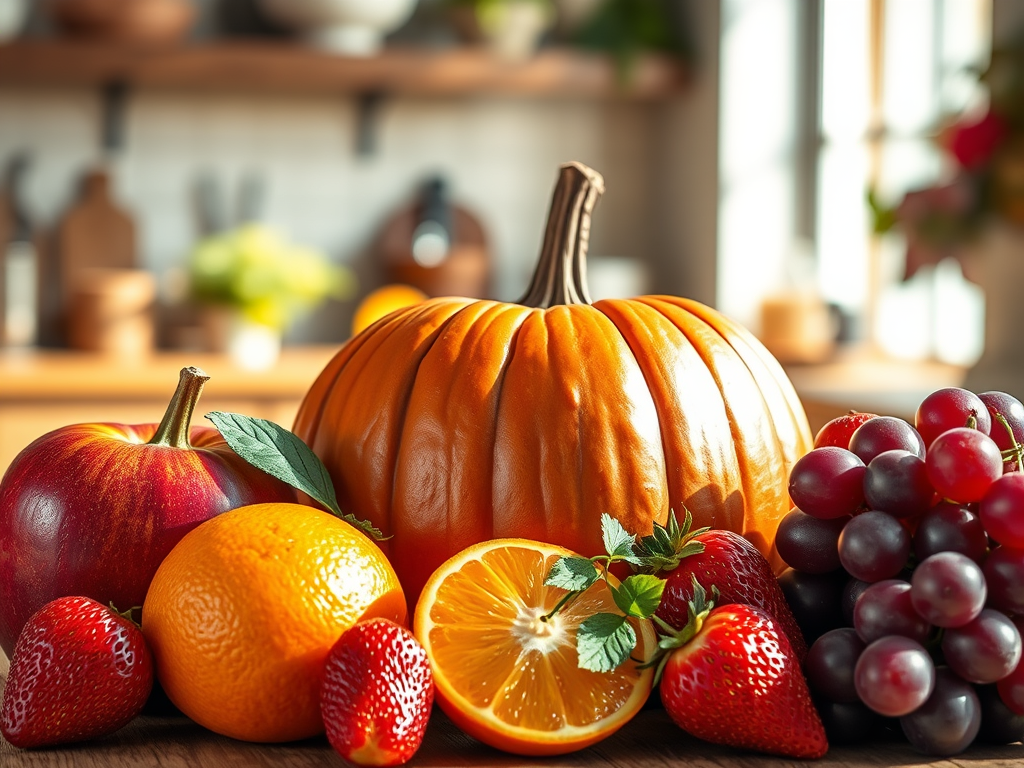
    We eat them, decorate with them, and even build billion-dollar brands around them. Fruits aren’t just food—they’re cultural symbols woven into marketing, tech, holidays, and everyday life. Here are my top five favorite fruits, not just because they’re delicious, but because each has a story far beyond the produce aisle. Enjoy!

    🍎 1. Apple – The Icon of Knowledge and Innovation

    When I think of the meaning of apples, I picture the iconic red apple on the teacher’s desk; the apple has long been a symbol of knowledge. In modern life, we instantly think of Apple Inc., the tech giant whose iconic Apple logo represents creativity, simplicity, and innovation. Many of my friends have iPhones and Apple computers! It’s amazing how this one fruit stands at the intersection of technology and symbolism, all while being crispy, sweet, and perfect for a midday snack. (And I’m having one now! Am I smarter? I’ll let you know in a bit.)

    🎃 2. Pumpkin – The Ultimate Seasonal Brand

    Pumpkins and Halloween are basically inseparable. A jack-o’-lantern instantly signals that October is here, and the popularity of the pumpkin spice latte is vital for seasonal marketing. (Imagine the fall season without seeing ads for pumpkin spice lattes or pies!) Whether in pies, porch decor, or spooky events, pumpkins are synonymous with autumn culture. We can’t consider holiday branding without it.

    🍊 3. Orange – A Global Symbol of Fortune and Warmth

    Nothing brightens a cold winter day like a juicy orange. In Chinese and Japanese cultures, oranges are considered lucky, often gifted to bring good fortune and prosperity at the New Year. In North America, oranges are abundant around Christmas, bringing a dose of sunshine when we need it most. And most importantly, when I think of juice, orange juice is the first thing that comes to mind. It’s a fruit that’s as symbolic as it is refreshing.

    🍓 4. Strawberry – The Sweetheart of Summer

    Strawberries symbolize love in so many ways. Their heart-like shape and bold red color make them a favorite in Valentine’s Day logos and desserts. They’re also tied to summer memories—picnics, ice cream, and homemade jam. Strawberries are healthy and not, showing up in fruit salads, strawberry milkshakes, and ice cream. (And strawberry is a flavor you can find for any milkshake or ice cream! How comforting!)

    🍇 5. Grape – The Fruit of Celebration

    Grapes are one of the most interesting fruits on this list! They’re just as tasty as the rest. And they are a great addition to cheese platters and fruit platters! (Like nature decided to make them the food that’s also a decoration.) Grapes are also suitable for casual and highly formal events, from family picnics and barbecues to fine dining and celebrations. Grapes transform into wine for weddings, holidays, anniversaries, and classy events. Case in point: a bottle of Domaine de la Romanée-Conti 1945 once sold for $558,000!

    Key Takeaways

    Fruits aren’t just tasty—they have a lot of deeper meaning. Whether it’s grapes and wine culture, the apple tech symbol, or the pumpkin’s Halloween branding power, these everyday foods tell stories, stir emotions, and even shape our habits. Which fruit do you see differently now?

  • What Emojis Do You Use to Express Yourself?

    What Emojis Do You Use to Express Yourself?

    Daily writing prompt
    What are your favorite emojis?

    So much of our communication happens online now—texting, emailing, messaging through apps. It’s convenient and quick and you can look back on the conversation if you can’t remember the details (like where and when you’re supposed to meet). But one of the biggest challenges with written messaging is tone. 

    You can’t always tell if someone is joking, being serious, or just confused. That’s where emojis come in handy for clarification. I love using the 🙂 happy face to share good news, 😢 sad face for not-so-great news, and 😂 the laugh emoji when something is very humorous.

    Especially in group chats where you don’t always know everyone well, emojis can clarify your tone of voice. Not everyone uses “LOL” or “hahaha” to show laughter and clarify that you’re in a good mood. In other cultures, people might write “jajaja,” “wwww,” or “hehehe” instead. Emojis are a universal way to show laughter or emotion without needing to explain ourselves as much.

    Even at work, emojis are making their way into our messages and emails. They help show intention, so there’s less room for misinterpretation. A 🙂 with a message adds a friendly tone. 🤔 shows you’re thinking or unsure. 😕 for disappointment or bad news. It makes digital messages feel more human.

    I like to try new emojis, but it depends on the tech. On some devices, scrolling through all the options takes longer. You can also call up an emoji just by typing the word. For example, type “cat”—and the 🐱 emoji pops up. Super convenient!

    Sometimes I wonder if it’s possible to speak in full emoji sentences. It could be faster to type, though that could get confusing fast. Something like: 😅📅⏰➡️☕💻👀🤯 could mean “Woke up today when the alarm went off, so I got coffee, went to work and saw my messages, and felt overwhelmed.” Or it could mean “So embarrassing I forgot to remind myself to go get more coffee. Got an email. Read the news. So shocked I’m awake now.”

    Some people are more advanced—they’re using memes and GIFs, not just emojis to express themselves. I have enough of a challenge just picking emojis that aren’t just faces. I’ll stick to emojis. They’re simple, fun, and expressive enough. 😊