Tag: careers

  • What You Learn in High School: Looking Back as an Adult

    What You Learn in High School: Looking Back as an Adult

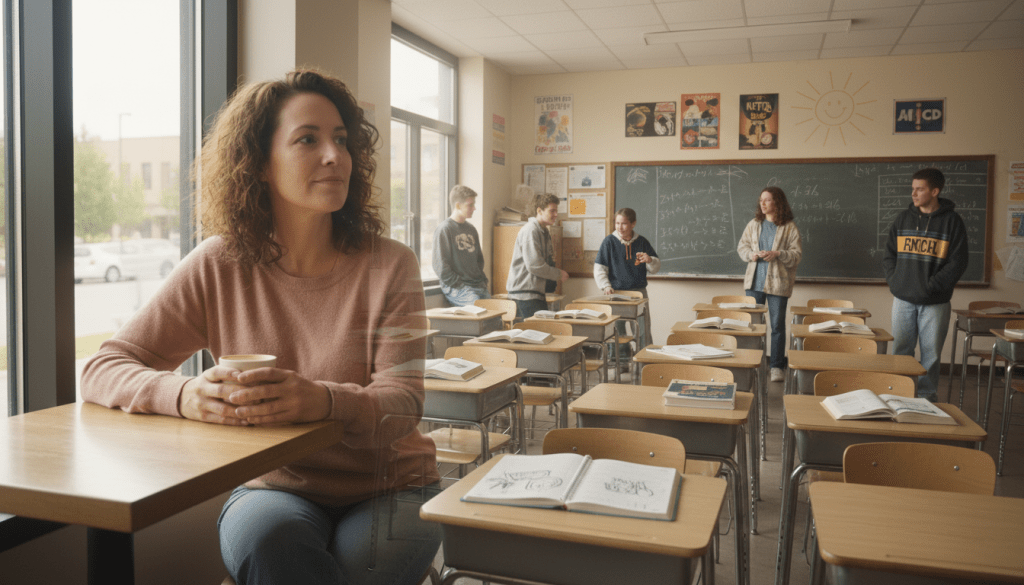
    High school is a phase for learning general knowledge – but it sure doesn’t always teach you what you actually need to survive life. 

    My biggest protest is how we spend years learning how to write formal essays to prep you for college. Then you graduate college, and pretty much everyone I know hasn’t written an essay since then. Starting from your first job, you’re writing emails, reports, Slack messages, or PowerPoint presentations. There is a major disconnect between what we learn to do and what we actually have to do when we get a job. Of course, it’s a relief that you’ll be done with essays at some point if you really hate them.

    We also study a wide range of subjects in high school, such as science, math, and history. Some topics were more interesting than others. One example is chemical elements. It’s handy to know what you should and shouldn’t combine if you don’t want to create an explosion. But I’ve forgotten how to create a parabolic curve, despite dedicating two weeks of my life to learning the math behind it. 

    In hindsight, if there’s one thing that should have been taught to everyone, it’s business. Not because everyone will want to be self-employed, but because business teaches valuable skills: leadership, communication, resilience, budgeting, and how to present and “sell” your ideas. These are skills you use whether you’re running a company or working a 9-to-5 job.So what I learned about high school was that you learn a lot of generalist knowledge that is (mostly) not applicable to your adult life. Also, at that young age, you don’t know what you really need. A lasting example is learning to bake cookies in cooking class. Since then, I’ve learned that I’d rather buy than bake them.

    Daily writing prompt
    Describe something you learned in high school.

  • A Lesson I Wish I Had Learned Earlier in Life

    A Lesson I Wish I Had Learned Earlier in Life

    If I could go back and give my younger self one piece of advice, it would be this: start a side business early. For years, I believed the traditional career path was the right one—get a job, work hard, climb the career ladder. But economies shift, industries change, and jobs disappear, so stability is not guaranteed.

    What I didn’t realize at the time is that having a side business isn’t just about making extra money. When you run even the smallest business on the side—whether it’s freelancing, selling a product, or offering a service—you create an additional financial safety net. No matter what the economic climate or job market looks like, you have something of your own to fall back on.

    Beyond financial security, a side business teaches you a valuable set of skills that you might not get from having a job. You learn how to market yourself, manage finances, solve problems creatively, and build relationships with customers. These skills are transferable to every aspect of life, including your main career.

    And here’s something else I wish I had realized sooner: a successful side business can completely change your retirement timeline. Instead of waiting until your 60s to step away from work, the income and flexibility from a thriving business can open the door to financial freedom much earlier. You’re no longer tied to the traditional path of “work until retirement age.” You gain the freedom to choose when and how you work.

    So, if I could turn back the clock, the lesson I would impart to my younger self would be to start a side business as soon as possible.

    Daily writing prompt
    Share a lesson you wish you had learned earlier in life.

  • Why I’d Love to Teach Quantum Computing for a Day

    Why I’d Love to Teach Quantum Computing for a Day

    Daily writing prompt
    What’s a job you would like to do for just one day?

    If I could have any job for just one day, I would want to be a quantum computing teacher. Teaching quantum computing isn’t just about explaining technology—it’s about understanding the applications in a field that is still developing. You become an expert on a topic that even scientists are still exploring, and that’s both challenging and exciting.

    Quantum computing combines physics, math, and computer science. Traditional computers (classical computers) use bits—ones and zeros—but quantum computers use qubits, which can exist in multiple states at once through a principle called superposition. Another important concept is quantum entanglement, where two qubits become linked so that the state of one instantly affects the other, even if they’re far apart. 

    But these principles aren’t just abstract—they have real-world applications. Quantum computing could revolutionize medicine by simulating complex molecules to help design new drugs. It might help us create stronger materials, improve weather forecasting, and transform cybersecurity through quantum encryption. In finance and logistics, quantum computers could solve optimization problems much faster than any classical computer. The potential is enormous, and it’s only just beginning.

    To teach quantum computing, you need a strong background in physics and math. Although I don’t have that, one can always still learn. Being a woman in STEM (science, technology, engineering, and math) would make this job even more meaningful. I’d love to show students—especially girls—that they can excel in this field too.

    Another reason this job appeals to me is because I love writing fiction. Quantum computing, quantum entanglement, and time travel are ideas often found in futuristic stories and TV shows. Think of worlds where computers open doors to parallel universes. Teaching quantum computing would feel like standing at the edge of science and science fiction—where imagination meets reality.

    So, for just one day, I’d love to be a quantum computing teacher. I’d help students understand the deep, strange, and beautiful ideas behind the next generation of technology. I’d connect cutting-edge science with storytelling, curiosity, and possibility. Because what could be better than helping others discover the future—and maybe inspiring a few future inventors or storytellers along the way?

    What is your dream job?

  • 5 Soft Skills for Career Success

    5 Soft Skills for Career Success

    How important are soft skills when it comes to advancing your career, getting a raise, or showing your employer that you deserve to take on more responsibility?

    Soft skills are just as important as job-specific, hard skills. But before we get into why or how they are vital, let’s look at why now is the right time to hone your soft skills.

    Recent events during the pandemic changed the lives of millions, and many have changed careers, jobs, or where they work. Inflation and AI have brought much uncertainty, with people fearing the stability of their jobs and finances, especially with the escalating prices.

    Forget vacations or even splurging on a new pair of shoes: now some people aren’t even sure if they can afford their groceries. So what can you do to increase your chances that you can keep your job, or get a job when a crisis like this occurs?

    View soft skills to read the original post about the five soft skills that will take your career to the next level.

  • Fun Facts About Writing

    Fun Facts About Writing

    How much do you love writing?  Whether you want to answer this question with a groan or heart emojis, writing is a necessary part of modern life.

    For some, writing is a lucrative career. For others, writing is necessary, everyday communication through work emails, or texts with family and friends. Writing is a skill we can’t do without.

    Over time, and with practice, you can improve on the skill to overcome writer’s block, awkward sentences, jumbled thoughts, or grammar issues. 

    Because writing is an important part of our lives, we are sharing some amazing and shocking insights on writing skills. It’s astonishing what you can achieve when you put together a series of words!

    • What is the fastest time for writing a book? According to Guinness World Records, the fastest time to produce a novel is 9 hours 5 minutes 8 seconds. A team of 53 professional authors and academics wrote Moş Crăciun & Co.
    • How quickly does the English language change? Every two hours, a new word is added to the dictionary! Leading style guides such as Chicago, APA, MLA, and AP regularly revise their rules for punctuation and words and phrases. Writers and editors must keep up with the latest changes to ensure their writing is up to standard. 
    • Is there a limit to original story ideas? J.R.R. Tolkien had the idea for the Cauldron of Story (Pot of Soup), the collective imagination. All writers dip into this hypothetical pot, meaning no new stories are ever created.
    • How old is the earliest writing? About 5,500 years ago, humans drew symbols and images during the Stone Age. Around 3500 BCE, the first writing appeared, called Sumerian cuneiform, from pictographs. This writing system was used for business transactions, recording complaints, and refunds. Much later, writing developed into literature.
    • What are the most in-demand writing jobs? The most in-demand writing jobs are in content writing. Content writers write blog posts or articles. 
    • What are the highest-paid writing jobs? Some of the highest-paid writing jobs are (in no particular order): technical writer, copywriter, medical writer, speechwriter, screenwriter, ghostwriter, grant writer, and proposal writer. 
    • How much do writers make? The average writer’s salary in the United States is $65,000 (according to ZipRecruiter). The average salary for a creative writer in the United States is $52,576 (salary.com). Copywriter jobs pay from $75,000 to $140,000 (ZipRecruiter).
    • How is creative writing similar to professional athletics? German researcher Martin Lotze discovered that brain activity during the writing process and during athletic competitions is similar. However, professional writers use the speech-processing center of the brain while amateur writers use the vision center to visualize their story.
    • Do all writers write their own stories? If you have dysgraphia (difficulty with handwriting, typing, and spelling), it can be challenging to write a story. Author Agatha Christie published investigative books with the help of a typist like Barbara Blackburn, who could type 150 words per minute.

    If you liked this post, subscribe so you don’t miss the next one!