Tag: editing

  • Reading and Phone Humor

    Reading and Phone Humor

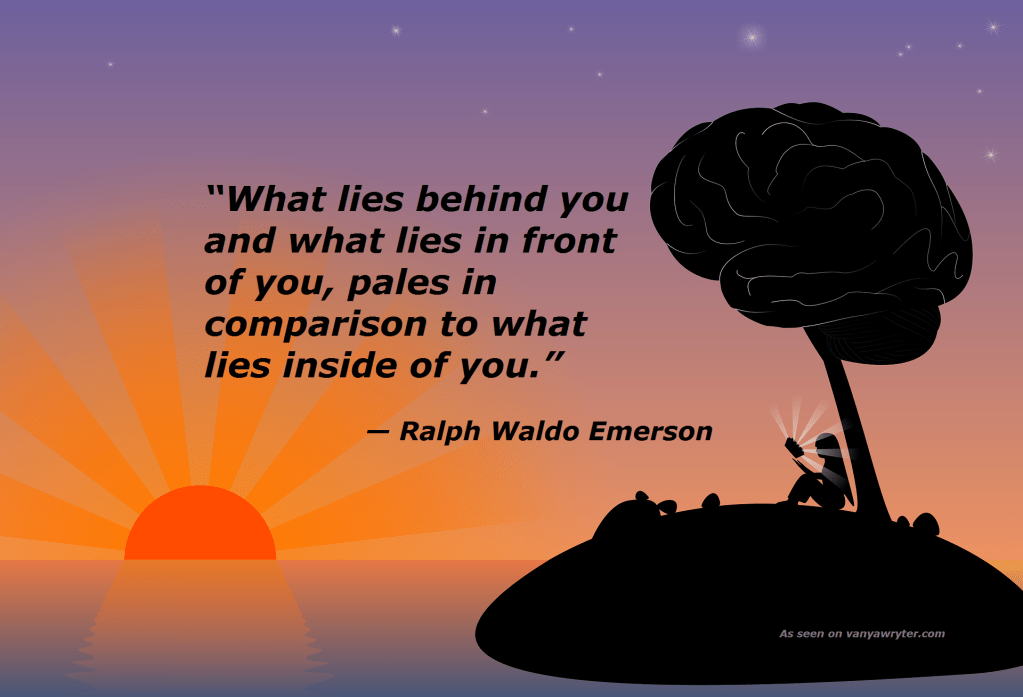
    Reading and writing are two of my favorite pastimes. Often a bit of humor catches my attention, so I collect those comics and images. I’m unable to identify the original owner of these images that I got off the internet. If you know who to give credit to, please share! In the meantime, I hope to brighten your day.

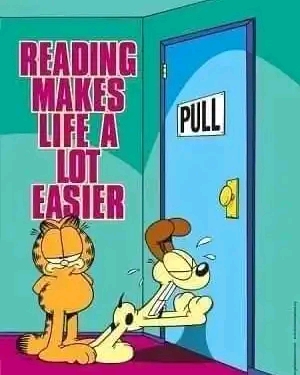
    Starting with this image… has this ever happened to you because you were distracted?

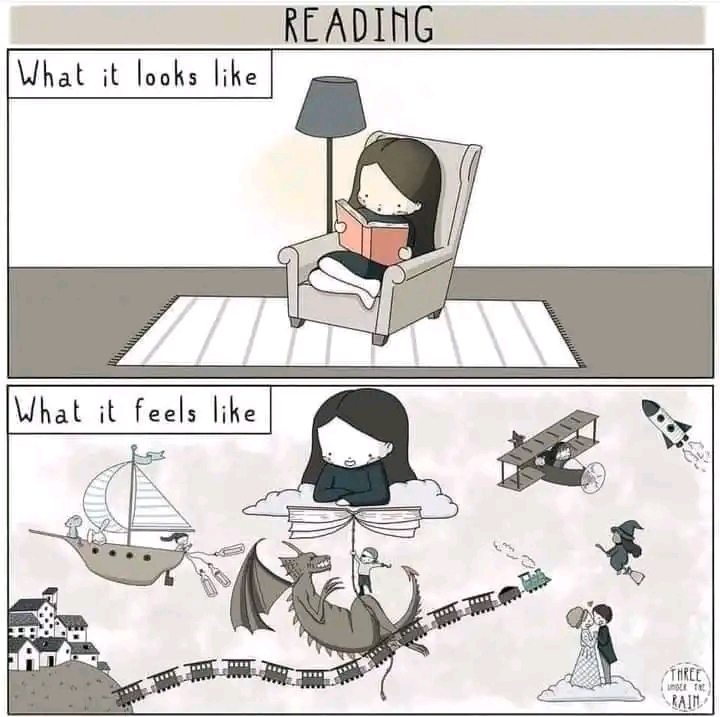
    Sometimes we can get so caught up in our book that our world looks like this:

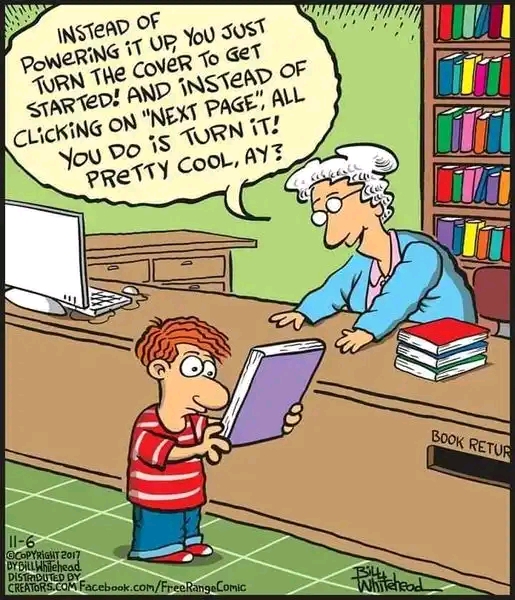
    These days, our phones can be such a complete source of information that it’s nice to go back to getting information from books.

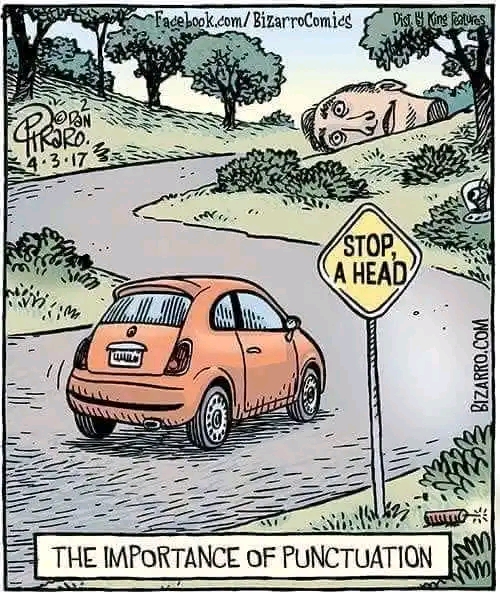
    Check your punctuation! It can make a huge difference.

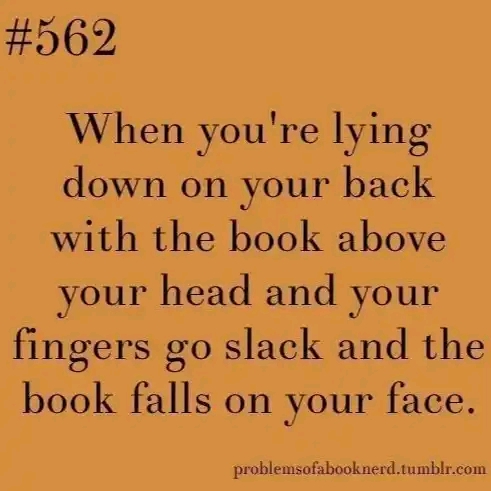
    And for those who look at their phones right before bed, they can relate to this:

    If you enjoyed this post, please subscribe so you don’t miss the next one! Thanks for reading!

  • Fun Facts About Writing

    Fun Facts About Writing

    How much do you love writing?  Whether you want to answer this question with a groan or heart emojis, writing is a necessary part of modern life.

    For some, writing is a lucrative career. For others, writing is necessary, everyday communication through work emails, or texts with family and friends. Writing is a skill we can’t do without.

    Over time, and with practice, you can improve on the skill to overcome writer’s block, awkward sentences, jumbled thoughts, or grammar issues. 

    Because writing is an important part of our lives, we are sharing some amazing and shocking insights on writing skills. It’s astonishing what you can achieve when you put together a series of words!

    • What is the fastest time for writing a book? According to Guinness World Records, the fastest time to produce a novel is 9 hours 5 minutes 8 seconds. A team of 53 professional authors and academics wrote Moş Crăciun & Co.
    • How quickly does the English language change? Every two hours, a new word is added to the dictionary! Leading style guides such as Chicago, APA, MLA, and AP regularly revise their rules for punctuation and words and phrases. Writers and editors must keep up with the latest changes to ensure their writing is up to standard. 
    • Is there a limit to original story ideas? J.R.R. Tolkien had the idea for the Cauldron of Story (Pot of Soup), the collective imagination. All writers dip into this hypothetical pot, meaning no new stories are ever created.
    • How old is the earliest writing? About 5,500 years ago, humans drew symbols and images during the Stone Age. Around 3500 BCE, the first writing appeared, called Sumerian cuneiform, from pictographs. This writing system was used for business transactions, recording complaints, and refunds. Much later, writing developed into literature.
    • What are the most in-demand writing jobs? The most in-demand writing jobs are in content writing. Content writers write blog posts or articles. 
    • What are the highest-paid writing jobs? Some of the highest-paid writing jobs are (in no particular order): technical writer, copywriter, medical writer, speechwriter, screenwriter, ghostwriter, grant writer, and proposal writer. 
    • How much do writers make? The average writer’s salary in the United States is $65,000 (according to ZipRecruiter). The average salary for a creative writer in the United States is $52,576 (salary.com). Copywriter jobs pay from $75,000 to $140,000 (ZipRecruiter).
    • How is creative writing similar to professional athletics? German researcher Martin Lotze discovered that brain activity during the writing process and during athletic competitions is similar. However, professional writers use the speech-processing center of the brain while amateur writers use the vision center to visualize their story.
    • Do all writers write their own stories? If you have dysgraphia (difficulty with handwriting, typing, and spelling), it can be challenging to write a story. Author Agatha Christie published investigative books with the help of a typist like Barbara Blackburn, who could type 150 words per minute.

    If you liked this post, subscribe so you don’t miss the next one!

  • Self-Editing Resources for First-Time or New Writers

    Self-Editing Resources for First-Time or New Writers

    Repost

    Ask anyone who writes professionally or personally, and they’ll say that it’s hard – really hard – to find their own writing mistakes. When you are your own editor, it’s tough to remain objective and read your work with fresh eyes.

    Difficult is not the same as impossible, however. You can self-edit if you know what to look for, and you develop a process. If you’re a first-time author or new to writing professionally, you may have many questions about how to edit, what to edit, and when (what stages in your writing) to edit.

    We’ve got the answers you need with resources recommended by professional book editors.

    Here are some fabulous self-editing resources to invest your time in. If you want a break from the written word, this list includes podcasts to check out as well.

    Self-Editing: The Writing Process

    Self-editing for Self-publishers: Incorporating: A Style Guide for Fiction by Richard Bradburn

    Indie authors looking to self-publish will find this resource particularly useful. It describes a three-stage editing process similar to the traditionally published one, from structural to sentence level to proofreading.

    Self-Editing for Fiction Writers, Second Edition by Renni Brown and Dave King

    Two professional editors have written this book which teaches you editing techniques on exposition, point of view, and dialogue. They provide many examples taken from manuscripts that they have edited.

    Understanding Show, Don’t Tell And Really Getting It by Janice Hardy  

    This award-winning author uses examples to demonstrate the difference between showing, not telling, when writing a story. She helps authors understand the balance between backstory, description, and narrative. 

    Revising Your Novel: First Draft to Finished Draft: A Step-by-step Guide to Revising Your Novel by Janice Hardy  

    This book tackles the big-picture problems that can go wrong with a novel. It shows how to review character and point of view issues, plot structure problems, and setting problems. You will learn to write stronger prose and build better character arcs and compelling plots.

    Cover to Cover What First-Time Authors Need to Know about Editing by Sandra Wendel

    After writing your first book, read this book to learn what to do next, before you work with an editor and prepare the book for production and publication. This is an important resource if you know little to nothing about the publication process.

    Troubleshooting Your Novel Essential Techniques for Identifying and Solving Manuscript Problems by Steven James  

    This hands-on guide takes you through the steps that will increase your chances of selling your manuscript to a publisher or gathering an audience for your book. Topics covered include story progression, character development, narrative techniques, and troubleshooting common issues. 

    Write Great Fiction – Plot & Structure by James Scott Bell 

    If you struggle with creating a plot that engages your readers, this is a resource to add to your library. The book tackles common plot problems, developing story structure, and how to create strong beginnings, middles, and ends to your story.

    Keys to Great Writing Revised and Expanded Mastering the Elements of Composition and Revision by Stephen Wilbers and Faith Sullivan 

    The writing process can be daunting. This book provides helpful techniques for the entire writing process, from prewriting to proofreading. It also has exercises to strengthen your writing skills from the sentence to the paragraph level.

    The Magic of Fiction Crafting Words Into Story: The Writer’s Guide to Writing & Editing by Beth Hill 

    This handbook for the writing and editing process is a valuable resource on all aspects of writing and editing. It covers writing and self-editing your own stories, whether you are a first-time or experienced author. 

    Self-Editing at a Sentence Level

    The Best Punctuation Book, Period by June Casagrande 

    Whether you write for an online, print, academic, or business audience, this quick reference guide covers your questions about punctuation for all styles, including AP (Associated Press), MLA (Modern Language Association), APA (American Psychological Association), and Chicago Manual of Style.

    Editing Fiction at Sentence Level by Louise Harnby 

    This book teaches you how to self-edit your manuscript at the sentence level, from narrative to dialogue. Examples are also provided to demonstrate the lessons.

    Eats, Shoots & Leaves The Zero Tolerance Approach to Punctuation by Lynne Truss 

    This resource covers grammar and punctuation insights using humor and history. It is clear from this book that a simple comma or apostrophe can completely alter the meaning of a sentence – sometimes in a hilarious way.  

    Artful Sentences Syntax as Style by Virginia Tufte  

    This book breaks down standard sentence patterns and forms to show how they convey meaning. New writers and those who love language will find this book fascinating.

    The Elements of Style by William Strunk and Elwyn Brooks White 

    Among writing manuals, this book is considered a classic. It even has its own Wikipedia entry! This guide covers good writing and composition principles, lists commonly misused words and expressions, and lists often misspelled words.

    Self-Editing Resources: Podcasts

    The Midnight Quill Podcast hosted by writers T. C. Emerys, M. J. Glenn and Maisy Osbon

    Listen to discussions about writing techniques, worldbuilding and self-publishing, with new episodes every week.

    The Editing Podcast hosted by Louise Harnby and Denise Cowle

    Explore practical tips and insights for editors and proofreaders. This podcast is available in 60 countries. 

    Key Takeaways 

    New writers published authors will find value in self-editing resources. These books cover important topics in the editing and writing process. 

    Experienced writers will benefit from the review and the checklists, and new writers finishing their first manuscript will benefit from the insight and tips. 

    For some of the latest advice on editing, writers and editors can stream podcasts from multiple sources, such as YouTube and apps.

    If you enjoyed this article, subscribe so you don’t miss the next post!

  • How Attention to Detail Increases Your Income

    How Attention to Detail Increases Your Income

    Repost

    Remember how satisfying it was to solve a mystery just by replaying the details in your mind? Where are your missing keys? Did your sweetheart lie to you? Where did you see that statistic that you could use in your report? Paying attention to details has many benefits.

    Being detail-oriented is a valuable workplace skill: Detectives analyze clues to solve a case. Medical professionals keep a close eye on details so patients get the correct dose of medication. Accountants check their numbers: a payment of $100,000 and a payment of $1,000,000 is just the difference of one zero, with very different results.

    From these examples, it’s clear that paying attention to detail is a vital skill to emphasize in resumes and skills assessments. Detail-oriented people have more workplace autonomy because employers can trust them to keep a business’s reputation.

    Attention to detail, or being detail-oriented, is valuable in the workplace. There are several ways to sharpen or improve your attention to detail skills.

    What does detail-oriented mean?

    If you are detail oriented, you are thorough, observant, and notice small details. For example, your coworker schedules a meeting for Monday, March 6th. You check the calendar and notice that March 6 is a Sunday, so you ask your coworker to update the meeting information.

    Precision is an important skill for any job, but small errors can have minor to major consequences depending on the job. 

    Book editors fix mistakes such as incorrect page references. Not catching this error can result in a minor inconvenience for the reader. An incorrectly typed line of computer code can result in the program not working for the user. A mistake on an invoice could mean an incorrect payment. Marking the left leg and not the right leg for surgery can have disastrous consequences.

    An employer trusts that a worker with close attention to detail will be accurate and careful, and not likely to make mistakes. That worker won’t need to be constantly monitored, and their work checked and rechecked. 

    Detailed-oriented people work effectively and accurately on each task. Their meticulousness will save the company embarrassment from careless errors that may harm its reputation or finances.

    Is attention to detail a skill?

    People list “attention to detail” as a skill on their resume or describe themselves as detail oriented during interviews. However, unlike other skills such as reading, writing, listening, and speaking, attention to detail is rarely tested as part of the interview process.

    Attention to detail, as mentioned already, affects a worker’s independence. A thorough and accurate worker is more likely to be given additional responsibility and more likely to be promoted. Employers trust that a detail oriented employee is careful to do each task correctly the first time. 

    Paying attention to detail also has social impacts at work. This skill improves customer and coworker relationships. A coworker who remembers the name of your kids, asks about the restaurant you decided to check out on Saturday, or wonders if your sprained ankle has improved is someone you’re more likely to remember and like.

    Similarly, the ability to remember small details improves customer relations and increases the likelihood of getting the customer’s business. Customers like to be remembered. It’s a great feeling, for example, to walk into a business and say you’ll get “the usual” and the staff knows exactly what you’re looking for.

    Does attention to detail increase your income?

    Those who are highly detail oriented are more likely to be in supervisory positions or have jobs with independence. These workers have shown that they are conscientious when doing their work. They can be trusted to check other people’s work and manage projects to complete them correctly and on time.

    Attention to detail can help you get a high-paying career, particularly for jobs in which accuracy and human lives are at stake. Here are some jobs in which attention to detail is extremely crucial:

    • Anesthesiologist assistants
    • Family medicine physicians
    • Proofreaders and copy markers
    • Prosthodontists
    • Urologists
    • Archivists
    • Camera operators, television, video and film
    • Computer programmers
    • Court reporters and simultaneous captioners
    • Cytogenetic technologists
    • Inspectors, Testers, Sorters, Samplers, and Weighers
    • Nuclear Power Reactor Operators
    • Obstetricians and Gynecologists
    • Optometrists
    • Physician Assistants
    • Skincare Specialists 
    • Watch and clock repairers

    The income range for some of these detail oriented jobs ranges from $70,000 to $187,000 (averaged income for each career). If you thrive on the details, there are jobs in which your sharp focus is highly valued.

    How to pay attention to detail at work

    Like any skill, you can improve attention to detail over time, starting with short exercises and repeated habits.

    Fun exercises you can try at home to improve your attention to detail skills include: 

    • Listening to ocean sounds or jungle sounds and paying close attention to the range of sounds that you hear
    • Studying a pair of compare/contrast pictures and listing the particular differences between the two pictures
    • Looking at a diagram and deciding whether it is the top, side, or bottom view of an object
    • Studying a picture or series of images, numbers, or letters to memorize patterns
    • Complete crossword puzzles
    • Count using a specific pattern, such as multiples of five, or looking at a page of text and counting every second word without the aid of your finger on the page

    While at work, create habits that encourage you to become detail oriented:

    • Organize your desk and your emails. When you are organized, you can track deadlines and files better, and you’re less likely to forget to answer an email.
    • Write to-do lists. These lists will help you remember all the tasks you need to complete before their deadlines. You can also keep not-to-do lists, such as cutting down on TV time and spending more time on reading, exercise, or skills improvement. 
    • Create checklists. If you notice that you frequently make mistakes when writing emails, keep a checklist that you must complete before you send the email. For example, remind yourself to check the spelling of the recipient of your message and check a word you constantly misspell. You can also keep a checklist for procedures to make sure you complete all the steps before you hand off your part of a project.
    • Practice active listening. When you are the listener, don’t just stare into space until the speaker finishes. Nod or say, “um hm” or “yes” to show you are listening. Summarize or repeat what the speaker said to demonstrate that you heard the details.
    • Take notes. When you’re at a meeting, jot down important details about your tasks. During the meeting, take notes to keep you focused on details. After the meeting, these notes can become your checklist for what you must do.

    Key Takeaways

    Attention to detail is a valuable skill. People who are detail-oriented are trusted with more responsibilities on the job because they complete tasks accurately and thoroughly. A careless mistake can cost a company their reputation and a person their job. Careers in which attention to detail can mean life or death are lucrative. You can become more detail-oriented by creating habits at work that focus your attention on details. 

    How detail-oriented are you? The next time you enter a room, take a look around for a few minutes, then close your eyes and try to remember as many details about the room as you can!

    If you enjoyed this article, subscribe so you don’t miss the next post!
  • Does punctuation matter? Some comma humor.

    Does punctuation matter? Some comma humor.

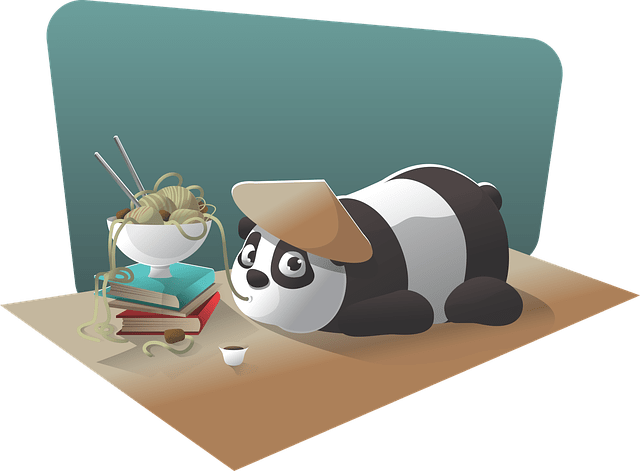
    Does punctuation matter? The answer is in this story about a panda that walked into a cafe, ordered a sandwich, ate it, and fired a gun into the air. But why did the panda do such a thing?

    The answer lies in a badly punctuated manual with a definition of “panda”:

    “Large black-and-white bear-like mammal, native to China. Eats, shoots and leaves.” – Lynne Truss, Eats, Shoots and Leaves

    Panda lying on table, slupping noodles.

    How important is it to learn punctuation rules?

    Let’s start with the disasters that could occur when the series comma is not used when it’s needed. The series comma (also called the Oxford comma, the Harvard comma, and the serial comma) is the comma that is used before you list the final item in a series of three or more items. For example, the serial comma is placed after “bunnies” in the following sentence:

    They like cats, bunnies, and bears.

    The series comma

    American English tends to use the series comma more than British English, but it really depends on which style guide a writer or editor is using.

    In some cases, the use of the series comma is necessary to clarify the meaning of a sentence, such as the sentence below, which doesn’t use the series comma.

    I like cooking my family and my pets. (Scary)

    A series comma changes the meaning.

    I like cooking, my family, and my pets. (Normal)

    Similarly, this sentence, without a series comma, describes a dog with two job titles:

    We went on a trip with my dog, the company CEO and my manager. 

    And this sentence describes a group of people and one dog.

    We went on a trip with my dog, the company CEO, and my manager. 

    Dog staring at woman, both are sitting at their computers at their desks.

    The period 

    A period shows the end of a complete thought and appears at the end of a sentence. Sometimes people follow their train of thought and place a period when they want to pause or conclude an idea. To check that you haven’t placed a period in the wrong spot, read your sentence out loud and check if the sentence makes sense.

    Notice the difference between the following two sentences:

    Help me get a job.
    Help me. Get a job.

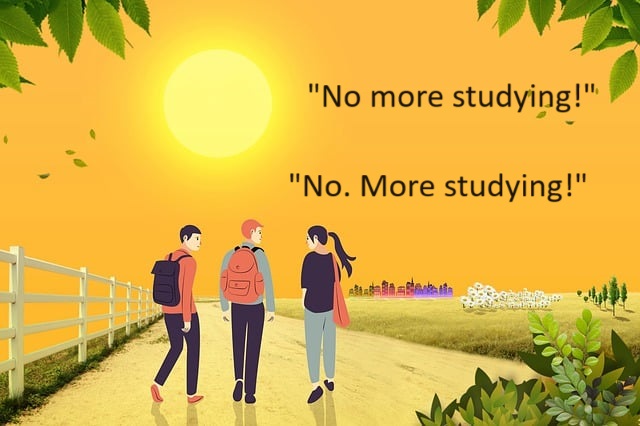
    And notice the difference between these two sentences:

    No more studying!
    No. More studying!

    Students walking together. "No more studying!"

    Be your own editor

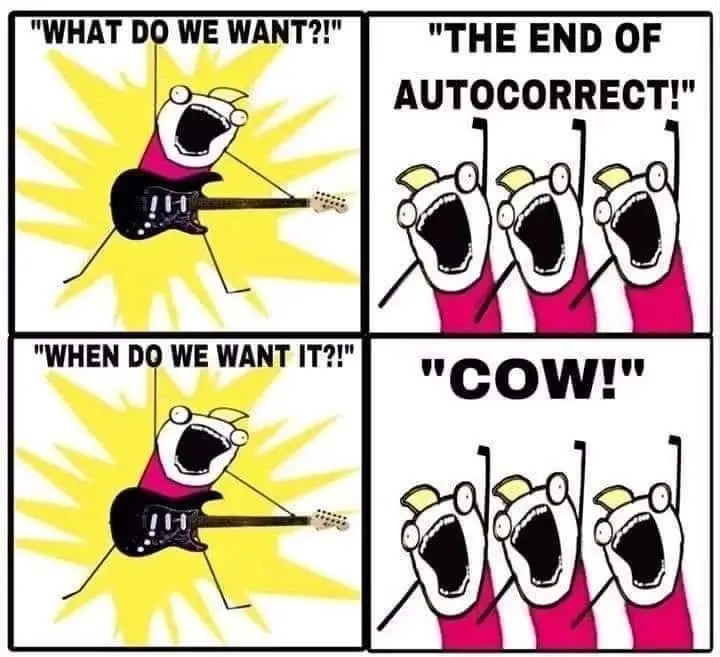
    Be your own editor and check your work. Don’t leave it up to autocorrect or free, readily available editing apps to make your final edits!

    Person shouts, "What do we want?"
People reply, "The end of autocorrect!"
Person shouts, "When do we want it?"
People reply, "Cow!"

    Photo Credits: GraphicMama-team (panda) Syaibatulhamdi (people walking), Karolina Grabowska (dog), Unknown source (autocorrect)