5 Unconventional Morning Rituals to Help You Win the Day

Daily writing prompt
What are your morning rituals? What does the first hour of your day look like?

Most morning rituals are about waking up early, exercising, and meditating. If you’re looking for something different from the usual, here are five unique morning rituals that can start your day in ways you might not expect.

1. Engage in Intentional Discomfort

Start your day with something that makes you slightly uncomfortable. It could be a 30-second cold shower, brushing your teeth with your non-dominant hand, or reading a book about a new topic. Small discomforts train your brain to be adaptable and resilient, preparing you to handle unexpected challenges throughout the day.

2. Consume “Mind Food” Before Physical Food

Before you have your usual breakfast or coffee, feed your mind with something inspiring or intellectually stimulating. Listen to a thought-provoking podcast, catch up on the news, or jot down an idea in a journal. This primes your brain for creativity and problem-solving, making the rest of your day more productive.

3. Do a Quick Reflection 

Do a quick reflection about your goals for the day. What do you hope to achieve today that you didn’t do yesterday? Or what were you proud of achieving yesterday that you want to achieve again?

4. Adopt a Mindset for the Day

Pick a persona that embodies the qualities you want to channel. Feeling sluggish? Be more athletic. Lacking confidence? Be a charismatic leader. Pretend you’re someone who naturally excels at whatever challenges you’re facing that day. By stepping into a different mindset, you’ll access parts of yourself you don’t usually tap into.

5. Send Gratitude

Instead of just listing things you’re grateful for, actively express gratitude. Send a quick message to a friend, coworker, or family member telling them why you appreciate them. This not only strengthens relationships but also puts you in a positive, abundance-focused mindset before you even start your workday.

Key Takeaways

Morning rituals don’t have to be generic or time-consuming. By incorporating even one of these unconventional habits, you can shake up your routine, build mental resilience, and set yourself up for a successful day ahead. Try one tomorrow and see how it changes your mindset!

Tips to Improve Your Mindset and Well-Being

Words have tremendous power and influence. Terse statements such as “I love you,” “I hate you,” “You’re hired,” and “You’re fired” can dramatically change a person’s life. But it isn’t just what we say to another person that can have a tremendous impact. The words we choose to say can change how other people perceive us, and change our own mindset. Here are some tips to create a positive way of thinking.

Tip 1: Choose words that put you in a positive light.

Compare the following statements. What does each pair of statements say about the speaker’s mindset? Which words are confident? Which words are apologetic?

Sorry, I’m late.

Thank you for waiting.

The first expression is very common. However, you are starting off with an apology (nothing wrong with that). But by saying, “Thank you for waiting,” you are acknowledging the other person and speaking in a more positive way by not beginning with sorry.

Tip 2: Say what you mean to avoid a possible misunderstanding.

Giving an order with “Don’t” is quick and to the point. “Don’t step on the grass.” But using “don’t” also emphasizes the negative. Sometimes, what people hear is not “DON’T step on the grass” but “Step on the grass.” You can make the same point using positive wording: “Remember to avoid the new grass.” Or “Remember to log off before you leave the office.”

Tip 3: Be careful with meaning and intent.

I didn’t hear what you said. Could you say it again?

Could you repeat what you said in a different way? 

A slight change in wording changes your meaning and intent. In the first example, you’re admitting you weren’t paying attention and the speaker must remember what he or she said. In the second example, you’re implying you were listening (even if your mind drifted) and you want to make sure you understood what was said.

Tip 4: Speak like you are being proactive, not reactive.

How do I know if I can finish the task correctly?

What if I make a mistake using the new software?

These two examples have the same negative mindset in common. The speaker is focused on failure or possible failure. The speaker is leaving the outcome to chance and fate.

What can I do to ensure I finish this task correctly? 

What are some common mistakes and what can I do to avoid them?

Compare the negative mindset examples to the sentences above. Notice the change to a positive mindset. The speaker is taking initiative and controlling the outcome. The speaker doesn’t know what to do, but is telling the listener that he or she wants to be prepared and will make sure the outcome will be the best possible one.

Key Takeaways

The words you choose to express an idea are part of your mindset. You can express an idea in a way that makes you appear negative and lacking in confidence. Or you can choose words that show initiative and positivity. Your words are a powerful extension of your personality and mindset.

If you liked this post, subscribe so you don’t miss the next one!

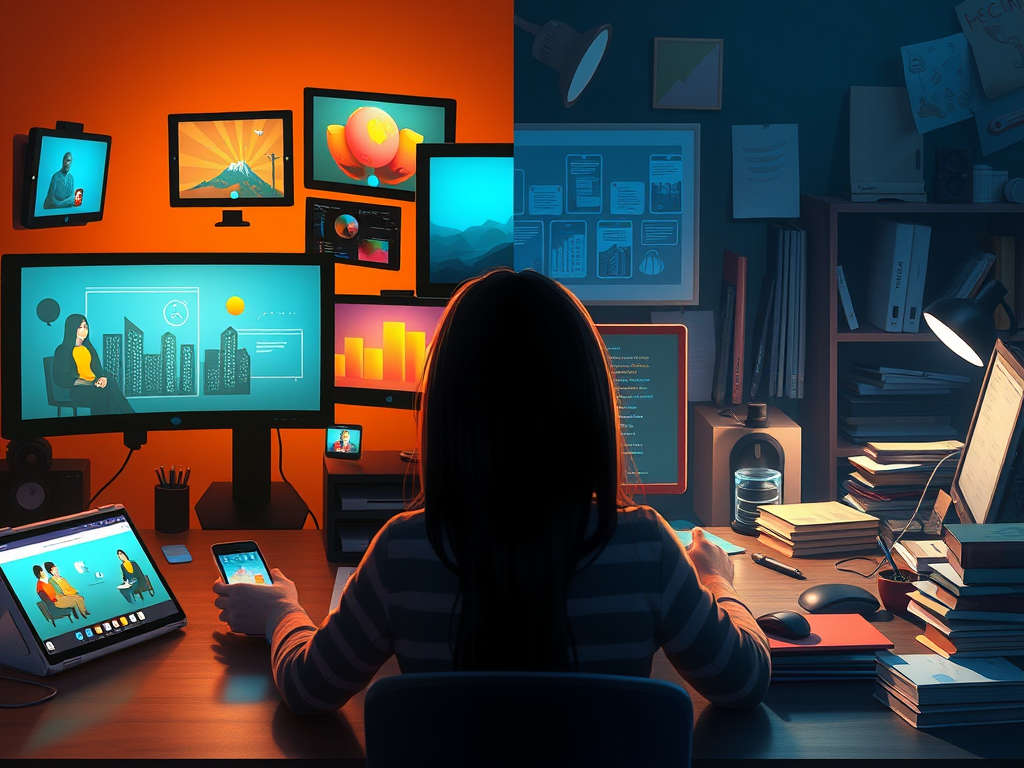
How has technology changed your job?

Daily writing prompt
How has technology changed your job?

Technology has changed the way I work, giving me more flexibility, and saving me valuable time and energy.

Technology has made it possible to do an office job by working from home. When I work remotely, I am more focused. Without the distractions of side conversations or office noise, I can concentrate better on my work. Having flexible hours makes my days less stressful. If I’m tired, I sleep in and work later, for example. I also get to wear comfortable clothes and walk around the office in socks or slippers.

Collaboration on projects with individuals in different time zones has also become much easier. Tools like Slack, Google Drive, and project management software allow for quick communication and file sharing, reducing the need to meet in person. This means work can continue around the clock as team members contribute at different hours.

Another major advantage is the elimination of a lengthy commute and dealing with traffic jams. Travel time is now used for more useful things, like finishing work earlier, doing some housework, and running errands.

Technology has also allowed me to make better use of breaks. Instead of being stuck in an office breakroom, killing time until I go back to my desk, I can spend fifteen minutes quickly completing some chores so I don’t need to do them later. This flexibility has greatly improved my work-life balance.

Another great benefit is not having to worry about the weather. No more stressful drives through heavy rain or snow! I can avoid the hazards of bad weather and go out when the weather is better.

Lastly, technology has made me more aware of online safety. Part of my job now includes being aware of cybersecurity and data protection. I take extra precautions to safeguard company files. It’s no longer sufficient to just show up at the office, turn on the computer, and type away.

Overall, technology has significantly improved my work life, making it more efficient, comfortable, and globally connected.

Is AI Killing Creativity or Expanding It?

Artificial Intelligence (AI) is becoming a part of every aspect of our lives—from writing and art to music and filmmaking. I’ve seen framed, AI-generated pictures at a local coffee shop, chatbots that can craft entire stories, and videos created by inputting ideas. But this rapid advancement brings up an important question: is AI enhancing creativity or killing it?

Some argue that AI is a tool, just like a paintbrush or a camera. It can help artists brainstorm ideas, automate tedious tasks, and create work that they need assistance with. AI-powered design software, for example, allows creators to explore variations of a concept within seconds, helping them refine their vision faster than before. Talented storytellers with limited budgets can use AI to illustrate their tales for them so they aren’t limited to words on a page.

On the flip side, critics argue that AI-generated content leads to generic, soulless creations. AI steals from the original artists without giving them credit. For example, it creates a painting in the style of an artist and calls it AI art. People who want to make money but cannot write search for ways to use AI to quickly and cheaply write stories for them. However, will true artistry be devalued if people consume AI-generated content without appreciating the effort that traditionally goes into the creative process? Some fear that creative jobs could disappear altogether as businesses turn to AI for cheap, efficient content production.

But history has shown that technological advancements don’t eliminate creativity—they shift it. Photography didn’t kill painting, and word processing didn’t end story writing. Instead, they expanded the ways people can create and express themselves. Perhaps AI is just the next evolution, challenging humans to redefine what creativity means.

What do you think? Is AI a powerful ally for artists, or is it taking the soul out of creativity?  

Full Moon Madness – Time to Act Naughty

From March 13 to 14, the lunar eclipse made the news. The sun, Earth, and moon aligned, and the Earth cast a shadow on the moon, causing it to have a reddish hue. This event is sometimes called the “blood moon.”

On eclipse nights, some people claim to have insomnia or restlessness because the gravitational pull affects circadian rhythms.

Certain myths also abound during eclipses, such as the fear that it is unsafe to go out during an eclipse. Or the belief that food and water left out during an eclipse is unsafe to eat.

For me, the lunar eclipse was the perfect reason to stay up late so I could view such a rare occurrence. Of course, it was a school night, so it sure felt naughty to be awake when I should have been in bed! However, the reward was the priceless sight of a blood moon.

image credit: D_Van_Rensburg