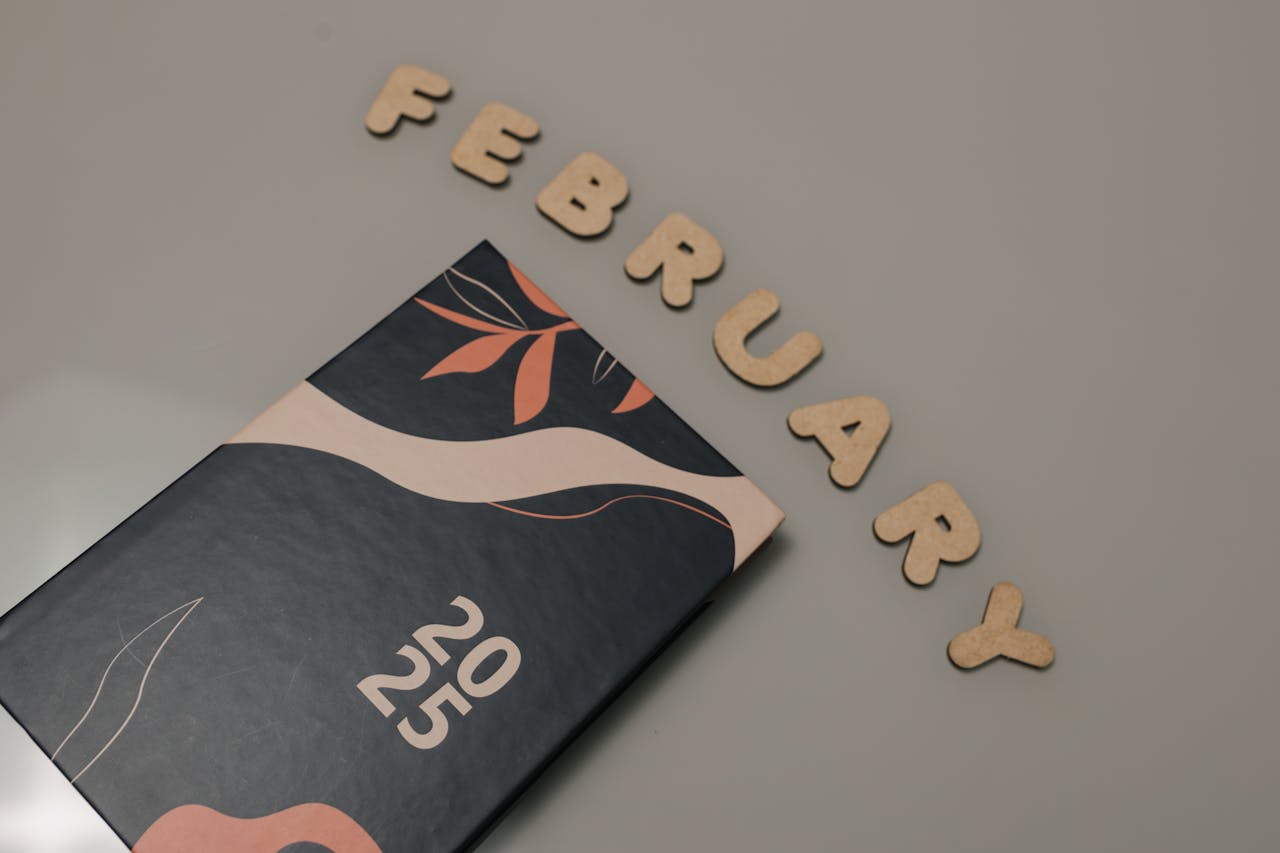
Why Is February the Shortest Month? 

February is an oddity. While the other months have at least 30 days, February alone has just 28 (or 29 in a leap year). But why?

The Roman Calendar’s Quirks

The origin of February’s short length goes back to ancient Rome. The earliest Roman calendar had only 10 months. To sync the calendar with the lunar year, the Roman king Numa Pompilius added January and February to the calendar. 

However, the Romans considered even numbers unlucky, and to avoid an “unlucky” year, months were adjusted to have either 29 or 31 days—except for February, which was stuck with 28.

Leap Years and Adjustments

Later, Julius Caesar introduced a leap day to be inserted in the calendar every fourth year, so leap years kept things aligned with the solar year. The Gregorian calendar, adopted in 1582 by Pope Gregory XIII, refined leap year rules but kept February as the odd month out.

Do People Actually Know How Many Days Are in Each Month?

It’s easier to remember that February has 28 days (and 29 days every four years) because it is so peculiar. The number of days for the other months can be trickier to recall. 

A surprising number of people rely on tricks to remember month lengths. Some use the rhyme:
“Thirty days hath September, April, June, and November…” Others prefer the knuckle method: counting the peaks and dips of the knuckles on their hands to determine 30- and 31-day months. But ask someone off the top of their head how many days are in, say, August, and they might hesitate. 

The next time you notice February’s shorter length, remember: it’s all thanks to ancient superstitions and the quirks of the Roman calendar.

Does Having Too Many Options Make Us Unhappier or Happier?

We live in a time of limitless choices. From streaming services to phone plans, from online shopping items to restaurants, we are constantly presented with an overwhelming number of options. Having more choices seems like a good thing—we have the ability to tailor our lives to our exact preferences. But is there a downside?

I think about the last time I stared at the menu of movie options for online streaming. Or the last time I tried to choose the correct shade of lipstick from thirty different shades of pink and red.

Too many options can lead to decision paralysis. What, exactly, is the “right” option? And once we’ve picked A, B, or C…. we sometimes circle back to the beginning and start weighing our choices again, just in case we could choose something better.

This “choice overload” can make simple decisions—like picking a restaurant for dinner—stressful.

Moreover, our expectations rise as choices increase. If we have 40 different types of tea to choose from as we stand in the tea aisle of the store, we expect our final choice to be perfect. Should you stick with the same brand of green tea or try a smaller box of something new? When your choice falls short, disappointment follows, and you’re stuck with a whole box of tea you don’t like. 

Contrast this with having just a few choices, where we are more likely to feel content with what we pick. I’ve been to a diner with only five choices for breakfast. You could play a game of eeny meeny miny moe and make a quick decision.

So, how can we deal with too many options? One approach is to simplify decision-making by setting some criteria, trusting our instincts, or just making a snap decision and trusting it’s “good enough.” 

What do you think? Do you feel overwhelmed by too many choices, or do you thrive on having endless possibilities? 

The Cybersecurity Threat That Included Ransomware

Last week, chaos erupted at the office. Well, it was thoughtful chaos. Our company had a discussion about what we would need to do if we faced a cybersecurity threat that sent ransomware throughout our computer systems.

It was a hypothetical situation, of course. Someone added an image of a dumpster fire on our collaborative Miro board. Another person added a happy face using the emoji stickers. But despite the levity of the images, the discussion was a real one.

Cyber threats are everywhere, and no business is too small to be a target. Hackers don’t care if you’re running a Fortune 500 company or a local coffee shop; if they can get in, they will. That’s why having solid cybersecurity measures in place isn’t just a good idea—it’s a must. And thus, the reason for our discussion. We covered many points in our two-hour hypothetical situation, including the following points for businesses.

Keeping Data Safe

Your business holds a ton of sensitive information—customer details, financial records, employee data—just a few examples. If hackers get their hands on it, the consequences can be devastating. Encrypting data, using multi-factor authentication, and running security checks regularly can help keep data safely stored away.

Avoid Losing Money

Cyberattacks like ransomware and phishing scams can drain your bank account faster than you can say “data breach.” Small businesses, especially, don’t always have the extra cash to bounce back from a major attack. Investing in firewalls and anti-malware tools, and training your team to spot scams can save you a fortune in the long run.

Earning Customer Trust

Nobody wants to do business with a company that can’t protect their personal info. A security breach can destroy your reputation overnight. Show them you take their privacy seriously by putting strong security measures in place—it’ll go a long way in building trust and loyalty.

Having a Solid Plan

Employees should be aware of what to do if their computer becomes infected or if they are suddenly denied access to company data because of a cyber attack. Company leadership should also have solid protocols for contacting staff and customers when they do discover ransomware. Having a plan will get the company back to normal operations as soon as possible.  

Key Takeaways

Cybersecurity isn’t just for tech giants—it’s for everyone. By being proactive and setting up strong security measures, you can avoid data disasters, keep your business running smoothly, and give your customers peace of mind. 

Thanks for reading this post!

Why You Shouldn’t Jump to Conclusions About People

We’ve all been there—someone snaps at us, ignores us, or seems distant, and our first instinct is to assume the worst. Maybe we think they’re rude, unfriendly, or even mean. But what if there’s more to the story?

People carry invisible burdens. The coworker who seemed short-tempered might have just received bad news. The barista who got your order wrong might not be careless, but exhausted from working two jobs. The student sitting alone at lunch isn’t necessarily unpopular—they might be grieving a lost friend and need space.

It’s easy to make snap judgments, but those judgments are often wrong. Imagine how many times someone might have misjudged you when you were having a tough day. Wouldn’t you want them to be patient and understanding rather than assuming the worst?

Kindness goes a long way. A smile, a gentle word, or even just withholding judgment can make a difference in someone’s day. Instead of assuming someone is naturally unkind or incompetent, consider the possibility that they’re struggling with something you don’t see.

The world would be a much better place if we all practiced more patience and compassion. So next time you find yourself forming a negative opinion too quickly, pause. Ask yourself, Could there be another explanation? Approach others with grace, and you might be surprised at the kindness that comes back to you.

Thanks for reading this post!

Why History Must Be Read in Many Languages

How do you know if you’re reading a good history book or a bad one?

This video I watched stated that a thirty-second test will help you to determine the quality of the history book you’re reading. If the book is about a part of the world that you’re not from, then flip to the bibliography at the end.

Do you see any sources in the language of the country that you’re reading about? If there aren’t any, the advice would be to toss the book. For example, to get a more authentic experience about the history of the Middle East, the sources should ideally be in four of the languages spoken in the area to get the best authentic experience. Don’t settle for a foreign translation of the history of the place you are reading about.

Here is the video that makes this point about authentic history.