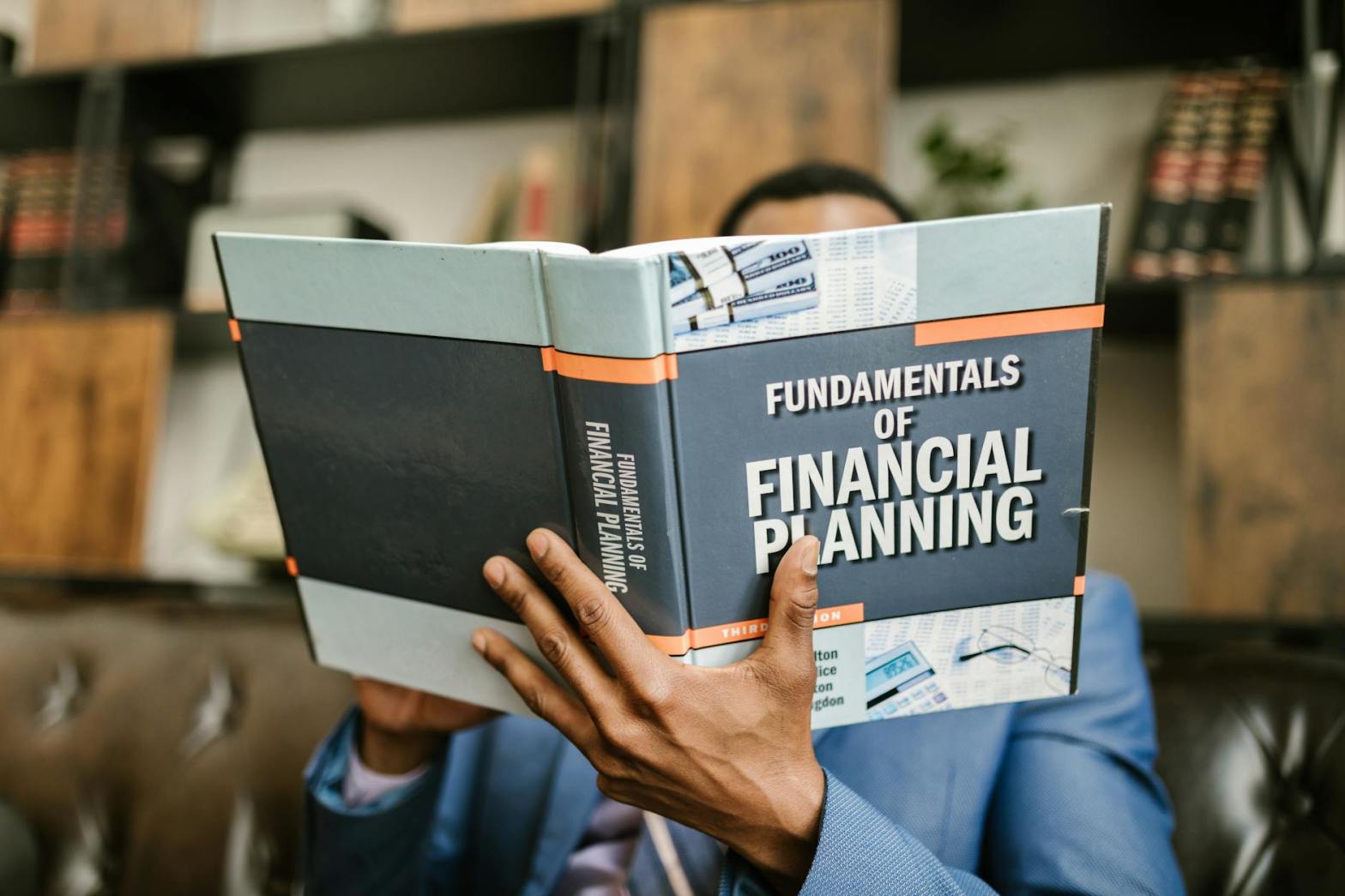
Why Learn Financial Literacy From a Young Age

In today’s unpredictable economy, financial literacy is more important than ever. Housing costs consist of a much bigger portion of our income than it did two generations ago. Yet, many young people graduate high school without understanding how to budget, invest, or manage debt. Even if students haven’t started their first job or applied for their first credit card, learning financial literacy early can set them up for lifelong success.

Financial Literacy Prepares Young People for Real Life

Schools teach math, science, and history, but they often overlook one of the most crucial subjects: money management. Understanding how to budget, save, and invest should be a fundamental part of education. Without these skills, young adults enter the workforce unprepared to handle their finances, leading to unnecessary debt and financial stress.

If students learned about topics like interest, credit scores, responsible spending habits, and investment options, they would be better equipped to make informed financial decisions. This foundation would help prevent impulsive spending habits, which can have long-term consequences. Even if they don’t plan to invest, learning about investment options such as real estate, bitcoin, and stocks helps them avoid possible scams. They should also learn debt management, such as paying off credit cards, loans, and mortgages. 

A Job Alone Is No Longer Enough

Schools teach that the natural path in life is school, then a job, then financial stability. While having a steady income is important, today’s economy is more unpredictable than ever. Layoffs, automation, and economic downturns can make job security uncertain. Relying on a single income source can leave people vulnerable to financial hardships.

This is why financial literacy should go beyond just budgeting and saving—it should also emphasize multiple streams of income. Schools should teach students about side hustles, investments, and ways to upskill without going back to school to provide financial security outside of traditional employment.

Side Hustles and Alternative Career Paths Should Be Encouraged

The traditional college route is no longer the only path to success. While higher education can be beneficial, it’s not the right choice for everyone. Many students would benefit from learning about trades, entrepreneurship, and freelancing as viable career options.

Side hustles—such as finding a job and then finding your own clients for the work you do (such as graphic design) are an option. Starting a side business, such as reselling products, allow individuals to generate additional income. Likewise, trade careers in plumbing, electrical work, and construction offer high-paying opportunities. Schools should educate students on these options to help them make informed career choices.

Key Takeaways

Financial literacy should be taught at an early age. It provides students with the tools needed to navigate today’s economy, build wealth, and create financial security. Learning financial literacy prepares students for real-world financial challenges, ensuring they have the knowledge and skills needed to succeed in any economic climate.

Strategies To Help You Cope With Negative Feelings

Daily writing prompt
What strategies do you use to cope with negative feelings?

Negative feelings are a natural part of life, but managing them can make all the difference in our mental and emotional well-being. We need to make a conscious effort and employ the right strategies to prevent them from overwhelming us. Here are some unconventional yet effective ways to deal with negativity.

1. Write a Letter You’ll Never Send

Sometimes, we bottle up emotions because we feel unsafe expressing them. Writing a letter to someone (or even to yourself) without intending to send it can be a therapeutic way to release frustration, disappointment, or sadness. This process provides emotional clarity without the fear of judgment.

2. Engage in Safe Destruction

Find a safe, non-harmful way to release pent-up frustration. This could be throwing rocks in the water, smashing a piece of junk you planned to throw out anyway, or popping balloons. The physical release can be surprisingly satisfying and help channel emotions productively.

3. Try Music or Singing

Music has a profound impact on our emotions. Channeling your emotions into music or singing can change your mood, particularly if it’s loud music or angry song lyrics. These activities can release tension, change your focus, and instantly improve mood.

4. Have a “Worst-Case Scenario” Brainstorming Session

Instead of suppressing worries or replaying negative thoughts over and over, fully explore the worst-case scenario in a structured way. Write down what could go wrong, how you would handle it, and the most likely outcome. This method helps put things into perspective and often reduces anxiety.

5. Create a “Letting Go” Ritual

Develop a personal ritual that symbolizes releasing negative emotions. This could be writing worries on a piece of paper and setting the paper on fire (in a safe place) or taking a symbolic shower to “wash away” stress. Associating emotions with actions can make it easier to move on.

6. Make Small Changes to Your Environment

Our surroundings can influence our emotions. Instead of a drastic change, make a small shift—rearrange your furniture, remove objects you associate with bad memories, or change your routine by going to a different room. These subtle changes can refresh your mindset and break negative thought patterns.

By incorporating these unique strategies, you can find creative and effective ways to manage negative feelings while maintaining a healthy emotional balance.

Thanks for reading!

Celebrating Women Who Changed the World

International Women’s Day, March 8, is a day to celebrate women: your mother, your sister, your daughter, your spouse, your friend, your coworker… any woman you would like to applaud. I would like to celebrate the achievements of remarkable women who made lasting impacts in history, science, and innovation. I’m highlighting three extraordinary people: Wu Zetian, Hedy Lamarr, Judith Love Cohen, and Elizabeth Magie.

Wu Zetian: China’s Only Female Emperor

Wu Zetian (624–705) became emperor in a male-dominated society, at a time in history when women weren’t rulers in China. This rank in itself was an amazing achievement. Rising from a concubine to Empress Consort and eventually Emperor of the Tang Dynasty, she was known for her intelligence, political acumen, and ambitious reforms. She expanded the civil service examination system, giving more people opportunities based on merit rather than birthright. 

Hedy Lamarr: Hollywood Star and Inventor of WiFi

A glamorous Hollywood actress of the 1930s and 1940s, Hedy Lamarr was also a brilliant inventor. During World War II, she co-developed a frequency-hopping communication system to prevent enemy interception of radio signals. This pioneering technology laid the groundwork for modern Wi-Fi, Bluetooth, and GPS. In her time, she didn’t get the recognition she deserved. Now, her contributions as a visionary innovator in science are being acknowledged.

Judith Love Cohen: Aerospace Engineer Behind the Apollo Missions

Engineer Judith Love Cohen played a key role in developing the abort-guidance system (AGS) for the Apollo 13 lunar module. She worked on the guidance system to help astronauts return to Earth while she was in labor, and solved the problem before delivering her son. She was also an advocate for women in STEM (science, technology, engineering, math), encouraging young girls to pursue careers in engineering. Her legacy is a testament to the importance of women in space exploration.

Elizabeth Magie: Inventor of the Game Monopoly

Elizabeth Magie invented “The Landlord’s Game” to illustrate the dangers of monopolies. This game popularized circular board games. Previously, board games were usually linear. Parker Brothers paid her $500 for the game, with no royalties. Although her idea was later adapted into Monopoly, her contributions to the game were not acknowledged during her lifetime. (A sad fact, considering that Monopoly ranks as one of the top ten board games of all time by units sold.)

This Women’s Day, let’s celebrate the achievements of women in history!

Image credit: Elf-Moondance

Dreaded Questions: “How Old Are You?”

Daily writing prompt
What is one question you hate to be asked? Explain.

If there’s one question I hate being asked, it’s “How old are you?” Throughout the different stages of my life, I vacillated from welcoming to not caring to disliking that question. 

As a child, age is something we celebrate down to the smallest detail. You’re not just six; you’re six and a half. You’re not simply eight; you’re eight and three months. Every added fraction of a year is a milestone, a step closer to the next exciting stage of life.

Then, as a teenager, age becomes a frustrating boundary. It takes forever to reach the magic age of eighteen. You’re constantly reminded of what you’re not old enough to do—too young to drive, too young to go to late-night parties, too young for independence. The years seem to stretch endlessly before you, filled with rules and restrictions.

But then, something shifts. You finally reach the legal age for certain privileges—driving, voting, entering clubs. Suddenly, answering “How old are you?” feels like a badge of honor. You say your age with pride because it now represents newfound freedom. You can’t wait to show your ID card.

Yet, time passes, and one day, that same question feels different. When you realize no one is checking your ID anymore, you wonder—do I look older? Am I showing my age? You want to show your ID card to prove you’re still young enough to be questioned.

As the years go by, you don’t want to be asked about your age anymore. That question is a reminder that you’re older. Your parents are old. You’re not a kid anymore. You have your own kids.

By now, your experience and maturity should speak for themselves. And more importantly (unlike when you were exactly eight years and three months old), you have trouble remembering exactly how old you are because you don’t want to know your age! Chances are, at this stage of your life, you might have a friend who has been celebrating a twenty-first birthday for the past ten years.

Then, you hit the senior years, and it’s like experiencing the same challenges of a teenager all over again. Age once again determines what you can or can’t do but in a different way. Are you old enough for retirement? Old enough for senior discounts? Old enough to be taken seriously or dismissed as just “old”?

At some point, you might even forget how old you are. Your teenage years might feel like yesterday. Your cousin doesn’t live in the same city anymore – she moved twice already in twenty years. And you aren’t the youngest in your friend group – you’re the oldest. You’re starting to realize the passage of time.

Ultimately, no matter how old you are, the question carries weight. Are you too old, too young, not old enough, or not young enough? The question, “How old are you?” is asking for a number—but how you feel about it changes with every year.

Thanks for reading!

6 Ways to Get People to Remember You

You can make lasting impressions when you are easy to remember and hard to forget. Whether it’s a social situation, a job interview, or a business situation, people will want to speak with you because they like you, and you create a strong initial impression. To help you achieve that goal, here are six ways to get people to remember you.

1 Say and Spell the Other Person’s Name

After you meet someone new, say their name during your conversation as soon as possible. Repeat their name at the end, closing with, “It was nice meeting you, (name).” People like to be remembered, and if you make an effort to remember this person, they are more likely to remember you as well. For me, it also helps to mentally spell that person’s name in my mind because it’s a visual attempt to associate their name and face in my memory.

2 Radiate Positive Energy

People associate you with what you say. If you complain a lot about the news, the weather, or other people, you may be perceived as negative. If you compliment others and speak positively about people, places, and events, others will associate you with this optimism. Make positive energy your brand, and that is what people will remember about you.

3 Be a Great Listener

People appreciate it when you show that you’ve been listening to what they say. If you repeat part of the last point they made or summarize what they’ve been talking about, it shows that you are a good listener. It also gives the impression that you value what the other person has said.

4 Share a Story

People remember stories. If you have a name that is difficult to remember, an anecdote about your name makes it easier to recall. Something catchy is as simple as an adjective + name: smart Sam or adventurous Alex. Then they will remember your name and something about your personality.

5 Give a Gift

When someone gives you something, you feel obligated to give them something in return. This is the Law of Reciprocity. You see this often when you go shopping. A staff member gives out free food samples, increasing the chances that the shopper will reciprocate by buying an item from the store. Similarly, when you open the door for someone, buy a coworker a coffee, or share useful information (like telling someone about a 2-for-1 deal you heard about), that person will view you more positively.

6 Be Vulnerable

One way to get people to remember you is to be vulnerable. When you make mistakes, others see you as more human and relatable. When you meet someone for the first time, share a quick anecdote about an embarrassing moment. For example, share how you ate the spicy green wasabi because you thought it was mint ice cream. People like people they can relate to.

Key Takeaways

Sometimes our first interaction with someone is brief. To create a lasting impact, try one of these six techniques to make yourself more memorable. As the saying goes, you have one chance to make a lasting impression.

If you enjoyed this article, subscribe to make sure you don’t miss the next post!