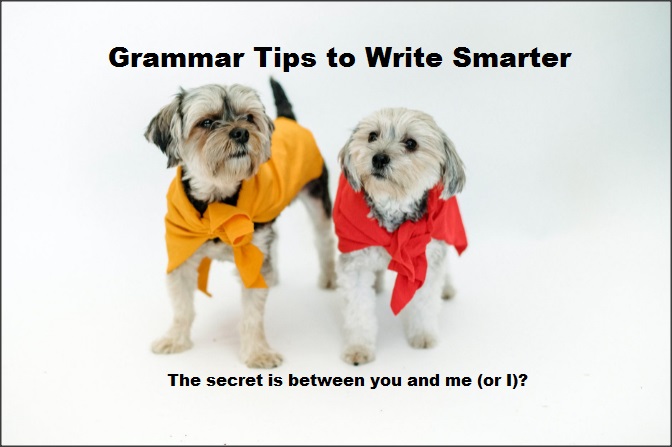
10 Quick Grammar Tips that Make You Look Smart

Grammar is a tough subject, wouldn’t you agree? Even if you’re a grammar nerd (cough) expert, you’ll find that rules change. English is a living language, and what wasn’t correct before can become accepted!

On the flip side, some mistakes are repeated so often that people think they are correct when they aren’t. Here are ten quick grammar tips to avoid common slips and make you look smart.

Tip 1: its/it’s

Wrong: Its rare to see an egg that laughs at it’s own jokes.
Right: It’s rare to see an egg that laughs at its own jokes.

To apostrophe or not to apostrophe? When in doubt, say it is in the sentence because it’s is short for it is. Its shows possession for animals and inanimate objects. It sounds strange to say the cat licked it is paws, but you can say the cat licked its paws.

Photo Credit: Roman Odintsov

Tip 2: must’ve, should’ve, would’ve, could’ve

Wrong: They should of purchased the home when it was a buyer’s market.
Right: They should have purchased the home when it was a buyer’s market.

These words are misused much more often than they should! Must of, should of, would of, and could of were born when we started to spell these expressions the way they sound. Contractions such as must’ve from must have became must of. Time to change should of and would of and could of back to should’ve, would’ve, and could’ve!

Tip 3: there, their, they’re

Wrong: There staring out the window at they’re friends over their.
Right: They’re staring out the window at their friends over there.

These three words sound the same but have different meanings. Remember that they’re makes sense if you can replace it with they are in the sentence. There and here both have “ere” and refer to places. You use their to show possession, such as when someone is the heir to something.

Photo Credit: Suzy Hazelwood

Tip 4: than/then

Wrong: That insurance plan was more expensive then that one.
Right: That insurance plan was more expensive than that one.

Quick tip to remember which is which: then with an “e” is used for time while than with an “a” is used for comparisons.

Tip 5: literally

Wrong: My head literally exploded from all the new information during class that day.
Right: I was overwhelmed by all the new information from class that day.

Some people like to use literally to emphasize what they are saying. But this word means that what you are saying is what really happened. Your head actually exploded, which would have been gruesome. The opposite is also true. Saying you “literally ate three hamburgers in one sitting” is a great accomplishment. But eating is eating.   

Photo Credit: ViTalko

Tip 6: lie, lay

Wrong: He wanted to lay down and sleep under the desk where his boss wouldn’t see him.
Right: He wanted to lie down and sleep under the desk where his boss wouldn’t see him.

Here’s how to remember the difference between lie and lay. The past tense of lie is lay. The past tense of lay is laid. That alone is confusing. Try the following tip.

Lie doesn’t require a direct object but lay requires a direct object. You lie (no direct object) down on the bed. You lay the book (direct object) on the table. Yesterday you lay (no direct object) on the bed. Last night you laid the book (direct object) on the table.

Tip 7: whet or wet

Wrong: She wanted to wet her appetite by taking a sniff of her mom’s food.
Right: She wanted to whet her appetite by taking a sniff of her mom’s food.

There is no moisture involved when you are trying to arouse your desire for food! The expression whet your appetite originated sometime in the 1600s when “whet” referred to making one’s interest or desire more acute.

Photo Credit: freestocks.org

Tip 8: could care less

Wrong: I could care less if you could melt gold with your mind.
Right: I couldn’t care less if you could melt gold with your mind.

I couldn’t care less means I couldn’t be less interested in something. If I could care less, I still have a bit of interest in something. You could still convince me that melting gold is even less interesting if you tried hard enough.

Tip 9: I or me?

Wrong: Mario talked with Luigi and I about the mushrooms.
Right: Mario talked with Luigi and me about the mushrooms.

A tip that will help you to remember whether to use “I” or “me” is to take the other name out of the sentence. Does it sound right to say, “Mario talked with I about the mushrooms”? It sounds better to say, “Mario talked with me about the mushrooms.”

Grammar nerd tip: the rule to remember is that the object pronoun “me” always follows a preposition, such as “with.”

Photo Credit: Pixabay

Tip 10: due diligence

Wrong: She did her do diligence and looked into the history of the company.
Right: She did her due diligence and looked into the history of the company.

Due diligence is a legal term that means a person will take reasonable steps to satisfy legal requirements, especially when buying or selling something.

Key Takeaway

Many common grammar mistakes have made their way into our written communication. Check your hastily written texts and your rushed emails to ensure you’re not guilty of making these mistakes! Follow these ten grammar tips to make your grammar look polished.

If you enjoyed this article, subscribe to make sure you don’t miss the next post!
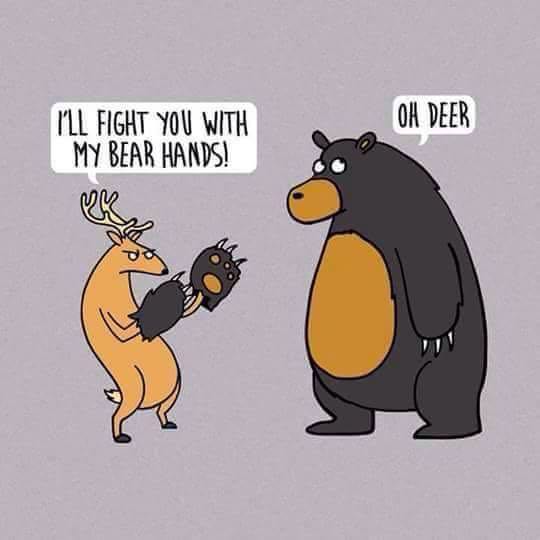
Fun With Language

How much fun can you have with words? As much fun as your imagination can create!

Source: Unknown

Many languages have homonyms. But be careful how you use them. For example, watch how you use they’re, their, and there in English. These are misused more often than they should!

Can you think of any homonyms from other languages?
Comment below.

3 Tips for Selling Effectively

People hate being sold to. If you tell them your product is an “awesome buy” and “there are only two left,” people will raise their hackles. Just think of the times you threw up a stop sign when someone tried to sell you services, gadgets, or discounted items you didn’t want.

Regardless, everyone should learn how to sell because the ability to persuade and negotiate is necessary in both your personal and professional life. The reality is, you’re always selling. If you can’t sell, you’ll limit your success at getting hired or being the person friends want to spend time with.

Whether you’re a novice or an expert, you’ll find selling strategies that work for you. Let’s start with three quick selling tips that’ll make you successful, even if you are already a master at sales.

Tip 1: Listen to what the customer wants

Being a great listener surpasses listing all the features and benefits of the service or product you are selling. Think about how you want your needs heard as a customer.

For example, I used a skincare brand for several months without seeing any results, so I stopped using it. The associates who sold me the products immediately asked if I had used the items exactly as instructed. They said I needed to give the products more time to see the desired improvements. I could speak to one of their skincare advisers to get some advice.

Interestingly, however, not once did they ask what I wanted, or why I quit using the products!

If they had taken a minute to ask, “What do you want the skincare to do for you?” or “Why did you stop using the skincare?” I would have told them I had an allergic reaction. Their products weren’t advisable for someone with my skin condition.

Listening to what the customer wants is vital.

Listening to what the customer wants is necessary if you want to sell.

The skincare associates were trying so hard to show how their products would benefit me that they didn’t consider the possibility that I wasn’t a fit. They didn’t even ask why I quit, but if they had, they would have found out the products had caused me a month of pain.  

So the first quick tip on selling is to listen and really find out what’s going on. If a customer isn’t interested in buying, pushing features and benefits won’t get you the sale. Learning their story, however, will get you closer to success.

Tip 2: Build rapport and trust with the customer

Back to the first rule of sales: Don’t push features and benefits.

Last month, I was roleplaying with a friend who was practicing as an insurance agent. He was nervous, trying to remember every point he was supposed to cover in the sales presentation. Accurate recall was necessary for him to be in the field with clients. He was so focused on getting all the elements of his presentation right that he didn’t listen to my answers. He simply fired off each line of questions from his sales script.

Building rapport and trust with the customer is important if you want to close the deal and get the sale.

Approach the customer as though they were a friend but do it professionally. Before starting the presentation, ask some quick questions. Talk about the weather, weekend plans, family pictures in the hallway, how the day went … anything to keep the conversation light. Get to know the human sitting across from you before you start to make any sales pitch.

When a customer feels that you’re interested in their well-being, that you mean more to them than some income in your pocket, then they are more likely to do business with you.

You close more deals with genuine conversation.

I remember feeling impressed with the decor and the atmosphere of a client’s apartment. I gave them honest compliments as we had a brief conversation about their family, career plans, and what brought them to the neighbourhood. The information they openly shared with me helped to customize my presentation so that I was able to sell them a plan that best suited their situation.

When you know more about your customer, you can customize your service or product to their needs. For example, when I found out a client was expecting to have a child later that year, I highlighted the benefits of getting a plan to help the client invest twenty-five years into the child’s future.

Tip 3: Respect each other’s time

Set a clear start and end time for your sales meeting. After you set a time, confirm it with a reminder text or email a day to an hour before the meeting.

Arrive at the meeting on time.

It shows you respect your client’s schedule and demonstrates your professionalism. Wear a watch so that you can discretely keep track of the time at strategic points in the meeting. Checking every fifteen minutes makes you look disinterested. Checking during a pause in the discussion will show that you have a schedule to keep. Explaining that you have an appointment after the current one gives the impression that you are busy.

Bring a watch. Look busy. Look professional. Stay on schedule.

Another reason for keeping tabs on the time is your customer will lose focus and not buy if the meeting is more than two hours long. In my first week in sales, I had an appointment that was three hours long, and by the end of it, the client was exhausted and so was I!

Key Takeaway

I’ve come across many great books on sales, as well as tips and tricks. In this blog, I’ve featured only three quick tips, but these are key to getting a sale. Listen to your customers, get to know them, and then sell them what they need.

If you enjoyed this article, subscribe to make sure you don’t miss the next post!

20 Commonly Misused Words and Expressions You Should Know

A friend shared a story in which a guy typed, “Your adorable,” and the girl wrote back, “No, you’re adorable.” And romance wasn’t on her mind.

It’s wonderful to share a joke and everyone laughs. It’s not so funny when you’re typing a serious message, and someone laughs… at you.

To avoid these unfortunate situations, brush up on these commonly misused words and expressions. You never know when knowing the difference between these word pairs can make you seem as wise as an English professor.

How many of the following misused expressions do you already know?

1 Affect/Effect

Affect: Usually a verb; meaning to impact or change something
The rainy weather affected her mood.
Effect: Usually a noun; meaning the result of a change, such as an outcome
The cultural experience had a strong effect on the topics on her podcast.

2 Afterward, Afterword

Afterward: Adverb meaning later (more common in American English whereas afterwards is more common in British and Canadian English)
She told us afterward that dinner had been great.
Afterword: Noun meaning epilogue
The novel has an afterword written by the author.

3 All ready, Already

All ready: meaning completely prepared
The musicians were all ready for the concert to begin.
Already: meaning it happened before
She already had her coat on when the door opened.

4 Among, Between

Between: used for one-to-one relationships
That secret is between you and me.
Among: for undefined or collective relationships
They divided the snacks among the children.

5 Carat, Karat, Caret

Carat: the weight of a gemstone such as a diamond
Karat: The proportion of gold in an alloy
Caret: mark on a manuscript  ‸

6 Councillor, Counselor

Councillor: someone who sits on a council, such as a city council
Counselor: a person who gives advice, such as a marriage counselor, or a lawyer

7 Deserts, Desserts

Deserts: barren areas of landscape with little precipitation; punishment or what’s deserved (just deserts)
People who intentionally hurt others will get their just deserts.
Desserts: sweet course at the end of a meal, such as cake, ice cream, or cookies
The desserts were served after the main course.

8 Emigrate, Immigrate

Emigrate: to leave the country where one used to live to live in another one
Immigrate: to enter a country to live there
He used to live in England but now he lives in the USA. He emigrated from England and immigrated to the US.

9 Flammable, Inflammable

Flammable: it can catch fire or you can set it on fire (more commonly used).
Inflammable: can burst into flames without any ignition (decreased in use in modern English). It isn’t the opposite of flammable; the opposite of flammable is nonflammable

10 Flare, Flair

Flare: a glaring light
She placed emergency flares around the stopped vehicle.
Flair: outstanding talent or stylishness
He had a flair for cooking exotic foods.

11 Hangar, Hanger

Hangar: you can find these structures housing aircraft at an airport
Hanger: you can find these holding up clothes in closets or holding up pictures on your walls

12 Healthy, Healthful

Healthy: someone who is fit
She stays healthy by exercising and eating well.
Healthful: something that causes good health
A healthful diet includes fruits and vegetables.

13 Incredible, Incredulous

Incredible: unbelievable or astonishing
They went on an incredible trip through the woods.
Incredulous: disbelieving or skeptical
He was incredulous about their claims for compensation.

14 In regard to, In regards to

In regard to: the correct expression
In regards to: remove this from your vocabulary forever

15 Less, Fewer

Less: Use for mass amounts that you cannot count
There was less water in the pond two months later.
Fewer: use for things that you can count
Fewer people are going to the movies these days.

16 Nauseous, Nauseated

Nauseous: makes you feel sick (modern English – this meaning is being used to mean nauseated as well)
The smell can make you feel nauseous.
Nauseated: condition of feeling sick
She felt nauseated.

17 Therefore, Therefor

Therefore: adverb; meaning for that reason
She wanted to buy him a nice gift; therefore, she got the more expensive one.
Therefor: adverb; in return for
I took back the book and the store gave me my money back therefor.

18 Toward, Towards

Toward: use this if you prefer American English
Towards: Use this if you prefer British or Canadian English

19 Whoever, Whomever

Whoever: subject pronoun that works the same as he, she, and they
Whoever turned on the AC in this heat is my new best friend.
Whomever: object pronoun that works like him, her, and them
Give the cake to whomever you see in the room.

20 Your, You’re

Your: the possessive form of you
Your cat is adorable. (The cat belongs to you.)
You’re: the contraction of you are
You’re adorable and your cat is adorable too. (You are adorable. So is your cat)

Bottom Line

How did you do with these commonly confused expressions?

Now that you know how to use these expressions correctly, keep a sharp eye on them and you’ll sound wise in your written correspondence!

If you enjoyed this article, subscribe to make sure you don’t miss the next post!

Why We Should Teach Kids to Be Entrepreneurs

When I was a little girl, I dreamed of marrying a wealthy business owner, and when I got older, I dreamed of becoming a successful business owner, but teachers and family had other plans for me. Instead, they wanted me to attend university and have a career as a doctor or dentist. Helping people and changing lives appealed to me, but being around sick people or staring at teeth all day did not. So when I finally decided to step out of the box and become an entrepreneur, I discovered all my years of schooling weren’t enough to fulfill my dream.

Employee vs Entrepreneur

School taught me how to be an excellent employee. I went from obeying the teacher to obeying the boss, from taking six classes a day to working set hours. I performed according to expectations and job requirements, and challenged myself to leave my comfort zone when it meant a pay raise or getting fired. Having a job and a career were great — I really enjoyed my writing career after graduating from university. However, it didn’t bring me any closer to fulfilling my dream.

Now that I have my own business, I’ve realized that there are entrepreneurship skills that school doesn’t teach you that are relevant no matter what career you choose for yourself. Some of the most successful entrepreneurs, including Richard Branson and Henry Ford, were not known for having a shining academic performance.

Students who are well behaved, complete their homework, and perform well on tests are praised by their teachers. Students like Branson who struggled with dyslexia, disliked schoolwork, or didn’t fit the “good student” stereotype were told they needed to change. A friend who failed in school (because it didn’t challenge him) now owns two flourishing side businesses.

Perhaps, in addition to the current school curriculum, children should be taught entrepreneurship from an early age. Entrepreneur wannabees would benefit from these skills, but students seeking careers would benefit also.

Leadership and Communication

Two of the most important entrepreneurship skills are leadership and communication. Children who lead by example and communicate effectively are known for their charisma and optimism. Peers are drawn to their ability to make decisions and define objectives, such as making teams and establishing rules for a game. They can convince others why building a sandcastle would be a fun activity.

These leaders will listen to your problems, empathize with you, and offer advice if needed.
A popular girl in my third grade embodied these qualities. She always smiled, and when you spoke to her, she listened like you were the only other person in the world.

I have never heard anyone say that they admire their bossy supervisor. But I’ve heard how much people admire leaders who get their hands dirty and treat their coworkers as equals. That’s like the child who makes the extra effort to make the new student feel welcome and encourages classmates to do the same.

An example of how leadership can inspire others is acclaimed speaker and author Adora Svitak. She advocated kids to take action about academic and environmental concerns and has also spoken for causes such as feminism and literacy. Her Ted talk “What Adults Can Learn From Kids” has received more than 4 million views and established her as a prodigy by the age of 12.

The Ability to Sell Yourself

Not everyone likes to sell or become a salesperson, but everyone should learn how to sell to succeed in life. Before the age of 18, children have done various jobs, from opening a lemonade stand to having a paper route, mowing lawns, and babysitting. These jobs teach you about tracking sales and developing your sales skills.

Moziah Bridges was 11 when he started to sell his bow tie creations on Etsy. He learned to sew from his grandmother. He’s made more than $600,000 in sales and continues to grow his business with a seven-figure deal with the NBA to make bow ties for 30 professional basketball teams.

Evan of EvanTube reviews toys and covers topics that interest other kids his age through video recordings. He makes more than one million per year with his band, and he’s not even ten years old.

Having the ability to sell can start at a young age and be just as valuable when you’re an adult. If you can convince someone you have what it takes to do a job, you will ace a job interview. Likewise, by showing someone that you have the personality and qualities that he or she is looking for, you will do well on a first date.

Finding Opportunities

Teaching children about entrepreneurship includes teaching them about weathering financial difficulties. If they need money to buy a new outfit or video game, they will speak with neighbours, friends, and family members to make some cash by shovelling snow, painting a fence, or selling a toy collection they no longer want.

We can also teach children to see opportunities instead of problems. For example, they may be seeing only the problem if they have only $100 in allowance money and the toy they want to buy is $130.

The creator of Nay Games, 14-year old Robert Nay, learned how to code through research at the public library. He programmed “Bubble Ball,” which received more than one million downloads. Nay Games now has games to help students with spelling and physics-based puzzles. Nay saw an opportunity and followed through with it.

Learning Problem Solving

Children who learn entrepreneurship also learn problem-solving. They find solutions to their problems by tackling situations head-on.

In the case of Cory Nieves, a six-year-old boy became a business owner after he decided he was tired of taking the bus to school. He wanted to buy a car because it was too cold outside. He sold hot cocoa and later branched out to selling lemonade and cookies to achieve his dream and save up for college. In 2014, when he was ten years old, he was making sales of a thousand cookies a weekend.

Busy vs Productive

Time management is a valuable skill when you own your own business. You learn to be productive, instead of just busy. Children who are adept at time management are efficient at accomplishing more in less time. Instead of finishing a homework assignment in two hours with plenty of breaks, they can finish in one hour with time for other tasks.

Business mentor and coach Cameron Herold has spoken in favour of having parents and teachers encourage kids to be entrepreneurs. At a Ted Talk in Edmonton, Alberta, he speaks about how he was bored and failing in school because teachers did not identify entrepreneurial traits as worth encouraging.

For example, at the age of seven, he  was able to sell coat hangers at a higher price than originally expected, but negotiation was not a skill that he was taught.

Stories of successful kid entrepreneurs echo a similar theme to Herold’s story: they didn’t pay attention in school but became thriving business owners. As young teenagers, they were told to set aside their business ventures until they were older, but they continued to pursue their dream until they reached their goal or surpassed it.

My earliest brush with entrepreneurship was the day we brought belongings we no longer wanted and placed them on our desks at school. We walked around the class and looked for things to barter for using our items. A classmate had a pair of three-inch tall glass boots I liked. I asked her what she wanted from my desk in exchange. Sadly, what she wanted was only worth one boot — she didn’t like the other items I had. To this day, I only have one glass boot in my display case, a reminder of my early attempts at commerce.

Key Takeaways

Encourage children to pursue entrepreneurship. They will have more skills to succeed as adults, whether they choose to have a job or own a business. One lesson that successful kid entrepreneurs have taught us is that we should never limit what we want to accomplish.

If you enjoyed this article, subscribe to make sure you don’t miss the next post!