
3 Quick Tips for Checking Your Own Writing

If you do any amount of writing at your job, then this article is for you. Whether you write emails to clients or reports to document projects, it’s important to do a final check before hitting Send or Print. There is nothing more horrifying than spotting a glaring error right after you have sent off an important email or file.
Writers should use these quick tips for checking that their writing looks polished before sharing their work with their audience.
Tip 1: Read your work in a new way
After you have finished your writing task and typed your last period (or signed off with your name), don’t press send yet. Save your work and take a break, even if it’s for a few minutes.
When you return, check over your work with fresh eyes. One of the best ways to do this is to read your writing out loud. It’s a great way to realize if a sentence is awkwardly phrased if you trip over your own words. Or, if you nearly pass out while reading, it’s a hint that you may need more commas or shorter sentences.
Another way to read your writing with fresh eyes is to print out what you’ve written or change the type style or font size. Just changing the appearance of your writing can help you to notice typos or grammar mistakes that you didn’t see before.
Yet another suggestion for checking your work is to run your grammar check or spell check program if you have one. Some writers use the Read Aloud feature if they are using Word. Hearing another voice read your work aloud can help you find errors you might not have noticed if you only review it silently.
Tip 1:
- Read your writing aloud
- Print out your writing or change the presentation of your writing
- Run a spell check or grammar check program
Tip 2: Create a checklist to follow
A great habit is creating your own checklist to refer to whenever you write something that will be shared with an important audience, such as your boss, client, or customers.
Do you often get two words mixed up, such as “cite” and “site”? Do you often forget the rules for using commas, or whether a technical term in your industry should be capitalized or spelt a certain way? If you find yourself making the same mistakes over and over again, create a checklist of common errors or confusing writing points. Then make a habit of going through this checklist before you share your writing assignment with your audience.
Another tip is to keep templates of the types of writing that you do most often. Following the template for an email, report, or presentation saves time and helps you to learn that particular style of writing.
This repetition creates a habit. Eventually, you will internalize this checklist when you keep repeating it to yourself. It’s one of the best ways to learn how to spell a word, learn a grammar rule, or familiarize yourself with how something is written in your industry or company.
Tip 2:
- Create a checklist
- Use templates
- Create a habit
Tip 3: Commit 1 to 5 minutes a day to learning something new
Each day, commit one to five minutes a day minimum to learning a new writing tip: One minute if you don’t do much writing at work. Five minutes or more if you do a lot of writing daily.
These quick tips are easily digestible lessons that will help improve your writing over time. No matter if you’re a novice or pro at writing, this tip still applies.
Refresh your grammar and punctuation rules. Learn how to spell a challenging word correctly. Or improve your plain language or technical writing skills. Even a minute a day, each workday, can add up to a significant amount of time over a year.
Your lessons can come from grammar and writing books, YouTube videos about writing, a dictionary, or writing style guides specific to your company. Many resources are out there for you to learn from.
Tip 3:
- Commit a specific amount of time to improve your writing daily
- Use different sources, from print to online
Key Takeaways
Before you hit the send or publish button after finishing a writing task, take a moment to check over your work. You could save yourself the embarrassment of sending an email with a blatant grammar mistake.
If you enjoyed this article, subscribe to make sure you don’t miss the next post!
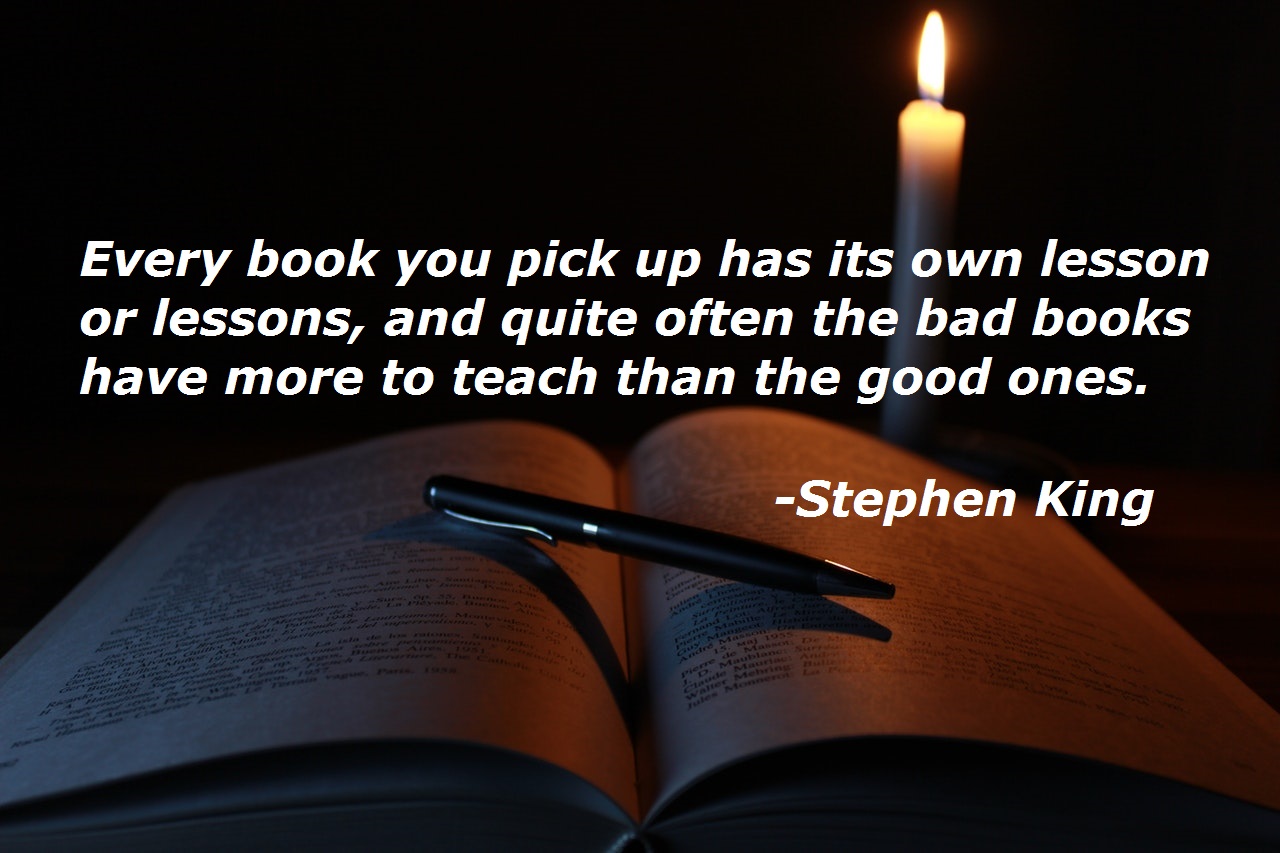
Insights From Famous Writers: Stephen King
Business Review: Halloween Museum

Museums that are replicas of villages or towns from another time are intriguing. They waken the imagination, teach us history, and connect the past to the present.
The 1920s village museum I visited recently is decorated with a spooky yet friendly autumn theme for about a week in October. Unlike previous years, there is no trick-or-treating because of the pandemic. However, this year’s crow and pumpkin themed event was proof that we can still celebrate traditions and enjoy time with friends and family.
Here are some highlights from the Eerie Illusions event.

When you first walk in, you hear the voices of two children projected on loudspeakers. They have discovered a spellbook that they want to try out! Lights project onto the field to scarecrows standing guard, and behind them, you see dancing, winking jack-o-lanterns in the trees.
A crowd stands around in a half-circle to watch the performance. No one seems afraid that the magic that has brought the pumpkins to life will affect the bystanders too.
All family members, from children to adults, and costumed small and tall people, were transfixed by the attractions. They took photos. They pointed at the displays. One child kept pointing at the house-sized spiders and spider webs but I wasn’t sure what mezmerized him about the webs.
The village seemed to come alive with a temporary magic in the evening. In the church, two pumpkins were getting married. Down the street, two other pumpkins are talking to each other and driving their early 1900s car. Like in a Disney movie, the ordinary came to life to do the same activities as any human. And the sights weren’t spooky at all.
On the main street, museum visitors could get their photo taken by an invisible photographer. You could stand on a marked circle and look at a mirror. Then the photographer’s voice told you that your photo was ready, and in the mirror, you saw yourself, but projected over you was a ghost.
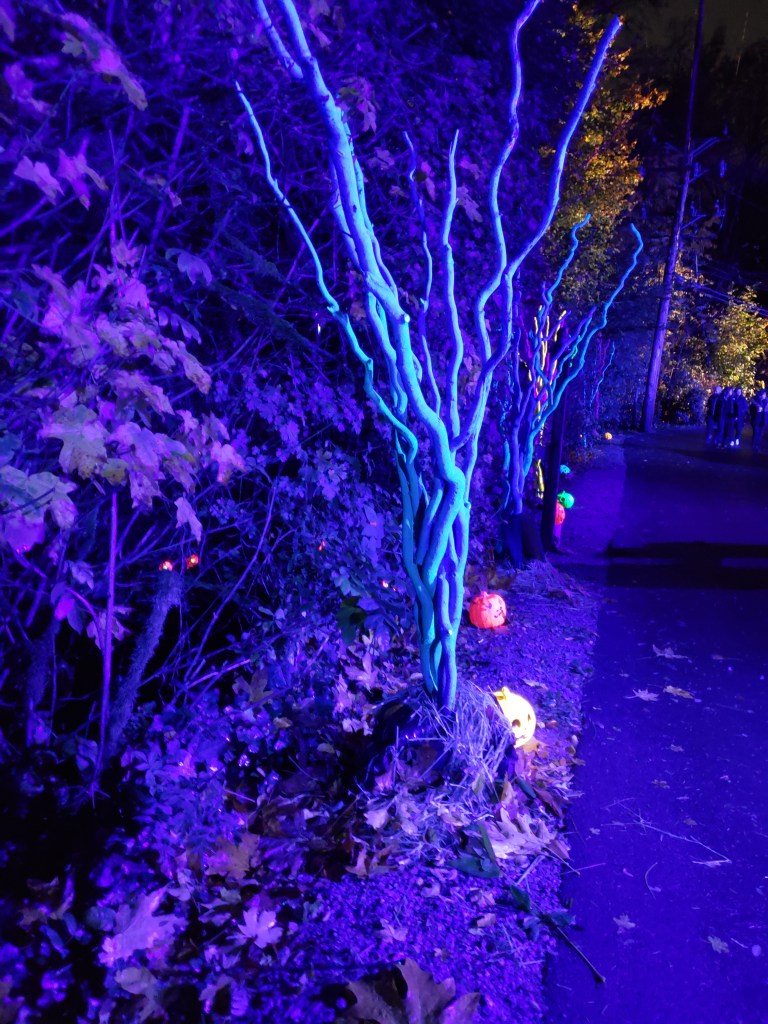
You’ll notice much attention to detail. On one darker side of the street, painted trees glowed in the night. In the bushes, you saw the unblinking neon eyes of owls and other creatures as they watched you. A stuffed raccoon (toy stuffed, not taxidermy stuffed) studied you from next to the base of a tree.
At the end of the street, the one-room schoolhouse was closed. The students had gone home, but you could see the shadows of crows fluttering behind the windows. Eerie music played in the background. Would you dare to enter the building? Good thing school was out.
The farmhouse was one of the best sights at the museum. The full moon next to it was a ball of light with images projected on it. If you watched long enough, you would see the moon change colours and birds flying across its surface. At some point, the moon had closed eyes and a mouth as the moon slept!
The seasonal harvest was part of the farmhouse display. The bottled jams and corn dollies looked real enough to eat (if you could eat plastic), and no one was in sight. Should you buy the food? Or take it? But maybe a ghost is watching. The glowing jack-o-lanterns definitely had their eyes on you.
Key Takeaways
Halloween isn’t just about scaring others or getting scared. In the case of the museum, visitors followed the story of two children who used their magic to bring creatures to life. The village was transformed, and we could see pumpkin people and crows doing what many humans do. These themed events are a great way to bring people to a place that connects the past with the present.

 Vanya Wryter Consulting Services