Signs You’re a Bad Writer… and How to Improve

(Repost)

What is a bad writer? I’ve looked at over a handful of articles in search of an explanation of what makes a bad writer, and everyone seems to have a different point of view. Some say it’s the attitude to writing, and others say it’s poor writing skills, such as bad grammar and punctuation.

Writing is both a skill and a work of art, so you could say a bad writer is a mix of someone with a negative attitude to writing and weak writing skills. So how could a bad writer improve their technique? One way is to start by identifying the signs that they’re a bad writer.

Bad Writer Sign #1: Closed Off to Feedback

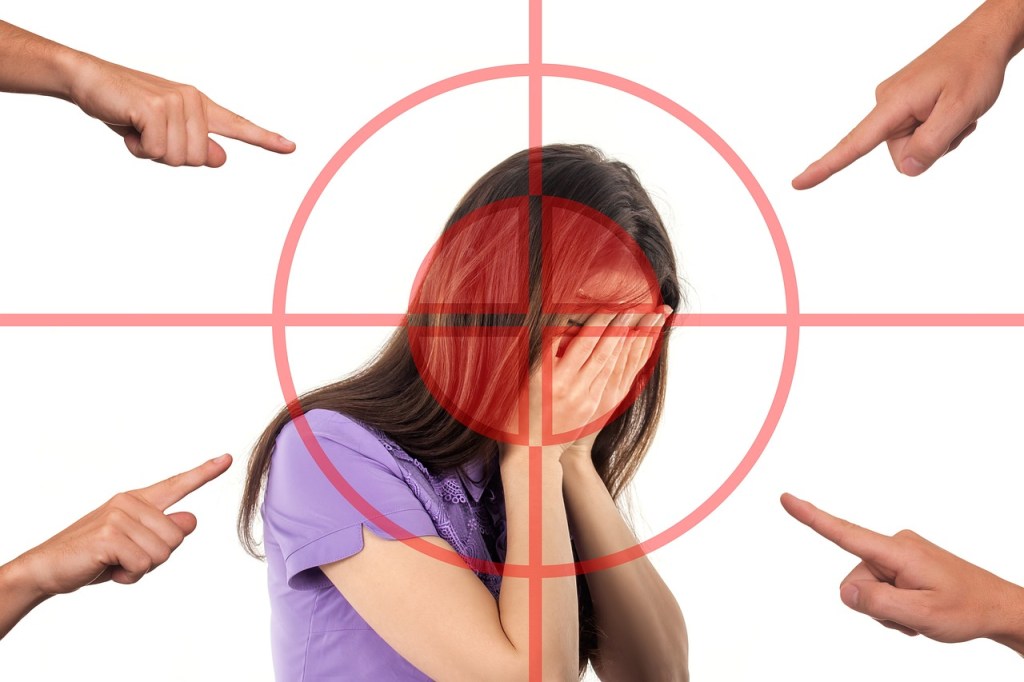
Bad writers dislike criticism and become defensive when they hear their work is not perfect. They believe there is only one way to write a paragraph or a story, and that’s their way. They don’t want to see how a sentence could be rewritten to make the meaning clearer.

A bad writer is closed off to feedback and sees comments as an attack on them as a person. They don’t see constructive feedback as a suggestion on how to improve their writing. Instead, they see the comments as a suggestion that they are flawed as a person.

Bad Writer Sign #2: Working on Projects That Last Forever

Some writers blame writer’s block when they start a writing project and never finish it. This project could be a short story, an essay, a poem, or a novel. They work on rewrite after rewrite but they never finish what they start.

Writing takes discipline, from setting goals to setting deadlines for completing those goals. A bad writer constantly fails to reach a milestone, such not finishing a chapter because of a distraction or because they want to rewrite the chapter again.

It’s difficult to improve your writing skills if you’ve never finished your first draft of a piece of writing.

Bad Writer Sign #3: Stale Writing Skills

Bad writers have limited vocabulary and sentence structure. They don’t expand their vocabulary to add more variety to their writing. Neither do they try to write their sentences in different ways. Each sentence follows the same pattern so that their writing is repetitious.

When a bad writer doesn’t learn more vocabulary or open themselves to criticism, they may also be unaware of incorrect word use, such as mixing up their, there, and they’re; or similar words such as illusion and allusion.

How to Transition from a Bad Writer to a Good Writer

A good writer isn’t necessarily a perfect writer or the best writer. But a good writer will start by learning what they can about writing. They will finish the first draft and be open to feedback on how they can improve. They will work on revisions so that the third draft is an improvement from the first.

Improving one’s writing skills isn’t easy. To make a comparison, writing is like a muscle that can only be strengthened if you use it. With an open attitude to feedback and learning writing skills, a bad writer could become a good writer over time!

If you enjoyed this article, subscribe to make sure you don’t miss the next post!

How AI Is Affecting the Recruiting Process

Artificial Intelligence (AI) could be deciding whether you pass the application process and you’re asked for an interview. Companies that mass hire (bulk hire) for jobs in a limited time frame appreciate reducing the time and costs involved in the hiring process. This also means the human element is removed from part of the hiring process because AI is deciding your suitability for a job.

How does AI help recruiters to find the right applicants?

One way that AI is helping recruiters and companies to select the right candidate is by matching candidates’ skills with the skills required for the job. Before an interview, the recruiter decides if a candidate is the right fit for the job based on his or her own description of skills as written on the application form or resume. It is unknown whether the candidate can really do the job.

One way to streamline the hiring process is through skills assessments. Skills assessments test whether a job candidate has the soft skills needed to do the job. Soft skills are core skills that apply to all professions. For example, time management, teamwork, problem-solving, and communication skills. 

An assessment for customer service will have a typical customer/ customer service agent scenario in which the job candidate takes on the agent’s role to answer a customer’s question. The candidate’s answer is evaluated and scored based on their ability to communicate and solve the problem.

AI in assessments speeds up the hiring process, especially when hundreds of applicants apply for jobs in the same week.

Does AI test candidates reliably?

AI is fast and efficient, but like humans, it is not flawless. AI was made by humans. Its purpose is to help people with repetitive tasks, such as scanning through hundreds of job applications quickly to determine who should move on to a job interview.

Like humans, AI can be biased. Humans wrote its programming. Questions in the assessments should not be too easy or too difficult. The only way to determine the difficulty level is by testing questions with the target audience. Test makers assume candidates may answer a question a certain way, but they may need to adjust their answers based on actual answers provided by the candidates.

Although the test makers and the test takers both speak English, there may be regional differences that cause a misunderstanding. For example, sweaters and jumpers are the same thing, depending on which country you are from. 

AI is changing the recruiting process and it is constantly being improved. Over time, it will automate more takes, particularly repetitive ones. It will also be able to communicate in real time. For example, it can automate sending emails to update candidates on the status of their application.

If you’re curious about how AI is changing the recruiting process, you can read more about it here.

Key Takeaways

Artificial intelligence (AI) is helping recruiters and Human Resources to increase the efficiency of the hiring process. Companies that bulk hire can use assessments evaluated by AI to determine whether a group of job candidates have the soft skills required to do the job. AI also helps to automate repetitive processes and communicate in real time. In the future, AI will have a part in moving candidates quickly and effectively through the hiring process.

If you enjoyed this article, subscribe to make sure you don’t miss the next post!
How to Write a Proposal for a Nonfiction Book

Writing a book proposal is not an easy task. You love your book idea, but you need to make the publisher fall in love with it too. How can you describe what it’s about? What do you say to make the publisher want to turn your idea into a printed book that you can hold in your hands?

If you’re thinking of writing a proposal for a software book to a publisher, check out this post on Medium with tips on writing a proposal for a nonfiction book on a technical topic. Even if you aren’t writing about a software topic, these tips are worth considering for technical topics.

If you enjoyed this article, subscribe to make sure you don’t miss the next post!

ChatGPT and AI: A Threat to Jobs?

The other day I had a most dreadful experience: the day after making a mistake at work, I was called into a meeting with the bosses. I thought I was in trouble. Instead, the opposite happened. They wanted me to try something that might help me to do my job better. 

While feeling relieved that I wasn’t getting a notice to pack up my things, I was surprised at their request. They wanted me to try out ChatGPT because we also used our own AI and they were curious whether ChatGPT would help me do my job faster. So I tried it out, and here are my conclusions.

Creativity Isn’t AI’s Strongest Skill

Fortunately, my bosses couldn’t hear me working. I did as they requested and asked ChatGPT to do the task that one of my bosses had requested. I asked the AI to generate a workplace conversation. 

The result was so generic and so far from creative that I thought it was funny. If my bosses could hear me, they would have thought I was watching entertaining cat videos on company time.

I asked the AI to improve the conversation and gave it a more industry specific example. It effortlessly created yet another workplace conversation, but again, it sounded like the average of many conversations put together, and not a real conversation that an actual worker would have at work.

I came to my first conclusion: creativity isn’t this AI’s strongest skill set. It had yet to create the level of writing that I do on the job.

AI Cannot Replace Jobs that Require Special Skills

After asking ChatGPT to complete a few more writing tasks, I breathed a sigh of relief, knowing that my job is still secure. 

One of my job tasks is to write skills assessment questions. These questions test a person’s soft skills and their suitability for jobs in specific industries. AI is not yet at the stage where it can write materials for industry-specific tests designed to test a specific soft skill. For example, it cannot design a series of skill testing questions about a customer opening an account at the bank.  

AI such as ChatGPT can answer a question that you ask it and then refine its answer again and again, but it could not achieve the final goal on the first try. It needs lots of hints and refinements.  

Key Takeaways

AI can help with the initial research and generation of ideas. However, it still has a long way to go before it can think like a human. It cannot create test questions and answers unless they already exist in the public domain. 

As such, those who have specialized skills, such as creating tests for industry-specific clients, won’t be replaced by test-generating AI anytime soon.

If you enjoyed this article, subscribe to make sure you don’t miss the next post!

Gratitude Quotes

Time to reflect! We’ve now completed the first three months of 2023, also known as Q1 in business circles. It’s also the end of another week. What are you grateful for?

There are so many wonderful things: family, friends, the weekend, another fulfilling week… the list goes on.

As we think about the things we’re grateful for, we’ll share some thoughts about gratitude from writers and storytellers.

“Piglet noticed that even though he had a Very Small Heart, it could hold a rather large amount of Gratitude.” ― A.A. Milne, Winnie-the-Pooh

“Gratitude is the sign of noble souls.” – Aesop

“Gratitude is a quality similar to electricity: It must be produced and discharged and used up in order to exist at all.” —William Faulkner

 “For my part, I am almost contented just now, and very thankful. Gratitude is a divine emotion: it fills the heart, but not to bursting; it warms it, but not to fever.” —Charlotte Bronte

“I awoke this morning with devout thanksgiving for my friends, the old and the new.” —Ralph Waldo Emerson