
Tag: job skills

  • Powerful Persuasive Writing Tips You Should Know

    Powerful Persuasive Writing Tips You Should Know

    Updated post

    When was the last time you saw an ad or read an article that persuaded you to buy something you didn’t even need? Well-crafted words can be powerful enough to influence your decisions. This writing skill is worth developing in your professional and personal life.

    Here are some powerful, persuasive writing tips you should know to convince your reader to buy from you. First, let’s define persuasive writing.

    What’s Persuasive Writing?

    Persuasive writing convinces your reader to side with your point of view. To achieve this, you need facts, statistics, and other research from credible sources. When your point of view is backed up with strong and credible evidence, your reader is more likely to agree with you.

    What Makes Persuasive Writing “Persuasive”?

    Persuasive writing has three key elements. First, includes the beliefs of a group of people or a culture. If the writer seems to understand the reader’s beliefs, then the reader is more likely to agree with the writer. Second, the writer must appeal to the reader’s sense of logic by providing scientific evidence and facts. Third, the writing must appeal to the reader’s emotions.

    If you can’t appeal to the reader’s beliefs, sense of logic, or emotions, then it’s difficult to persuade the reader to agree with your point of view.

    How Can You Use Persuasive Writing at Work?

    If your job is to influence people through the written word, then persuasive writing will be an extremely handy skill to have.

    Persuasive writing will persuade your audience to follow your social media channels because people value the insights they get from your blog posts or articles. 

    Persuasive writing persuades customers to buy products and services. Advertising and marketing copywriters, for example, write copy for web content, email campaigns, marketing brochures, ads, and corporate brochures.

    Persuasive writing skills are also necessary for press releases, copy for fundraisers, and articles about government policies.

    How Can Persuasive Writing Help Your Business?

    Persuading your customers and clients to invest in your products and services is key to your business’s success. Dr. Robert B. Cialdini’s research on the psychology of persuasion has had a tremendous impact on marketing.

    One concept he has proven is the principle of reciprocity. Humans naturally want to return favors and pay back debts. An example of this in marketing is a business that provides advice to website visitors through free blog posts, training courses, and PDF downloads. The informative, free content increases the likelihood that people will pay for the company’s products and services in the future.

    Another principle is social proof: whatever most people do, someone joining the group will do the same, even if the behavior doesn’t make logical sense. Consider how a worker may work a little longer just because everyone else in the department works late. And think of the last time you decided whether to give a new restaurant a try because of how busy it looked. If you read about a popular trend with your age group, you’ll be more likely to try it.

    Scarcity is another persuasive tactic. An ad for “the last available room,” “30% off your purchase today only,” and “offer ends at midnight tonight” will create a fear of missing out (FOMO).

    Persuasive writing will give people the push they need to decide to subscribe to your email list, buy two for the price of one, sign up for a course, or invest in your consulting services.

    How Is Persuasive Writing Useful to You?

    Persuasive writing can help you to get a job when you’re writing to a prospective employer. It can help you to get a promotion or raise.

    Persuasion is also critical when speaking during an interview or conversation for a promotion. Whether spoken or written, words can be used to appeal to others and convince them to agree with your point of view.

    Key Takeaways

    Persuasive writing uses psychology to give people that nudge to make a decision now. It wins you over with logic and appeals to your emotions. It may even play to your fears (FOMO) or convince you to make a purchase because of the free value you have already received. Persuasive writing creates action through the power of words.

    If you enjoyed this article, subscribe to make sure you don’t miss the next post!
  • Hustle Culture and the Pursuit of Goals

    Hustle Culture and the Pursuit of Goals

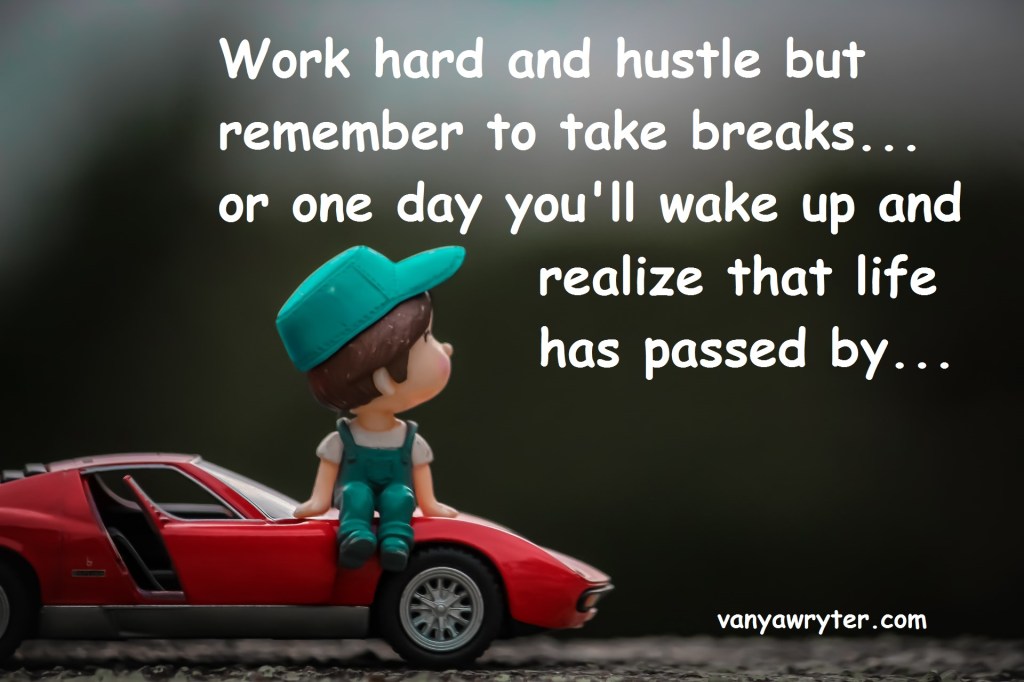
    Do you think putting in long hours of hard work is the key to success in today’s work environment? People talk about hustle culture as a necessary part of doing well at work. They brag about missing sleep and skipping meals to make more money and achieve their next promotion. What do you think?

    Is taking time off similar to being lazy? Do we want to look back at how we collect overtime hours like success badges to brag about?

    Some say hustle culture is necessary these days to reach the economic success we aim for. Food isn’t cheap and housing is barely affordable for some people. Quality of life is eating healthy, but unless we have the financial ability to buy the food we need, or afford the vacation that will give us the mental health break we need, hustle culture can’t be avoided.

    What do you think? Is hustle culture an important part of career success?

  • Technical Writing is Boring! (Or is it?)

    Technical Writing is Boring! (Or is it?)

    People think writers write novels, blog posts, or magazine articles. Technical writing isn’t top of mind. People also tend to think that technical writing is boring. It’s about writing instructions, and how many people have the patience to follow instructions these days? Now before you yawn, let’s get into why we need technical writing. 

    First, what is technical writing? 

    It’s not dry writing. I mean, technical writing is about a specific topic. The primary purpose is to provide instruction and information. Employee handbooks, standard operating procedures (SOPs), troubleshooting guides, user manuals, company documents, and case studies are all examples of technical writing.

    Why do we need technical writing? 

    Sometimes in life, we get stuck. We need help that is easy to follow. You’ve probably read an example or two of technical writing by now, especially if you bought a new computer or phone and read some documentation to figure out how to use it. If you’ve watched a video that gave you instructions, the transcript is an example of technical writing. 

    Technical writing organizes information into easily digestible bits. You can go to a table of contents to find the topic you’re interested in, and read just that section to get the information you need. You don’t need to read the entire book or PDF from cover to cover, or read each page of a website to find the answer you need.

    Why is technical writing fun to write?

    People may think that emotions and personal experience have no place in technical writing, so technical writing is boring. However, if you like organization and solving puzzles, you’ll like how technical writing follows a sequence. Technical writing will explain a concept clearly, using plain language without jargon or idioms. If a special term is used, the meaning is explained. 

    This is why technical writing is fun. It’s like being in an escape room and you’re faced with the challenge of organizing a bunch of information to get the answer you need. If you get it right, your mission is accomplished. You can also use your imagination in technical writing. You can create a handbook on how to capture and tame dragons.  

    Key Takeaways

    Technical writing provides valuable instructions and information. If you’ve picked up a user manual to find the answer to your question, you’ve read a piece of technical writing. This style of writing sticks to the facts and doesn’t include emotions or personal experiences. For this reason, some people think technical writing is boring. But other writers think technical writing is fun. It’s challenging to write information in a way that is easily understood and easily found by skimming and scanning. Technical writing has a very important role in providing readers with important information. 

  • Why Is Editing Your Work Important?

    Why Is Editing Your Work Important?

    Repost

    If you write for your job or business, you need to read this. If you write at all, you should read this. Editing is an important step in the writing process, and it’s more than checking for typos. A lot more because of what’s at stake.

    Editing can prevent awkward situations that result from typos, and it can prevent confusion from a poorly worded message. Here are four reasons to ask someone to edit your work. 

    Professionalism

    Editing is a key step in maintaining your professionalism. A quick review doesn’t take long and saves potential embarrassment and heartache.

    For example, if you’re sending a text for work, take an extra second to reread your message. Check your phone didn’t surprise you with autocorrect. Anyone who has used a smartphone long enough has likely experienced an unusual autocorrect suggestion.

    When writing emails, check that you’ve spelled the recipient’s name correctly. You don’t like it when people get your name wrong, so treat others with that in mind!

    The other party can guess your meaning when you skip a word. However, “I will finish by tomorrow” and “I will not finish by tomorrow” have a completely different meaning.

    Editing your work can include checking what you do. I once saw a section on a website that looked like internal notes to team members – because someone had accidentally hit publish instead of save.

    Clarify Meaning

    It’s clear in your mind what you want to say. Asking a coworker or taking a break before rereading your work can make a huge difference. You may find that your writing isn’t as straightforward as you thought.

    Getting someone else to read your work can give you valuable insight. They may ask questions that make you realize you left out details or your meaning wasn’t clear. Or they may have suggestions about how to write something more concisely. Why take fifty words to say something that you can express in thirty?

    When you read your work aloud, you might realize you are wordy. You might discover that you need more commas to break up chunks of text in a sentence. Or you may have a sentence that goes on forever and you need to add a period before you pass out from lack of oxygen.

    Verify Details

    Review important details before publishing a report or sending an email. A simple typo could send your client to the wrong address or invite a colleague to attend a meeting at the wrong time.

    Numbers can be boring to check, but they are worth verifying. For example, suppose you have completed several calculations. You’re typing up a table of numbers or copying a bunch of monetary totals as part of a project proposal. Double check your numbers. You don’t want your proposal to say that you can do the project for $1000 when your team quoted $10,000 for the job!

    New ideas

    Asking someone edit or check over your work is the same as getting a fresh pair of eyes. You’ll see your work from a new perspective. Your coworker could provide suggestions on a more engaging way to word your email.

    A colleague could provide ideas for another way to present your information. For example, taking a paragraph of statistics and presenting it as a graph or colourful infographic.

    Key Takeaways

    It is worth taking the time to double check your work. You could be saving yourself the embarrassment of a costly typo. You could gain insight into writing in a more appealing way to your audience. Be open to learning from mistakes and learning new ways to write.

    If you enjoyed this article, subscribe to make sure you don’t miss the next post!
  • Humor and Horror: Workplace Typos We Wish We Could Take Back

    Humor and Horror: Workplace Typos We Wish We Could Take Back

    If you communicate with other humans by typing messages, you’ve probably experienced this horrifying moment. For me, it was swearing at my dad when my fat fingers switched two letters on my phone and instead of typing “ok,” I typed a swear word. Also when I emailed my favorite author and said, “I’m a writer too!” and signed the email with “Thanks you.” When these mistakes happen at work, it can be worse (or just as bad). And we’re not alone.

    Here is a collection of typos that I found circulating on the internet. They appear in different types of media, from internet searches to videos to websites. For this reason, I am unable to track down or credit the original owner. If you are the owner or know the owner, let me know! I could relate to these typos, and I hope that you will too.

    Imagine having a terrible workday when your computer asks if you want to exist. In a world where AI is everywhere, I can’t help but wonder if some artificial being wants to take over my job. Or my life.

    For those who design programs, this message reminds them of the importance of doing a final QA to check for typos before releasing a program to the public.

    This warm message is both heartwarming and memorable for teachers. The students are showing appreciation for what their teacher taught them, such as spelling and vocabulary. It is also a reminder that sometimes, students are eager to apply what they’ve learned, but they still have more to learn.

    These labels are all spelled differently. As an editor, I can relate to this. I’ve been aghast to find the chapters in books are not the same, such as using a different format from one chapter to the next. Sometimes, you just don’t realize there’s a problem until you compare everything side by side.

    If you’ve ever ordered several copies of something, such as a company brochure or a business card, and only noticed the typo after several copies were made, you will appreciate this sale-priced item.

    Sometimes, a typo can show a lot of resilience and pass through several sets of eyes and stages of approval. Sometimes, you just need to appreciate their tenacity.

    This isn’t quite a typo but I wanted to share this one. Something got lost in translation but this translation sure is sweet. I would love to experience what tiny grass dreaming is like. It sounds fun. It is better than the original language, which says that tiny grass is resting… do not disturb. Sweet dreams!

    If you like what you’re reading, subscribe for more.