Why Is Editing Your Work Important?

Repost

If you write for your job or business, you need to read this. If you write at all, you should read this. Editing is an important step in the writing process, and it’s more than checking for typos. A lot more because of what’s at stake.

Editing can prevent awkward situations that result from typos, and it can prevent confusion from a poorly worded message. Here are four reasons to ask someone to edit your work. 

Professionalism

Editing is a key step in maintaining your professionalism. A quick review doesn’t take long and saves potential embarrassment and heartache.

For example, if you’re sending a text for work, take an extra second to reread your message. Check your phone didn’t surprise you with autocorrect. Anyone who has used a smartphone long enough has likely experienced an unusual autocorrect suggestion.

When writing emails, check that you’ve spelled the recipient’s name correctly. You don’t like it when people get your name wrong, so treat others with that in mind!

The other party can guess your meaning when you skip a word. However, “I will finish by tomorrow” and “I will not finish by tomorrow” have a completely different meaning.

Editing your work can include checking what you do. I once saw a section on a website that looked like internal notes to team members – because someone had accidentally hit publish instead of save.

Clarify Meaning

It’s clear in your mind what you want to say. Asking a coworker or taking a break before rereading your work can make a huge difference. You may find that your writing isn’t as straightforward as you thought.

Getting someone else to read your work can give you valuable insight. They may ask questions that make you realize you left out details or your meaning wasn’t clear. Or they may have suggestions about how to write something more concisely. Why take fifty words to say something that you can express in thirty?

When you read your work aloud, you might realize you are wordy. You might discover that you need more commas to break up chunks of text in a sentence. Or you may have a sentence that goes on forever and you need to add a period before you pass out from lack of oxygen.

Verify Details

Review important details before publishing a report or sending an email. A simple typo could send your client to the wrong address or invite a colleague to attend a meeting at the wrong time.

Numbers can be boring to check, but they are worth verifying. For example, suppose you have completed several calculations. You’re typing up a table of numbers or copying a bunch of monetary totals as part of a project proposal. Double check your numbers. You don’t want your proposal to say that you can do the project for $1000 when your team quoted $10,000 for the job!

New ideas

Asking someone edit or check over your work is the same as getting a fresh pair of eyes. You’ll see your work from a new perspective. Your coworker could provide suggestions on a more engaging way to word your email.

A colleague could provide ideas for another way to present your information. For example, taking a paragraph of statistics and presenting it as a graph or colourful infographic.

Key Takeaways

It is worth taking the time to double check your work. You could be saving yourself the embarrassment of a costly typo. You could gain insight into writing in a more appealing way to your audience. Be open to learning from mistakes and learning new ways to write.

If you enjoyed this article, subscribe to make sure you don’t miss the next post!

What If Your Life Weren’t Real?

What came first, real life or the painting? I’m asking because sometimes, it feels like life imitates art and other times, art imitates life. “All the world’s a stage, and all the men and women merely players,” Shakespeare said.

Take a look at the following image. It looks like a photo, but it’s a painting. The incredible detail is amazing, from the labels on the bottles to the paint stains on the man’s pants. It’s the detail that brings the picture to life. In person, the lighted image looks three-dimensional, but unfortunately, the photo has flattened the image.

If you’re a highly imaginative writer or a philosophical one, you’ve probably asked yourself if humans are possibly living in their own dream universe. Maybe someone is watching us, and we are the actors in a movie.

A change in perspective is needed. Take a look at the artwork below. No, it’s not an upside photo. The label next to it shows that this is the way that the work is meant to be presented. It’s an upside-down tree. Or maybe we are the ones looking at the world from the wrong way up… or down.

What do you think? Even if you’re not a writer, the question must have crossed your mind at some point. What if life weren’t real? What if you’re a character in a story? Or a character in a picture, like the rose or the fruit captured in the painting of the first photo?

How Technology Has Changed How We Communicate

Repost

How often have you sent an urgent text and impatiently waited for a reply? Texting etiquette says we should respond within a few hours at most – assuming we didn’t (gasp) forget our phone at home.

Technology has changed the way we communicate, from the speed of communication to the quality of communication. Gone are the days when recent news became old because it took time to send a letter. We often assume the person we want to communicate with has an email account, mobile, or both.

Technology has impacted how we communicate with family, friends, and coworkers. Let’s look at some examples of how much we’ve come to rely on tech to communicate with others.

Messages, Email, and Apps

How often do you say, “I’ll text you the info?” or “I’ll send you an email?”

Only one generation ago, sending letters and Christmas cards by post was still trendy. The cost of a stamp was much less than what it is today, and all you had to do was wait a few days to a week for your letter to reach the recipient.

It also wasn’t that long ago when we used dial-up – that horrid screech on the telephone line – to surf the net. You couldn’t get online privately either – first, you had to tell everyone in the household not to pick up the phone!

These days, a long letter can be sent overseas by email in minutes and read by the recipient on their phone.

You can send a voice or text message by any number of options: SMS, WhatsApp, Telegram, WeChat, Instagram, Discord, Messenger, and many more.

We also have many new social issues that we didn’t have more than a decade ago. Back then, we could “chicken out” and slam the phone when the answering machine clicked on, and we weren’t sure what to say.

These days, it’s the psychological impact of the Read Receipt. If the other party has read your message but doesn’t reply, does it mean you’re not important, or they don’t care to reply? If you sent the message hours ago, but they didn’t open it, should you send another message in case the message was lost in cyberspace?

And if you want to get with the times, what do you do if your email or message was opened days ago and you were ghosted?

These days, we expect a response immediately, within an hour, or at least within twenty-four hours if it’s not urgent. After all, we can answer a question and send information instantaneously.

We can even video chat a loved one while on a business trip or vacation to another country. Distance and time zones aren’t an issue anymore.

Communication at Work

Technology has closed the physical distance between people, work, and talent.

Previously, you needed a system to keep track of the most recent version of a document. If employee A creates a file and sends it to two others for review, how could employee C and B coordinate feedback?

With technology like Google Docs, many people from different offices in different cities can work on the same document without worrying about keeping track of which version is the most recent. It also introduces a whole new level of strategy.

For example, it’s a little more challenging to tell your coworkers that you’re working on the document if you’re not showing as active in the file. It’s also a bit nerve-wracking if you’re writing a sentence and you know someone else is, in a sense, looking over your shoulder.

Fun moments can arise, such as when I was working on a document and a cursor appeared. A coworker started to type a note addressed to me in the middle of a paragraph. The note was just to say Hello, how are you doing? Then he deleted the sentence.

The upside of having files in a cloud, of course, is not worrying about what happens if your computer crashes or you need to access the file and keep working from another computer. You have a lot more flexibility.

The ability to share files has changed the speed of communication. You can save your file and open it again to share in the board room without having to lug around your computer or a USB drive.

If your talent is not writing or typing, you can record your meeting and have it transcribed into notes afterward. You can also use an app to correct your grammar and spelling. Then a click of a mouse can correct a mistake or rewrite an entire sentence in a second.

Robot Editors

With grammar check options and apps such as Grammarly and Hemmingway, one could say that we no longer need writing lessons. We can ask AI such as ChatGPT to finish our writing assignments using perfect grammar. Professional editors may also be out of a job one day because of AI.

That “one day” won’t be for a while yet, so human editors will still be around. Even if you’re not thinking of hiring a professional editor, you still need to be your own word expert.

Our smartphones aren’t yet smart enough to be fully trusted with our messages. Autocorrect can create some awkward situations, depending on what word your phone thinks you had in mind. Voice dictation can produce funny results too. I’ve studied some puzzling messages from a manager who said apologetically, “Siri likes to mess with me.”

Grammar correction options in word processing or email programs are both good and bad. I’m grateful when I can’t remember if an obscure word is spelled with one “r” or two, and I can play around with letters until the program likes what I type.

It’s also helpful if you’ve had a long day and your editing program kicks in so that you realize you just typed, “I’ll see you at the the meeting.”

If you can’t remember grammar and punctuation rules, these grammar programs are great. If you’re an editor or a writer with strong grammar, technology can be annoying. You can find yourself fighting with a program that says your sentence is incorrect when your sentence is perfectly fine. You just have to know your grammar rules.

Living Language

Where will we be in the future? Will AI take over the job of professional writers? Will AI be a substitute for professional editors? The discussion is here now, yet the future is hard to predict. Any language, including English, is a living language. Professional editors’ forums debate the spelling of a word or a writing style. What wasn’t acceptable three years ago could become correct in five years.

What we consider conventional or unconventional ways of writing may change ten years from today. Will technology be able to keep up with all the changes and adaptations and write as well as the most talented human? We’ll see.

Key Takeaways

Technology has impacted the speed and convenience of communication. The day has already arrived when we can ask AI to write our emails for us. Yet we can still have our fun with autocorrect and grammar check.

What’s your opinion on the influence of technology on communication? Leave your comment below.

If you enjoyed this article, subscribe to make sure you don’t miss the next post!

What If Books Were Free?

What if books were free? I admit, I would like a free book about a topic I’m only mildly interested in. It’s much easier to get a free copy of a book these days. You can press download, and viola! you have a free ebook to enjoy.

Here’s another perspective. An author can spend months or years to write a book. That’s hundreds and thousands of hours put into a piece of writing.

Recently, an author was horrified to find her book could be downloaded for free on a website. She asked for help to prevent this from happening.

Imagine working for thousands of hours for no pay. I know the feeling. I’ve worked as a book editor with authors who spend two years on a book and don’t finish it. I’ve also worked with authors who patiently work through several drafts, rewriting the same chapters until perfection.

It’s horrifying to see thousands of hours of hard work given away for nothing. What would you do if you came across a free book?

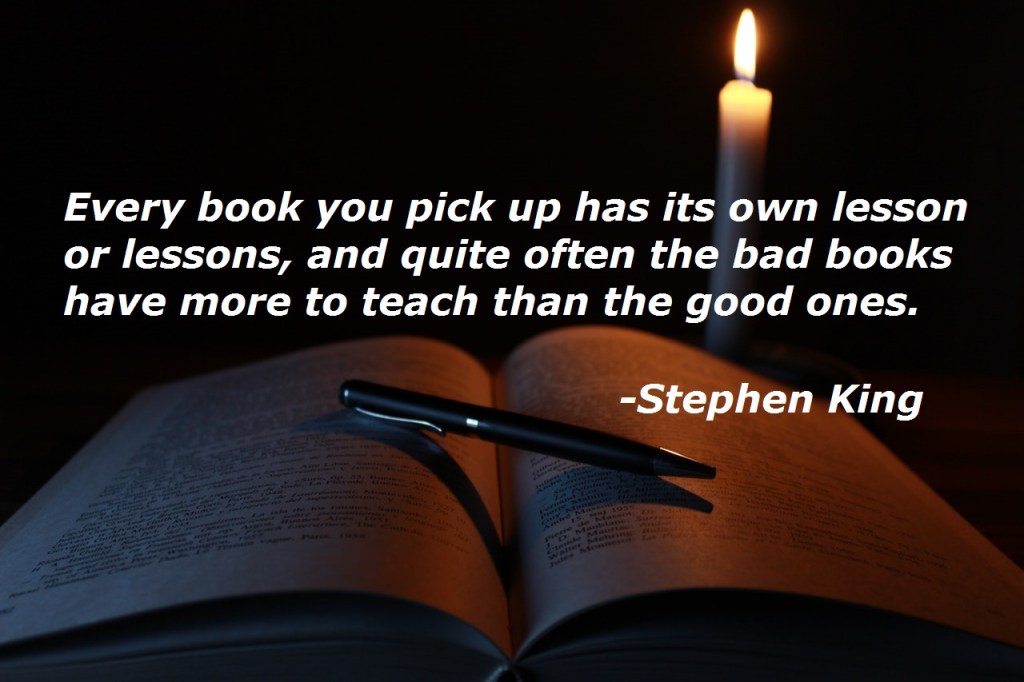
And on another note for book lovers, I’ll leave you with this handy guide for buying books.

image credit: bethanyfiction.com

Are You Feeling Lost?

Have you ever walked into a room and realized you don’t know why you’re there? Then you walked back out to retrace your steps and recover your memory from ten seconds ago. It happens sometimes.

It can happen anywhere. You can be at the store and not remember what brought you to that aisle.

You can be at work, distracted by a message, and find yourself sitting at your desk, fingers hovering over your keyboard while you try to recall what you were supposed to be working on.

Maybe it’s time for a break. Happy Friday. Happy weekend. Happy whatever occasion you want to celebrate.

Image credit: source unknown.