What do your clothes say about you? In the pre-COVID days when I worked at the office at a job, I had a supervisor who wore body hugging suits and stiletto heels. Her makeup was polished and stunning. Overall, her fashion sense gave her an aura of confidence, power, and strength.
These days, working from home has made makeup, business fashion, and coats unnecessary. At virtual meetings, you only need to look presentable from the waist up (just don’t stand up). It’s easy to roll out of bed and show up at the office in a hoodie and sweat pants, oversized cardigan, or even pajamas.
You feel relaxed and comfortable. No need to impress anyone, and you don’t even need to wear contacts. Glasses are fine!
After almost a year of remote work, people have redefined fashion trends for the at-home workplace. What do our clothes say about us though? Does comfortable still mean professional? Does baggy, loose fitting, and relaxed still give us the feeling of confidence that we had at the office?
If you’re working from home, what is your work outfit these days? Share your thoughts in the comments!
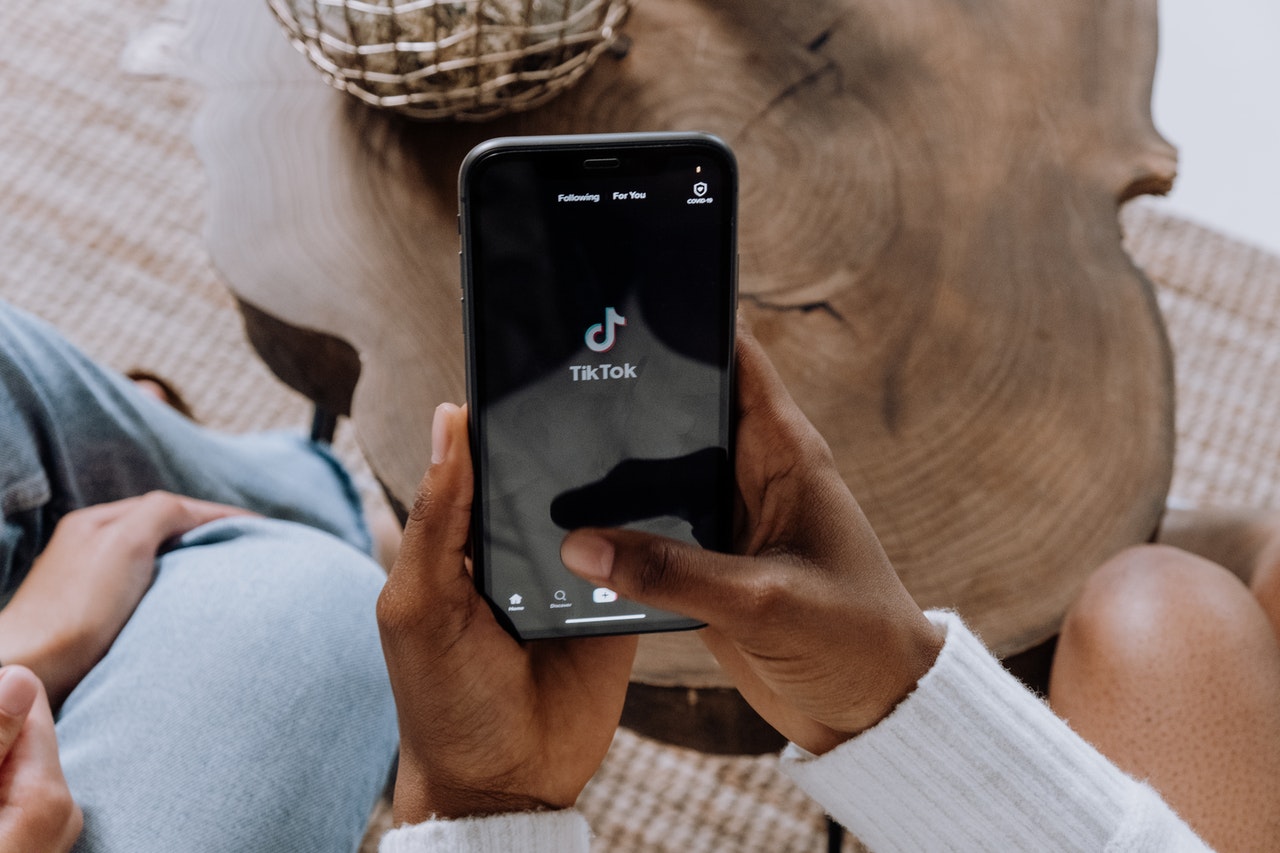
Have you ever been curious about a career and wished you had more time to learn about it? Or perhaps you have a career that you want to teach people about but you’re not sure where to start. TikTok influencers have embraced this task by creating humorous, informative, and engaging videos that are perfect for learning the inside story about careers.
The facts, the awkward moments, and the insightful moments are captured in short, bite-sized pieces for viewing. If you’re interested in learning about a career, or if you want to learn more about a career, check out these three TikTok influencers.
They’ve found the formula for giving their fans the inside scoop about their jobs. If your goal is to create TikTok videos to teach your fans about your job or career, these three accounts provide a great formula for the videos to create.
Learning About a Career as Flight Attendant from TikTok
Interested in becoming a flight attendant? Even if you aren’t, Sandra J Kwon, aka @jeenie.weenie, has some amusing anecdotes about air travel that many people can relate to. She has over 3.6 million fans on TikTok and posts a great deal of content about her past career as a flight attendant.
Her videos share a variety of topics, from creepy flight stories, to scenarios with difficult passengers, to heartwarming stories about memorable passengers. She demonstrates her talent and flexibility as an actor when she dresses up in the duo role of flight attendant and passenger to talk about visiting places such as Australia and Russia.
One of her most entertaining series is “Things you didn’t know about cabin crew” in which she reveals inside stories about life as a flight attendant. In one video, she yells, “Things you didn’t know about cabin crew, part 19!” in an airport and laughs when she’s ignored. In this series, you find out about some airport perks for staff, and answers to questions such as whether you can date or be married while you’re cabin crew.
Another ongoing series are stories about Sandra J Kwon and her mother (Sandra plays both roles). People who grew up with immigrant parents or parents who speak English as a second language (ESL) will relate to the ethnic humour about flying with an ESL parent.
Insightful one-off videos include one about the different types of flight attendants, and one about what you can do to prepare to become a member of cabin crew once COVID is finished and they start hiring again.
The depth of her experience as a flight attendant results in informative videos such as the following one about travel tips, which received 1.6 million likes.
Sandra J Kwon is one TikTok influencer who can teach you a lot about cabin crew life in her videos. You can learn a lot about a career as a flight attendant while being entertained at the same time.
Learning About a Career as an ESL Teacher from TikTok
Anyone who has taught English in a country where the primary language is not English can relate to the experiences of Mr. Patrick as @thepaperpat on TikTok. His videos about life as a teacher in a foreign country has over 889,000 followers. Although you never see his students, he brings them to life in his anecdotes. It’s a clever idea to have the young students represented as voices.
In his video scenarios as an English as a second language (ESL) teacher, he presents situations such as learning student names (we all can relate to learning new names and faces), dealing with students acting up and misbehaving, and having to scold the class.
After watching a few videos, you start to experience what the human interactions are like between teacher and student. For example, one day he must deal with students who have no energy. This happens sometimes, and it is up to the teacher to set the energy and tone, even when everyone is having a bad day.
Unique to ESL teachers (and not other teachers) is disciplining students about language use. Teachers need to enforce the English only rule, and in these videos, our TikTok influencer shows a few videos in which his Japanese students struggle with what they can and cannot say. Japanese names, for instance, don’t count as speaking Japanese. In contrast, sometimes the students are speaking English but the teacher can’t decipher what they are saying.
Also unique to ESL teachers teaching overseas is the fishbowl situation. Students are curious about the teacher because the teacher is foreign. It’s like he is always on a stage, constantly being watched.
Students will notice differences from one day to the next day. When he wears glasses for the first time instead of contacts, his students are very curious about why he has changed his appearance. This video, shown below, got 201,000 likes!
For quick snapshots of a TikTok influencer’s portrayal of life as an ESL teacher, check out some of these videos. They are perfect for learning about a career as an ESL teacher and bringing back some memories of life as a student.
If you’re interested in life as a surgeon, this TikTok influencer has some worthy insights into the career. If you aren’t, you might find some answers to some niggling medical questions that you have. Dr. Sina Joorachi, known as @doctor.sina on TikTok, is an ENT doctor with over 569,000 followers.
He covers a range of specific topics about surgery. Have you wondered what it feels like to be under anesthesia? You’ll find a video for that. Are you curious about how to break a nose for medical purposes? Watch and you’ll find out. This TikTok surgeon also tells you about the worst emergency surgery he experienced, and the most dangerous surgery he completed.
You’re probably familiar with surgeons scrubbing in before an operation. In these videos, he takes it a step further and shows you how it’s done, and what happens if there’s an emergency and you need to take a short cut on those steps. Are you wondering about the difference between the yellow and the pink soap? He answers that too.
Ordinary tasks take on a fun and entertaining tone in the videos as well. You might be surprised to see that this surgeon puts on his PPE like how Iron Man puts on his suit. Special effects add to his superpowers of course. They also help him turn into Thor calling for his scalpel. In another video, you see him efficiently handling the task of dictating how he did a surgery. He speaks faster than most humans on this planet!
Surgeon life isn’t all work and no play. In one video, Dr. Joorachi tackles the question, “Do surgeons have a life?” when he takes you from his place of work to a vacation spot in the span of a few seconds. In another video, he’s in a kitchen, cooking up the perfect playlist to listen to during a surgery.
A popular video is the surgeon’s checklist before starting surgery. It has over 1.4 million likes and is a serious, informative look at what is needed to prepare before the operation.
This TikTok influencer’s videos teach you what a career as a surgeon is like with brief snippets of scenes from the operating room. Most of these videos are entertaining, but for some, be aware that you may be viewing some surgical scenes with internal body parts.
Learning about a career can be fun and exciting. Three TikTok influencers have shared videos about what it’s like to work in their profession, as cabin crew, a teacher, and a surgeon. You can enjoy these videos for the career information, or just enjoy them as a lighthearted moment in your day.
If you enjoyed this article, subscribe to make sure you don’t miss the next post!
TikTok is a video sharing social media platform that entertains and educates. Recently, I’ve been learning about career-related skills and information. For example, by watching these short, bite-sized videos, I’ve learned some answers to common health questions, discovered some insights into what it’s like to work in healthcare, and seen some unforgettable visuals about health issues.
One profession on TikTok that stands out is dentistry. A Malaysian dentist, Dr. Gao, shocked the world when he revealed the truth about how much toothpaste you actually need to brush your teeth. What the commercials tell us is not accurate, he says. (Mindblowing!) Not a question that was top of my mind, but the video got 11.7 million views and 1.7 million likes. Like they say… the truth is out there.
Get closer than ever to your customers. So close that you tell them what they need well before they realize it themselves. ~ Steve Jobs
Connecting with your customers and building a relationship with them is a powerful way to create customer loyalty to your brand. Before COVID-19, experiential retail had been a way to immerse your customers in an emotional experience with your products. (Think of Apple, Ikea, and Build a Bear.) But now that we must stay six feet apart – or avoid meeting in person – how to do we connect with customers virtually?
Experiential Retail – Connecting In-Person
Back when we could invite customers into our stores, smart businesses wanted to do more than display their products for customers to come in and buy them. They did something called experiential retail, which was giving customers an immersive experience.
Customers were invited to try out products, attend events, watch videos and listen to music. That wasn’t all. The experience was meant to have customers seeing, hearing, and touching what the business wanted them to buy.
Think of Cineplex Odeon Cinemas. You don’t just go there to watch a movie. At some locations, you can buy food and drink for during the movie, sit in a lounge (if you meet the age requirement) and enjoy an alcoholic beverage before the show, or play arcade games if you arrive early.
At Catfe, you can do more than look for a possible pet. In the lounge area, you can check out their collection of cats, and if you find one you like, you can adopt the feline for a fee. While you’re there, you can enjoy drinks, snacks, and merchandise with a cat theme.
Shopping is much more exciting when it’s an emotional experience. These experiences are still possible, but slightly changed during the pandemic. Businesses have limitations on how many customers to have on site at a time, and everyone is asked to maintain physical distancing from each other.
Connecting with Customers and Building Relationships Using Emotion
Emotions are an important part of building relationships with customers. Much of this connection can only be achieved in person by using your tactile senses when you try out the product. As the pandemic continues, the question is whether this in-person experience will be the same.
Build A Bear is another business which is experiential retail. At this store, you aren’t just buying a stuffed animal. A child can watch the creation of their toy, from choosing the animal that they would like, to watching as it gets the stuffing for its insides.
Like watching a member of the family come to life, the child can also choose what voice message they would like the animal to have. Then they can choose clothes and accessories (glasses, hat) to dress up their new toy. By the time the toy reaches the cash register, the child will have already started to build a relationship with the merchandise. The certificate that goes with the stuffed animal is the final touch to make this creature another member of the family, and not just another toy.
Ikea also connects with its customers on a deeper level. It’s not just a furniture store. In the showroom, customers can walk into kitchens, living rooms, and bedrooms to try out the furniture and imagine themselves in a room surrounded by these Ikea products.
These items aren’t just furniture. Each piece has a name. When your desk, chair, or bookshelf has a name, it’s that much more personal, more human, than a desk or chair with just a model number. To round out the experience, Ikea has a café … because everyone likes to eat. The family can make a day of looking at furniture and then eating. You’re not just shopping, you’re spending time with family.
Creating Strong Connections in the Virtual Photo creditWorld
Experiential retail seemed to be the trend of shopping in the future. At the Apple store, you can try out your product before you buy. At Lush, you can decide if you like what happens when you toss a bath bomb into water. It’s fun when you can try before you buy.
As pandemic continues to rage around the world and cities continue to impose restrictions, the next concern is whether we can connect with customers in the same emotional way. If customers cannot come to our stores, if it’s not safe for them to touch and feel and experience the products, can we get the same results with virtual selling?
Could businesses rely on technology to build those relationships with customers and make sales without actually being there with the customer? We have the good old telephone to make calls. In addition to calling customers, businesses can also reach out through email and virtual meetings on platforms like Zoom.
Social media also has an important role in building those connections. Businesses are posting videos about their products on Facebook, Instagram, LinkedIn, Pinterest, and YouTube. These posts use humour, curiosity, and surprise to tell customers about their products in creative ways. Some videos are straightforward, showing you the features and uses of a product. Others are unexpected, using skits or a scenario to showcase a product.
Watching a video about making ice cream with an ice cream maker isn’t as immersive as watching the food being made in person and then tasting a sweet sample. But it is still possible to connect with customers in the virtual world and provide them with a somewhat immersive experience.
Summary
Experiential marketing and virtual selling are two ways to connect with customers and build relationships with them. Customers want the opportunity to try out your product before they buy. Provide them with these opportunities through social media posts, online communication, and best of all, experiences in the store. Give customers a memorable and fun experience!
If you enjoyed this article, subscribe to make sure you don’t miss the next post!
Experiential retail is a form of marketing that’s a little different from the traditional approach of just browsing through merchandise.
This approach involves an immersive experience. It involves your emotions. Some examples:
Interactive museums where you can interact with the exhibits and post for photographs. Posting your photographs on your social media is encouraged.
Bookstores where you can sip a cup of coffee, read a book or attend an author talk.
Cosmetics stores where you can try out bath bombs, soap and shampoo right in the store.
Sports and athletic wear stores where you can try out athletic wear or equipment at the in-store trial space (such as a basketball court) or get an autograph from a top athlete.
Experiential retail was the new trend. However, with the social restrictions from the pandemic, what will happen to this form of marketing? Will the experience be the same if you virtually try out a product from your own home? What do you think?





 Vanya Wryter Consulting Services